








By Dr. Bill Lipsky –
Unlike many of the kings, queens, and princes of Europe throughout its long history of monarchy, Archduke Ludwig Viktor of Austria (1842–1919) declined an arranged marriage for either dynastic or strategic reasons. In fact, he declined to be married at all. An imperial wedding between him and one of his beloveds in Vienna’s great St. Stephen’s Cathedral was inconceivable, violating both ecclesiastical and civil law. Any domestic union he might have been willing to enter was illegal in Austria until 2019, exactly 100 years after his death.
Not every princess bride-to-be considered him a desirable romantic partner, either. Reporting about “Life in Vienna” in its February 15, 1880, issue, the San Francisco Chronicle wrote, “The Archduke is not a handsome man; he has the unfortunate ‘used-up look’ of a fast liver.” An “old French Marquise” described him as “a charming man, but c’est un chat qui a beaucoup couru les toits [this is a cat who has run across a lot of roofs].” She did say whose roofs they were.
Even so, the Chronicle explained that while “he is not tall,” he is “well formed, and the Field-Marshal uniform becomes him well. His mustache covers the too sensual lips of the Hapsburg physiognomy, and the carefully parted and curled blonde hair is most becomingly brushed back from a superb forehead which denotes nobility and intellect, both of which qualities he possesses, if the assertions of the exquisitely beautiful danseuses and gay Countesses can be relied upon.” As “an ardent lover of the ballet,” he was known well by them.
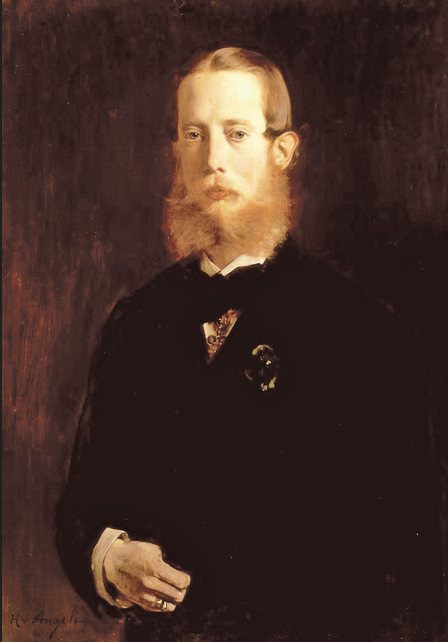
Among his finer qualities, the Chronicle concluded, was his ability to mind his own business, “a business which no one has a right to meddle with, no matter however spicy some of the revelations might be.” Whatever the newspaper might have been hinting at, it was an open secret that, although he was a General of the Infantry, with a regiment named for him, and a Knight of the Golden Fleece, the Archduke would rather be with a man in uniform than simply be a man in uniform.
Ludwig Viktor was especially well known for his ‘‘unnatural affections” for military officers. According to one story among many, when staying at Schloss Klessheim, his magnificent summer palace near Salzburg, he would invite some of the men stationed nearby to enjoy his swimming pool. Unfortunately, he never provided bathing suits. No one dared insult the emperor’s brother by not joining him in the water, so they swam in the nude. As soon as senior staff heard of these goings on, all future invitations were respectfully declined.
The Archduke “was famous for his love of male beauty” only among the privileged; strict government censorship kept his truth from everyone else. Same-sex intimacy was illegal throughout the vast Austro-Hungarian Empire, punishable by a prison sentence of up to five years, but it was the exalted will of Emperor Franz Joseph I (1830–1916), that Luziwuzi, as he was known affectionately to his family, be protected. As long as he maintained an outward appearance of propriety and his “indiscretions” did not create a public scandal, he was free to do as he pleased.
Unlike his brothers, Ludwig Viktor “took no interest in politics.” Instead, he preferred socializing, culture, and philanthropy. He became a devoted patron of the arts, amassing an important collection of paintings, porcelain, furniture, silver, jewelry, miniatures, decorative boxes, and books; the auction to sell them after his death spanned 54 days. He also created a personal salon at the Palais Erzherzog, his home in Vienna, inviting composers, painters, writers, and other innovators to discuss everything from music, theater, and literature, to fashion, interior decoration, and photography.
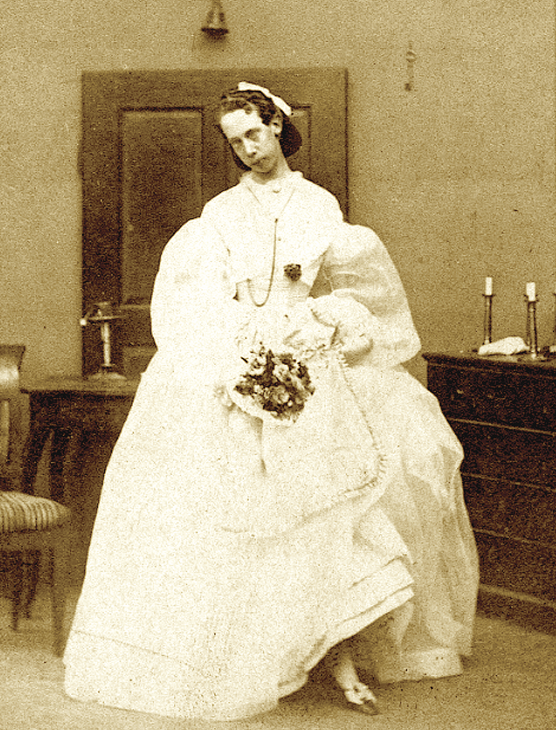
The Archduke also hosted grand social events, elegant dinners, costume balls, and “private theatricals,” often appearing in women’s clothing. With his wealth and imperial privilege, he lived openly, according to historian Edward Shawcross, as “a homosexual and cross-dresser with a reputation as a libertine.” Years later, even so distinguished a personage as Princess Eleonora von Fugger-Babenhausen (1864–1945) would only hint at his true sexuality publicly, using coded language to describe him vaguely as “completely different from his brothers, adept at neither military nor artistic matters, puny, unmanly, affected.”

After it opened in 1889, the Zentralbad—an exclusive bath house then considered to be one of the world’s finest—was frequented by Ludwig Viktor. On a visit in 1904, according to Princess Eleonora, “A real scandal came to pass: a brawl in a public baths. It was said that the Archduke had his ears boxed and been forced to take to his heels.” Apparently, he had “tried to establish closer contact with an attractive young man,” an officer “none too flattered by his advances,” who, inconceivably, slapped his face.
Newspapers all over the world reported the incident, although propriety forbade them from including any of the tawdrier details. In its February 14, 1904, issue, the San Francisco Examiner wrote about an unprecedented occurrence “in which the Archduke played the main part about two weeks ago.” The paper let its readers know that “the brother of the Austrian Emperor received a severe thrashing at the hands of a man whom he had grossly insulted in a public bath at Vienna. The man was arrested, but immediately liberated.”
Unflattering reports about the incident simply could not be contained. Months later, on May 9, 1904, the Tacoma Times was more specific, but less accurate. “He has been guilty of low dissipation,” it reported, “recently thrashed by the father of a lad he had led into debauchery. His magnificent palaces have been confiscated and sold, the proceeds going to charity.” Although that was not so, Ludwig clearly had disgraced the dynasty publicly, the unforgivable offense. There was some good news, however. “He is a bachelor, so his disgrace involves no women.”
“This scandalous affair was reported to the Emperor,” wrote the Princess, “naturally in the most lurid colors.” He may have quipped that his wayward brother “should be assigned a ballerina as an aide-de-camp, to keep him out of trouble,” but he was “utterly outraged” by Ludwig Viktor’s very public violation of imperial dignity. He banished Luziwuzi “immediately and permanently to Schloss Klessheim,” where he spent the rest of his life, a life he chose to live always as his authentic self.
Bill Lipsky, Ph.D., author of “LGBTQ+ Trailblazers of San Francisco” (2023) and “Gay and Lesbian San Francisco” (2006), is a member of the Rainbow Honor Walk board of directors.
Faces From Our LGBTQ Past
Published on December 4, 2025












Recent Comments