








By Stuart Gaffney and John Lewis –
On his first day back in office, Donald Trump issued a sweeping executive order attacking the rights, freedom, and dignity of transgender and other gender nonbinary Americans. One part of that order requires trans and gender nonbinary people to have passports that indicate the sex assigned to them at birth, not their true sex at the time their passport is issued, putting them in potentially extreme peril when traveling, working, or living overseas.
Our community immediately stood up for its rights and for our common humanity. In less than three weeks, trans and gender nonbinary people, represented by the ACLU, challenged the patently discriminatory order in federal district court, in a case named Orr v. Trump. The district court soon stopped the new Trump anti-trans passport policy from taking effect as the lawsuit proceeded in the courts. A federal appellate court concurred.
But, last month, the Republican supermajority of the U.S. Supreme Court—without full briefing, oral argument, or considered deliberation—promptly reversed the well-considered lower court rulings and allowed the passport restrictions to go into effect as the litigation went forward.
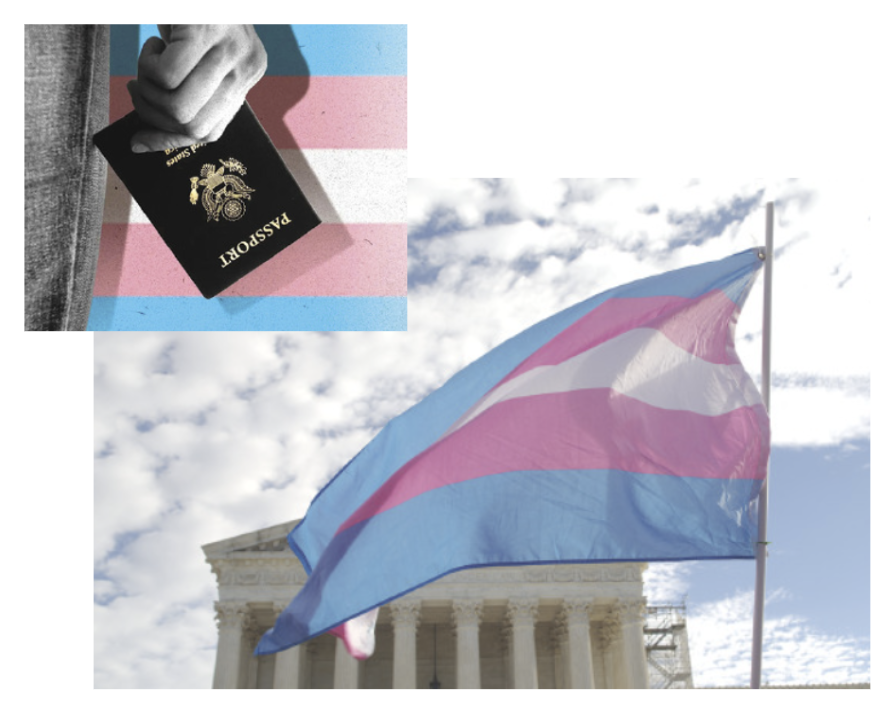
The snap decision was not only ill-considered as a matter of law, but it also reflected the arch-conservative supermajority’s callousness and stunning lack of empathy for trans people, who are suffering greatly as a result of the Trump administration’s actions. The ruling additionally seemed dangerously detached from reality itself, similar to numerous other recent decisions of the Republican supermajority.
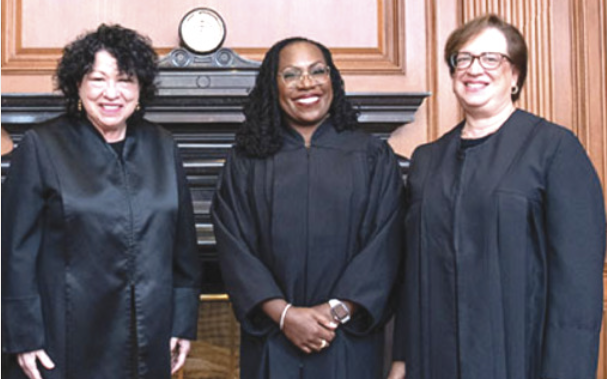
Like many of the Court’s procedurally similar rulings in cases challenging far-reaching Trump administration policies, the supermajority’s opinion is very short—just four paragraphs. Justice Ketanji Brown Jackson, in a compelling dissent joined by Justices Sotomayor and Kagan, characterized the ruling as yet another “‘back-of-the-napkin assessment’” by the supermajority in a case of enormous importance to the people it affected directly.
One component of the Court’s analysis as to whether to take the extraordinary step of intervening in a case at such an early stage in the litigation is a careful assessment of the likely relative merits of both sides’ arguments. Without articulating any meaningful analysis, the Republican supermajority simply proclaimed: “Displaying passport holders’ sex at birth no more offends equal protection principles than displaying their country of birth—in both cases, the Government is merely attesting to a historical fact without subjecting anyone to differential treatment” (emphasis added).
This assertion is absurd on its face. Being transgender or gender nonbinary means that one’s true sex or gender identity does not match the binary sex designation assigned to them at birth. The executive order undeniably subjects trans people and gender nonbinary people to “differential treatment” from cisgender people. Justice Jackson outlines myriad specific risks and harms that trans and gender nonbinary people could now face as the case proceeds. They include possible accusations against them of presenting a fraudulent passport, strip searches and other bodily violations at international borders or otherwise when traveling, personally invasive questioning, and being forced to reveal their transgender status to officials, thereby exposing themselves to potential violence or discrimination.
Under federal constitutional jurisprudence, every law or governmental action must at least have a “rational basis,” and those which “‘lack any purpose other than a bare … desire to harm a politically unpopular group’” are unconstitutional. The supermajority blithely declares that the Trump administration and its executive order had no such intention to harm anyone. Both the aforementioned tangible effects on trans people and the stated purposes of the executive order in the order itself reveal the order’s lack of rational connection between its own stated purposes and its obvious real world effects, as well as its clear intention to harm trans people.
The title of the order articulates a stunning, purported primary aim: “Defending Women from Gender Ideology Extremism,” which, of course, if such a movement actually existed, would have nothing to do with passports. The order’s official statement of purpose further emphasizes the importance of permitting only cisgender women, and not trans women, “access to intimate single-sex spaces and activities designed for women, from women’s domestic abuse shelters to women’s workplace showers.” This, too, plainly has nothing to do with passports. After all, trans people present their passports for inspection to security officials at international borders, not in women’s public showers. Women who are not border agents do not even know what another traveler’s sex designation on their passport is.
The order further claims to address governmental measures that “fundamentally attack women by depriving them of their dignity, safety, and well-being.” It maintains such measures have a “corrosive impact not just on women but on the validity of the entire American system” (emphasis added).
Of course, trans and gender nonbinary people having passports that match their true sex has absolutely nothing to do with the status and safety of cis women. As is obvious, the people who are actually “deprived” of their “dignity, safety, and well-being” by the executive order are trans and gender nonbinary people. The order itself and the Supreme Court’s upholding the passport requirement last month are what truly have a “corrosive impact” on American society.
The Republican supermajority also, without substantive explanation, reaches the astounding conclusion that trans people having gender markers on their passports that match their true sex would result in “foreign affairs implications” causing the U.S. government to suffer “irreparable injury” as the litigation proceeds.
Jackson’s dissent tears this claim to shreds and further notes that “[f]or the past 33 years, across six Presidential administrations, transgender Americans have been able to obtain U.S. passports with sex markers that match their gender identity” without negative effects. How could continuing this decades-long policy during the litigation suddenly have such catastrophic consequences?
Perhaps, most importantly, Jackson’s dissent asks a more fundamental, threshold question: “why [are] sex markers … required on passports at all?” Whether intended to do so or not, the question strikes to the heart of the relevance of creating divisions in society based on gender in myriad different ways. It gives voice to the countless ways over millennia that people around the world have understood and expressed gender.
We stand in unshakeable solidarity with transgender and gender nonbinary community members under attack today and will do everything we can to elect an LGBTIQ+ friendly president three years from now who will immediately reverse Trump’s executive order. And we take heart in the fact that Justice Jackson is asking such foundational questions that affect us all. We are reminded that, regardless of how our passports may try to categorize us, we as queer people can strive to continue to be our true selves and create community together wherever we are.
John Lewis and Stuart Gaffney, together for over three decades, were plaintiffs in the California case for equal marriage rights decided by the California Supreme Court in 2008. Their leadership in the grassroots organization Marriage Equality USA contributed in 2015 to making same-sex marriage legal nationwide.
6/26 and Beyond
Published on December 4, 2025












Recent Comments