





By Devlin Shand—
Queer Arts Featured will soon proudly display BEACONS, new paintings and the first ever solo exhibition by prolific San Francisco-based artist Nathaniel J. Bice. The exhibit will be on view from February 6–March 29, 2026. The public opening and artist’s reception will be on February 6 from 5–9 pm, in conjunction with the Castro Art Walk and the Community Opening of The Castro Theatre.
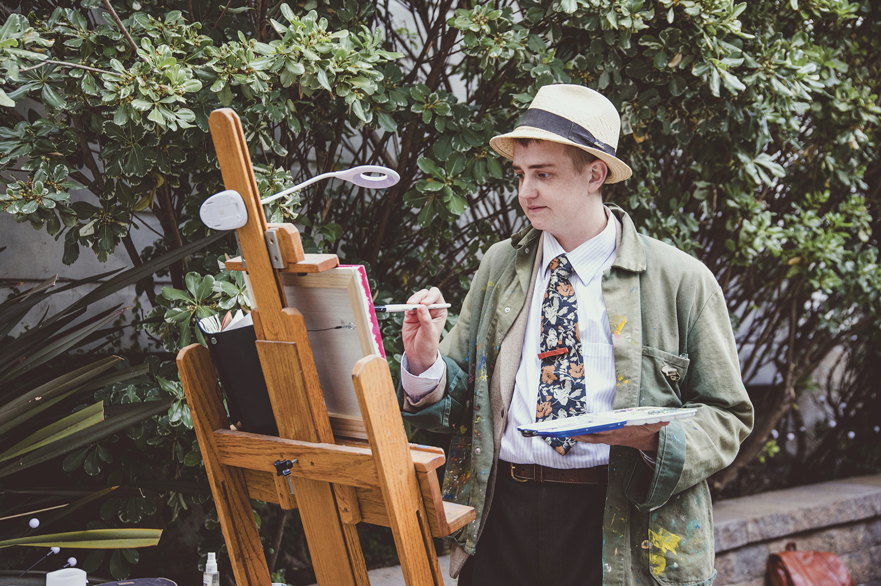
Nathaniel J. Bice
Having begun his career in theater, Bice came to San Francisco as a fellow at the American Conservatory Theater, and still assists production designer Nina Ball with set designs around the Bay Area. He shifted his focus to fine art in 2020, and his work has been shown in galleries and shops around the Bay Area, including STUDIO Gallery, änalog Gallery, Queer Arts Featured, Fleet Wood, The Drawing Room, Sanchez Art Center, and Gearbox Gallery. He also channels his scenic paint experience into murals for local businesses, including Tala Wine, Sour Cherry Comics, Mersea, and House of Tadu.
Well known for painting en plein air (outdoors, from direct observation) small scale works around San Francisco, Bice is diving into large studio paintings for his new series.
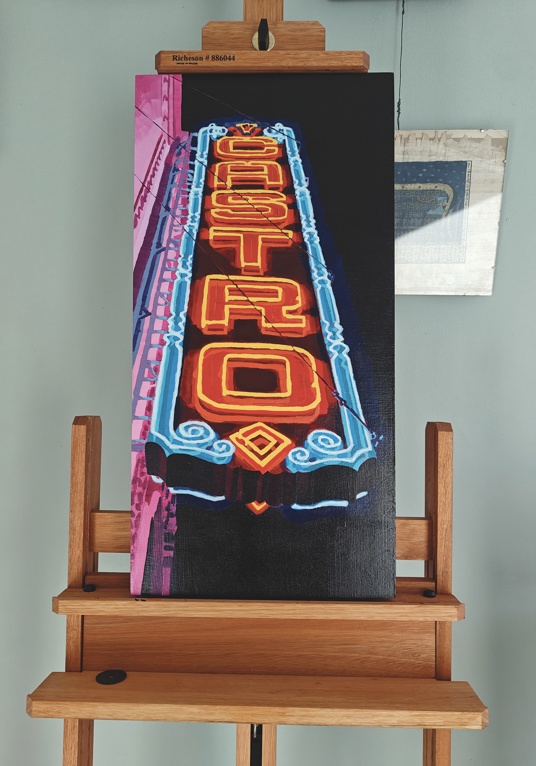
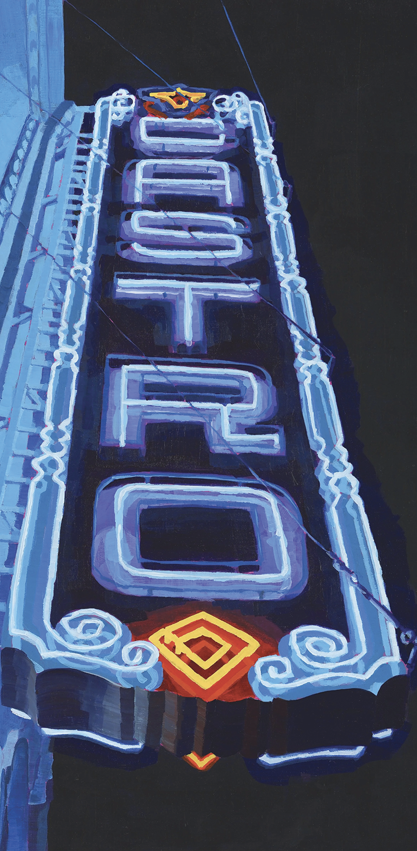
BEACONS Honors the Signage of Queer Spaces
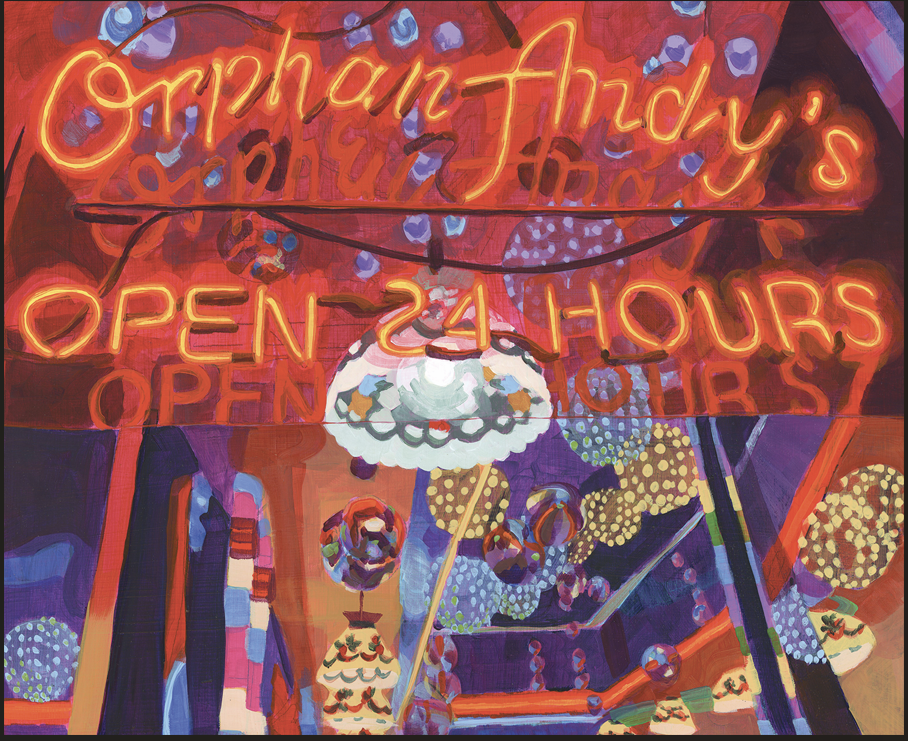
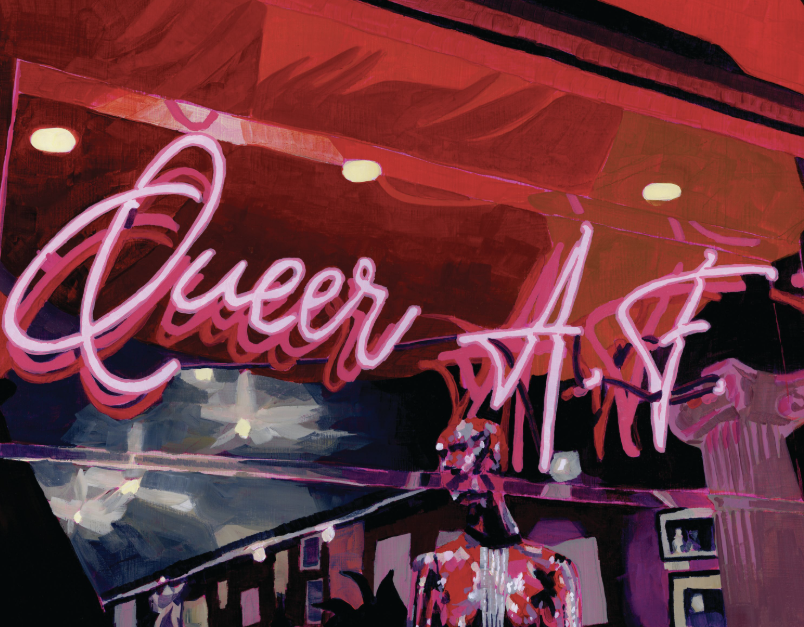
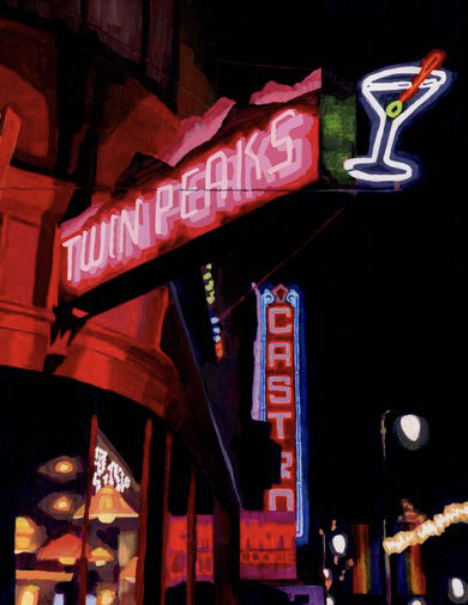
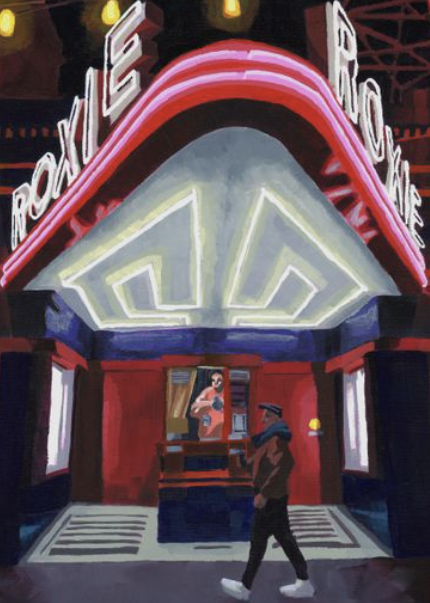
Inspired by the same love of the city that is evident in his smaller works, Bice’s exciting new direction for BEACONShonors the places that light up the streets and offer warmth, culture, and community. The works feature the signage, especially neon, of iconic queer spaces such as The Castro Theatre, Oasis, Orphan Andy’s, Martuni’s, Twin Peaks Tavern, Hot Cookie, and more.
His subject matter is an opportunity for Bice to explore high contrast, strong saturation, and extreme perspectives. The handmade nature of neon signs makes them, not just examples of typography and design, but also of craftsmanship. The rich glow of neon gas suffuses its surroundings, creating a unique lightscape and evoking the memories of the spaces they illuminate.
Just in time for the reopening of The Castro Theater, BEACONSalso grapples with mixed feelings around the restoration/renovation of the theater and Another Planet Entertainment’s management and neighborhood engagement. It is magical to see the sign glowing brightly and the interior details restored, but the loss of some historic features and the ongoing concern about the potential displacement of two local businesses cast some shadow on the celebration. The opening of the new exhibit will honor the legacy of both Castro Coffee and Castro Nail Salon.
Recently, I spoke with Bice for the San Francisco Bay Times about BEACON.
Devlin Shand: How did you get started as a painter?
Nathaniel J. Bice: I started off in theater, specifically in the scenic paint, prop, and design world, so I was doing a lot of urban sketching. I saw that as research for scenic design, and then I started taking that work seriously for its own sake and went to painting rather than sketching, the key difference being I started painting opaque instead of doing drawings and then coloring them with watercolors.
Devlin Shand: That makes sense. It is very in line with what this show is, because what I know of your work is that it is very much streetscape-based. Seeing this collection of work that is centered around neon, which is so theatrical, feels like an homage to your theater background. What inspired you to go for this particular subject matter and to go bigger? These are the biggest pieces we’ve ever seen from you.
Nathaniel J. Bice: From the painting perspective, it’s definitely in line with an exploration of light. I’ve been mostly painting daytime scenes, in person, en plein air, in the city, and exploring sunlight, but then this completely different nocturnal world became very interesting to me. I’m also interested in design and lettering, and I think neon is so beautiful.
Devlin Shand: What do you love about neon?
Nathaniel J. Bice: Neon signs are really unique because they are handcrafted. The tubes have to be bent by hand by extremely skilled craftspeople. It’s a long and difficult skill to learn, so every neon sign you see in the city is a handmade, beautiful work of craftsmanship. And, for the older ones, people would also spend a lot of time hand-designing the letters because nobody was able to just use existing typefaces. They would make them for that specific sign all the way from the ground up.
Devlin Shand: Why do you think that this old technology, neon, still captivates those of us in this tech-obsessed period?
Nathaniel J. Bice: Physically speaking, the glow of neon is a beautiful and unique thing. It’s the ignoble gases trapped in a tube and then you run the electricity through them and they just glow. And the gas never gets used up. It uses significantly less electricity than an incandescent light bulb, and it’s so, so bright. If you have a clear line of sight, you can see a neon sign from miles away. The colors that you can get are both more saturated and brighter than anything else. And it’s just stunning. It cannot possibly ever compare to LEDs. I think we react viscerally to the quality of light in our environment. We’re still staring at LED screens all day, so, even at night, a different quality of light is captivating to us. No matter how much time we all exist in the digital world and spend on the computer, we still have physical bodies and exist in space and should think about that more.
Devlin Shand: You’ve done so many beautiful pieces of the Castro Theatre before, and now also for this show.
Nathaniel J. Bice: A big part of that is the renovation and the reopening of the theater, and its deep history with San Francisco and with the gay and queer community in the city. Many of us know that the movie theater opened in 1922, but it was in the 1970s that the gay hub of San Francisco moved from Polk Street to the Castro because of the Market Street Railway. People could take the F line all the way to the end and that’s where they’d end up. And then there is this beautiful movie palace at the end, and they just started coming here, seeing movies, going to bars, making their own place and community in this existing neighborhood. The Twin Peaks Tavern in 1972 opened up their windows and made it so that people could see who is sitting inside, and people weren’t ashamed to be seen inside a gay bar. Gay bars started getting these beautiful neon signs, advertising where they are instead of being in unmarked storefronts with long, dark
hallways.
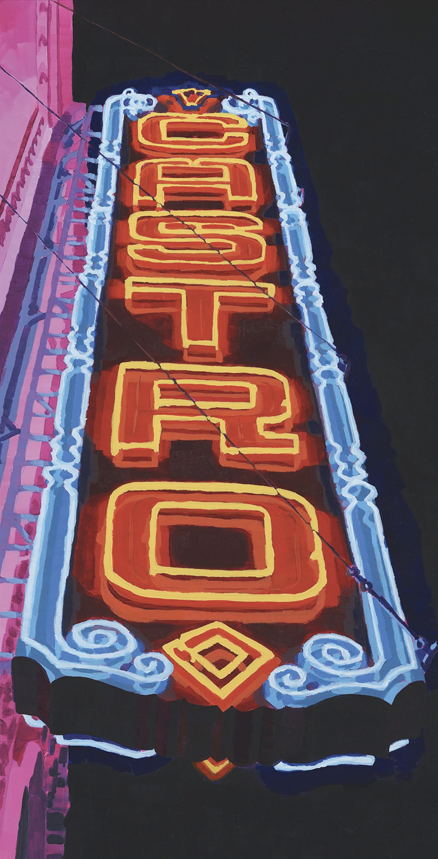
Devlin Shand: Your painting of The Castro Theatre blade is made on a piece of the old film projection screen from the theater, and it’s hung with some of the original old-growth pine floorboards from 1922 from the house of the theater. What’s your reflection on using those materials, and what it means to try and honor history amidst big changes?
Nathaniel J. Bice: I think getting to use these materials is a perfect metaphor for honoring, learning about, and respecting the queer history of the physical place, while finding ways to integrate that into our current lives and bring it forward to continue creating new queer history. It can be easy to get buried in nostalgia and forget that we have queer people who are living now, who are making amazing work—new shows and drag and artwork—in the city. And to use the screen is particularly exciting to me because I just think about the thousands and thousands of people in my community who sat in the theater and stared at this actual surface with different things being projected onto it, like everybody’s favorite campy gay culture films. Everyone was looking right at it, and now I’m putting the image of the Castro blade sign on there for people to keep looking at.
Devlin Shand: Tell me about some of your other favorite neon signs in the Bay Area.
Nathaniel J. Bice: Obviously, the Castro Theatre is at the top [of my list]. I also love the Aunt Charlie’s neon that’s inside the bar. The whole bar is lit up by it. It says Aunt Charlie’s in this beautiful, cursive script, and the neon actually runs all the way around the room so you get a ring light effect in pink neon. I adore the Twin Peaks sign, and I love the Martuni’s one: acid green with the red music note in the martini glass.
Devlin Shand: What inspired you to paint images of the signs instead of photographing them?
Nathaniel J. Bice: Photography is an art form and a skill that I admire, but I also believe that the human eyeball can do things that no camera can. And so for me to observe something and then do my best to record those observations by hand in a very difficult way is just going to do something more than photography can do. The color and brightness of a neon sign cannot be captured by photography or by paint, but I can have such fine control over saturation and value in paintings of neon signs that I can do more with my skill set to capture that as best I can.
BEACONS
February 6–March 29, 2026
Queer Arts Featured
575 Castro Street
https://www.queerartsfeatured.com/
Devlin Shand is the Co-Founder and Owner of Queer Arts Featured. He is a multidisciplinary artist and community builder who believes in creating vibrant barrier-free spaces for Queer Creatives struggling to survive in the Bay Area. https://www.devlinshand.com/
Arts & Entertainment
Published on January 29, 2026







Recent Comments