








By Joanie Juster—
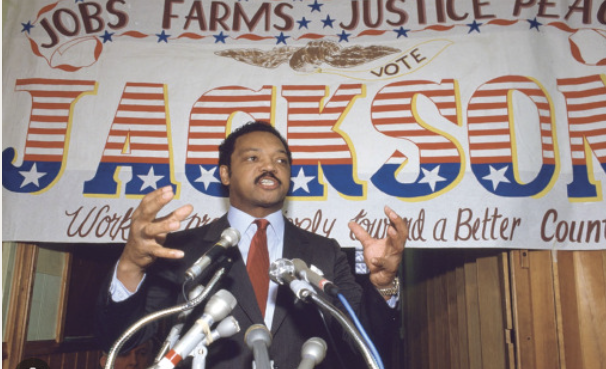
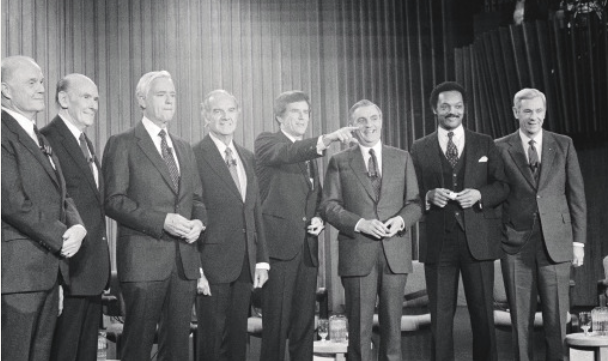
In 1984, Reverend Jesse Jackson galvanized the Democratic Convention in San Francisco with his speech calling for a “Rainbow Coalition” to work toward unity and social justice for everyone, building bridges between people across the board. These are values evident throughout San Francisco to this day.
“Our flag is red, white, and blue, but our nation is a rainbow—red, yellow, brown, black and white—and we’re all precious in God’s sight. America is not like a blanket—one piece of unbroken cloth, the same color, the same texture. The same size. America is more like a quilt: many patches, many pieces, many colors, many sizes, all woven and held together by a common thread.”
Reverend Jesse Jackson’s impact on every corner of American life has been seen in the many tributes people have shared, of working with him on a broad spectrum of social justice causes. For decades, the man was simply everywhere: always fighting for justice for the poor, the marginalized, the isenfranchised. While his work for civil rights and racial justice is well-known, he was also an early and important champion for the LGBTQ+ community, speaking at the National March on Washington for Lesbian and Gay Rights in 1987, and championing equal legal protection for LGBTQ+ people.
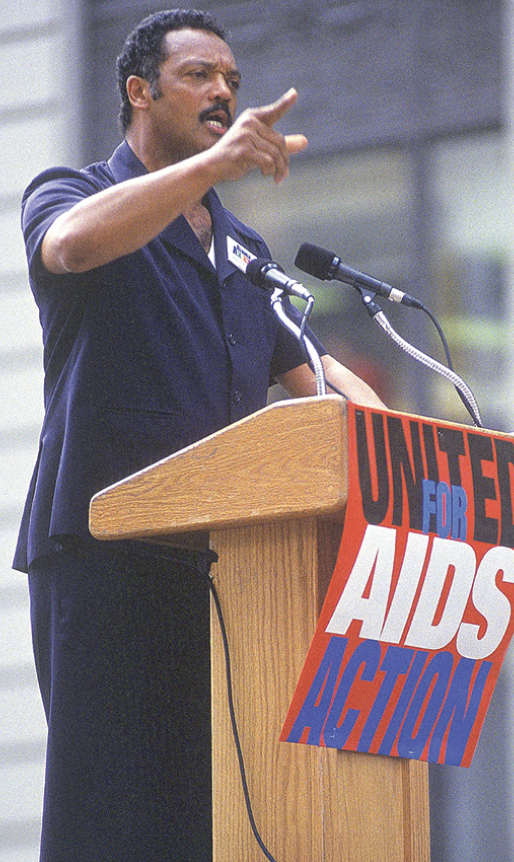
He also stood up for those with HIV/AIDS, long before it was considered “safe” or acceptable to do so. In 1993, he was arrested with members of ACT UP, protesting the U.S. government’s detention of Haitian refugees at the Guantánamo Bay Naval Base, who had tested positive for HIV. He continued to work with AIDS activists, advocating for distribution of generic HIV medications in South Africa and other developing countries. He visited the AIDS Memorial Quilt, and, at a time when President Reagan still couldn’t bring himself to mention AIDS, Reverend Jackson visited Coming Home Hospice in San Francisco, and visited with every patient there.
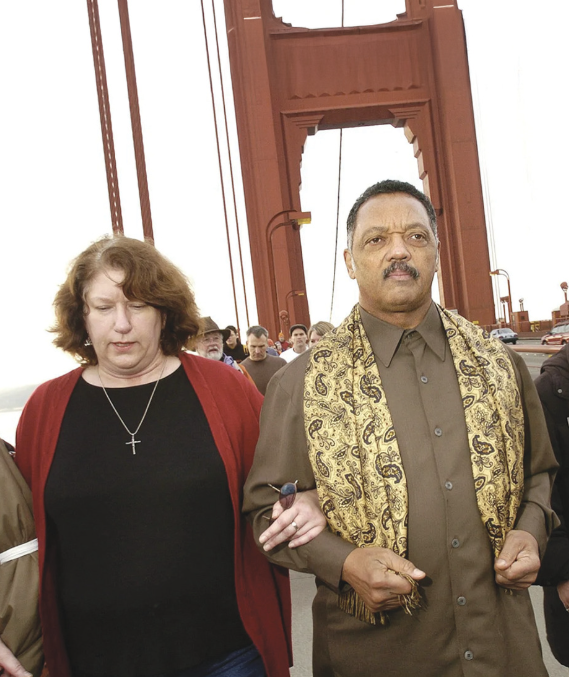
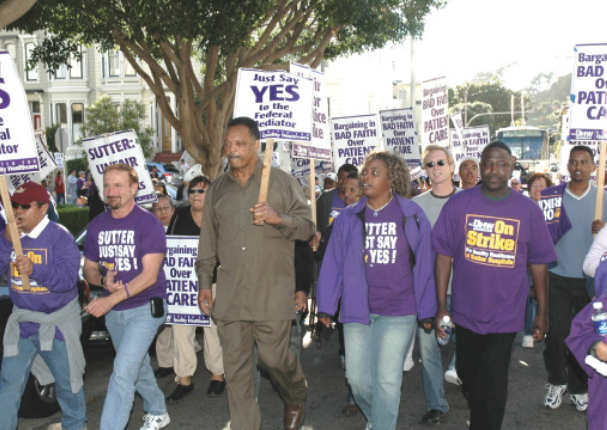
Our paths crossed in 2005, on the Golden Gate Bridge. From 1992 to 2006, when the state of California reinstated the death penalty, my husband Mark joined a group of anti-death penalty activists who marched 25 miles from San Francisco to San Quentin each time an execution was scheduled. I was able to join Mark on a few of these marches. It was challenging work, but our presence on the day-long marches brought attention to the issue, and helped change hearts and minds.
In December 2005, we faced a particularly challenging march. Tookie Williams, a notorious gang leader who had completely changed his life in prison, was due to be executed that night. It was a high-profile case that attracted national and international press. As we crossed the Golden Gate Bridge that winter morning, Mark and I were at the head of the procession. I felt someone take my arm as we marched, and realized it was Reverend Jesse Jackson.
Jackson felt the need to stand up for Williams that day, as he stood up for countless other people who faced injustice. He understood that his very presence that day would shine a light on the issues, and create conversations that might eventually lead to change. He understood the need to bring all voices to the table, and that all people must be lifted up together.
I am forever grateful that I had the opportunity to march with this great man. May his legacy be carried forward in the work that we do.
(For additional tributes related to Reverend Jackson’s LGBTQ+ community advocacy, see the February 17 post from Eric Sawyer at: https://bit.ly/3ZOxGFh and Pam David’s piece at: https://www.facebook.com/phd52
Joanie Juster is a long-time community volunteer, activist, and ally.
In Memorial
Published on February 26, 2026












Recent Comments