




By Dina Novarr—
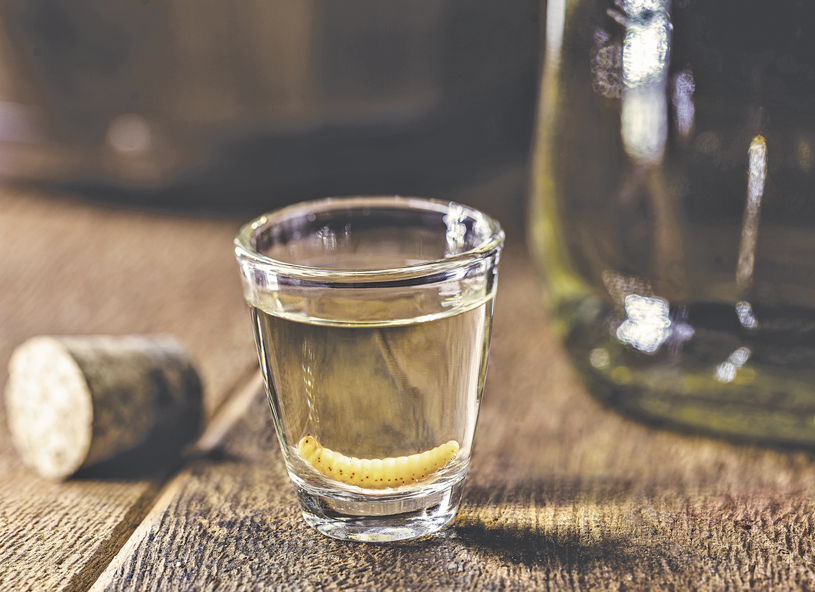
Every year, around the first week of May, American bars drape themselves in green, white, and red, pour margaritas by the gallon, and toast to Mexico. Somewhere behind the bar, there’s probably a bottle of mezcal with a pale, curled creature at the bottom: the gusano, the worm, the myth. It is the thing people dare each other to eat. It is supposed to feel authentically Mexican. Much like Cinco de Mayo itself, the true story is more complex.
Let’s start with the worm, which is not a worm. Researchers at the Florida Museum of Natural History confirmed this recently using DNA testing on specimens pulled from actual mezcal bottles. What’s floating in there is a caterpillar, specifically the larva of Comadia redtenbacheri, the agave redworm moth, which can be a pest that tunnels into agave plants, hollows them out, and kills them. The bottle tradition isn’t some ancient Oaxacan ritual. It was invented in the 1940s by a producer named Jacobo Lozano Páez as a brand differentiator, centuries after mezcal production began. The target audience was always American consumers, who received the novelty as authenticity and ran with it hard.
This brings us to one of the better ironies in the spirits world. The caterpillar masquerading as a gusano does have a real life in Oaxacan cuisine. Chinicuiles (the larvae of the redworm moth) have been eaten in Mexico for centuries, toasted, salted, ground with chile into sal de gusano, and served alongside orange slices at a proper mezcal flight. Mexicans are not worm-averse. They just think putting one in a bottle is embarrassing and signals an inferior product. The flavor argument never held up anyway. A single larva soaking in 750 ml of high-proof spirit contributes exactly nothing.
So, here is the joke: Somehow, the narrative became that Mexicans exported their worm culture to America. The actual sequence of events was a cynical American-facing marketing stunt that Americans then enthusiastically mistook for ancient tradition. The appropriation runs in reverse. A midcentury fiction got laundered into folklore, and the culture it claimed to represent has spent decades quietly mortified by the association. The gusano bottle is not a cultural artifact. It is a case study in how efficiently American consumption can invent a mythology, staple it to someone else’s identity, and act like it was there all along.
The consequences are no longer just aesthetic. A 2025 study found that larva extraction can reduce agave populations by up to 57 percent, with juvenile plants hit hardest because harvesters sacrifice them before they reach sexual maturity. Collecting the larvae usually means destroying the host plant. Scale that against international demand and you have a marketing gimmick that is actively threatening the ecosystem mezcal depends on to survive. Producers with any serious narrative would actually pour 400 Conejos, Los Siete Misterios, and Derrumbes, and would never go near a worm bottle. The stuff with worms lives on the bottom shelf and the spring break shot menu, which is exactly where it belongs.
The reason I have mezcal and worms on my mind is because there is a holiday in May where people crawl into bars and soak their livers in agave spirits: tequila and mezcal. It is Cinco de Mayo, or The Battle of Puebla, which happened on May 5, 1862, when Mexican forces defeated a French army that had expected an easy win. This battle was regionally significant, but is not Mexican Independence Day, which is September 16; yet, in the United States, Cinco de Mayo is observed everywhere, loudly, by people who probably cannot locate Puebla on a map, yet September 16th goes quietly.
The worm and the holiday are the same story. American consumption found something with genuine Mexican roots, flattened it into a symbol, and sold it back at a markup. The gusano had a real life in Oaxacan kitchens before it became a dare at a dive bar. Cinco de Mayo has real political weight beyond just a reason to order another round. In both cases, the copy got more famous than the original, and the original got buried under whatever version was easier to monetize.
If you want to honor the culture, skip the myths and go straight to the source. There’s better mezcal, better history, and better reasons to raise a glass. Choose the real story; it’s the one worth telling.
Common Ground
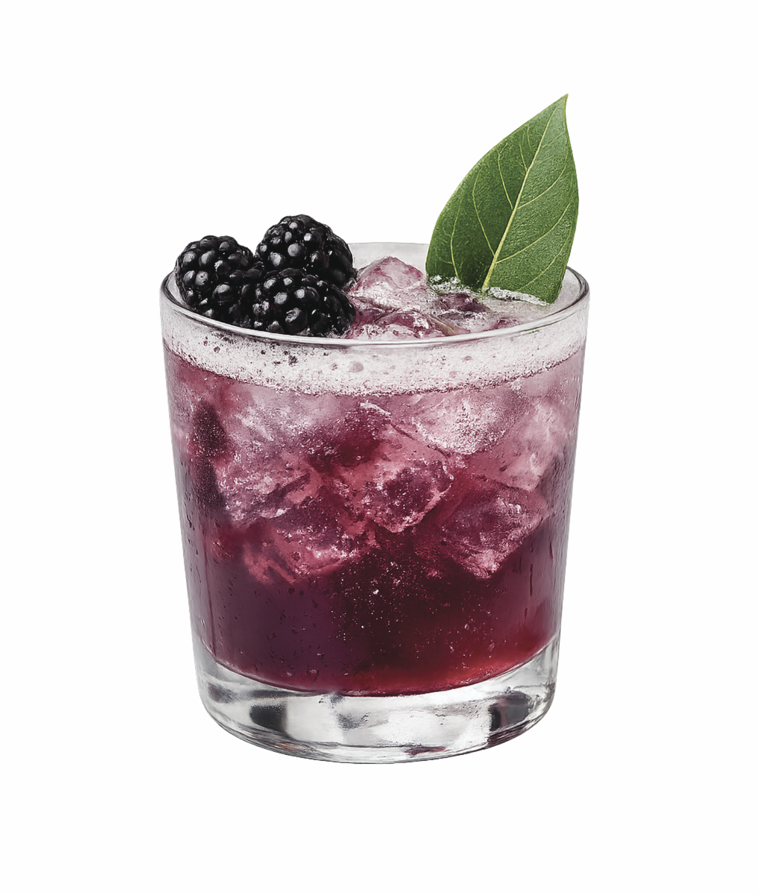
A drink that really blends two cultures in one glass
4 fresh blackberries (plus more for garnish)
¾ oz fresh lime juice
¾ oz simple syrup
1 oz Concord grape juice (from a grape developed and grown in the American Northeast since the 1840s)
2 oz 400 Conejos Mezcal Joven
ginger beer (to top)
ice
bay leaf (for garnish)
1) In a shaker, muddle the blackberries with the lime juice and simple syrup.
2) Add the Concord grape juice and mezcal.
3) Fill with ice and shake until well chilled.
4) Strain into an ice-filled glass (double strain if you want it cleaner).
5) Top with ginger beer.
6) Garnish with fresh blackberries and a bay leaf.
San Francisco-based Dina Novarr enjoys sharing her passion for fine wines, spirits, non-alcoholic craft beverages, and more with others.
Cocktails with Dina
Published on May 7, 2026









Recent Comments