









By Gary M. Kramer—
The Frameline Film Festival turns 50 this year, and the program is chock-full of new and classic feature films, documentaries, and shorts.
The festival will begin on June 17 at the reopened Castro Theater with an amuse bouche: Frameline From the Beginning, a series of trailers and shorts from the history of festival, before the feature Lady Champagne, a madcap murder mystery, with an afterparty at The Foundry. Ten days later, on June 27, the festival will close with trans and non-binary filmmaker Jane Schoenbrun’s Teenage Sex and Death at Camp Miasma, about a queer filmmaker and a horror actress. The film just won the Queer Palm at this year’s Cannes Film Festival.
In addition to sneak peeks of forthcoming releases including Girls Like Girlsand Julian, the fest will include revival screenings of classic queer films includingthe Wachowskis’ 1996 thriller Bound,Lino Brocka’s 1988 erotic drama Macho Dancer,Derek Jarman’s 1986 biopic Caravaggio, Jenny Livingston’s 1990 documentary Paris Is Burning,and Radley Metzger’s 1973 bisexual porn film Score, which will be screened in its rarely seen uncut version.
Here, in chronological order, is a rundown of two dozen features that will be screening as part of this year’s program.
Out gay writer/director Adrian Chiarella’s astonishing feature debut Leviticus (June 17, 9 pm, Roxie) has queer teens haunted by their desires. Naim (Joe Bird) and his mother (Mia Wasikowska) have moved to a small town in Australia where he falls for Ryan (Stacy Clausen), his classmate. The boys love each other in secret—though Naim questions why Ryan treats him differently when they are alone. Their relationship changes when Naim spies Ryan kissing Hunter (Jeremy Blewitt). Jealous Naim informs Hunter’s father, the local preacher, who brings in a Deliverance Healer (Nicholas Hope) to “cure” them of their affliction. What happens, however, causes Hunter and Ryan, and later Naim, to be haunted by the object of their desire, who comes for them when they are alone. And it can’t be undone. Leviticus is an obvious allegory for conversion therapy, but it smartly depicts how queer teens navigate safe spaces.
The affectionate documentary Time Warp (June 18, 3 pm, Castro) is set in the conservative town of Rock Springs, Wyoming, where out gay theatre director Kenny Starling is mounting a local shadow cast production of The Rocky Horror Picture Show. The actors, who are either members of the local LGBTQIA+ community or queer allies, all acknowledge how hard it is to be who you are if you are queer in Rock Springs. In fact, some conservative locals object to the production, leading to a debate at city hall. Director Allison Berg spends real time with Starling and his performers to show how the production creates a safe space and empowers them. The staging is fun and the Rocky Horror message, “Don’t Dream It, Be It,” rings true. This is an inspiring film about living one’s truth in a region of the country where it is dangerous to do so.
Iván & Hadoum (June 18, 5:45 pm, New Parkway) is a sweet romantic drama about the title characters, Iván (Silver), a transman, and Hadoum (Herminia Loh Moreno), a Moor, in Spain. They work at the same vegetable packing plant, where Iván aspires to become a manager—to afford a new apartment for him and his cramped family—while the carefree Hadoum is a packer who moves from job to job. After they kiss on the beach one night, each insists they don’t want to fall in love, but they grow closer despite concerns from each of their families. Things come to a head when the plant they work for is being put up for sale and Iván is asked to keep Hadoum and her fellow packers from sabotaging an audit. Iván & Hadoum is a gentle drama that addresses negative attitudes towards transpeople but also gives Iván his dignity. The film benefits from Silver’s assured performance and his chemistry with Moreno is appealing. Viewers will want them to couple up against the odds.
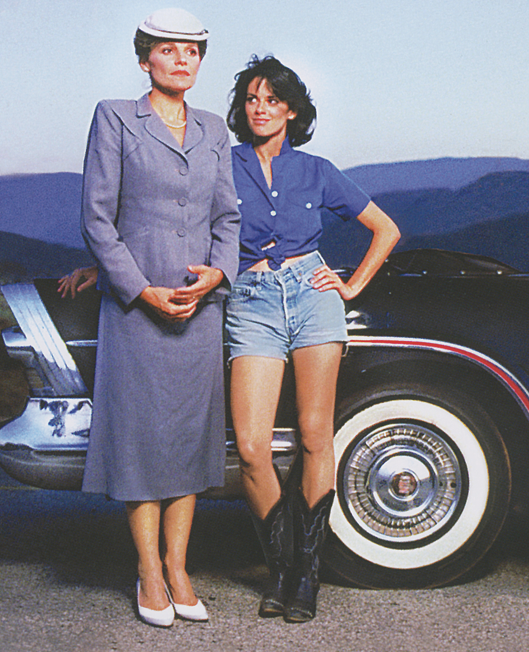
Desert Hearts (June 18, 8:45 pm, Castro)is director Donna Deitch’s landmark lesbian romance, set in 1959 Reno, which respectfully depicts the love that develops between Vivian (Helen Shaver), an English professor waiting out a divorce, and Cay (Patricia Charbonneau), who works at a casino and lives on the ranch where Vivian is staying. Vivian is prim and proper and wants to “be free of who I’ve been,” while Cay is reckless; the sexy young woman is seen driving backward when she first meets Vivian. Their slow-burn attraction heats up when the women kiss in the rain, but their relationship soon has local tongues wagging. The film’s sensual love scene is why the film still melts hearts decades later. Desert Hearts is beautifully made and acted and worth seeing or rewatching.
The Dads (June 19, 4 pm, Castro) is a wonderful documentary about fathers of trans and gender expansive kids. Tracking a handful of families over several years, director Luchina Fisher focuses on the increased difficulty of raising trans kids during the second Trump administration where gender-affirming care is often being denied. There are also citizenship issues for some families who leave America—while other families consider it. Nevertheless, all of the men profiled in this film benefit from the “Dads” support group. This includes attending retreats where they can talk candidly about masculinity as well as their fears and hopes about raising trans children, to attending a gender liberation march. It is gratifying to see these parents care so much about their kids’ safety and do what they can to protect and support them.

Adam’s Apple (June 19, 5:30 pm, Roxie)is a tender profile of Adam Sieswerda, a trans teen growing up in New Hampshire. Filmed by his mother, Amy, this personal documentary chronicles Adam’s life through birthdays and other milestones—from learning to drive and starting T, to getting a mastectomy and dating, as well as going off to college and getting a tattoo. Jenkins captures her son’s emotional arcs, from “wanting to do everything I can to just be one of the boys” to his debates with his parents over his deadname. The film shows how he comes to accept himself as he matures. Jenkins also includes her own reactions to her son’s growth from love and pride to fear and her own anxiety. A beautifully realized dual portrait, Adam’s Apple will resonate with both trans teens and their parents alike.
Out gay writer/director (and enfant terrible) Gregg Araki is represented at the festival with I Want Your Sex (June 19, 6:15 pm, Castro), which is a cheeky heterosexual sex comedy thriller that pokes fun at contemporary art, the #MeToo movement, and Gen Z snowflakes. The film is full of Araki’s patented eye-popping colors, arch one liners, and pop culture references. (One character wears a Spahn Ranch T-shirt, ironically, ‘natch). After Elliot (Cooper Hoffman) gets a job as an assistant to the provocative artist Erika Tracy (Olivia Wilde)—and becomes sexually involved with her—he has to recount the events leading up to a death to two cops (Margaret Cho and Johnny Knoxville). Araki coaxes a delicious performance out of Wilde, dressing her up in fabulous, naughty costumes, and giving her witty bon mots about art and woke culture. Hoffman, in contrast, plays up Elliot’s eagerness to please. The film is an entertaining Araki, but far from his best.
Maspalomas (June 19, 8 pm, Roxie) is a crowd-pleasing Spanish drama about Vincente (José Ramón Soroiz), a single gay septuagenarian who enjoys casual sex and nude beaches on the Canary Islands—until a stroke lands him in an assisted living facility. While he is assigned a handsome gay caregiver, Iñaki (Kepa Errasti), and even flirts secretly with him over an app, Vincente’s new situation, along with his gregarious roommate Xanti (Kandido Uranga), prompts him to hide his homosexuality. Vincente also reconnects with his daughter, Nerea (Nagore Aranburu), whom he has been estranged from since he came out. Maspalomas deftlyshows how Vincente learns to appreciate those around him and his sexuality, and Soroiz delivers a melancholic performance that expresses his late-in-life personal growth.
The fantastic documentary Jaripeo (June 20, 3:30 pm, Castro) immerses viewers in the hidden world of queer rancheros in Michoacán. Efraín Mojica, who codirected with Rebecca Zweig, explores the expectations around masculinity and sexuality in this rodeo culture. There are discussions of the secret glances, flirting, and discrete behavior—usually after drinking—that these men engage in, but they often fail to form lasting relationships. Jaripeo features interviews with Noé, who only wants to be with other masculine men, as well as a guy who is more effeminate and feels he has the support of the community. This documentary is a fascinating glimpse into a little-seen subculture.
At the Place of Ghosts (June 20, 8 pm, Roxie)opens with Mise’l (Blake Miranda), a two-spirit, having an encounter with a ghost that both scars him and scares him. He tells his boyfriend, Barry (Alexander Nunez), that he needs to go home to his Mi’kmaw community to “deal with stuff.” That “stuff” is an unresolved past trauma that haunts both Mise’l and his brother, Antle (Forrest Goodluck). As the siblings venture into the forest looking for a cave, they see versions of their younger selves, run into wild animals, experience sickness, and meet various strangers and healers. Written and directed by two-spirit Bretten Hannam (Wildhood), At the Place of Ghosts is an interesting (ghost) story about resilience and endurance that offers an allegory for Indigenous people. Beautifully lensed, the episodic film is a bit uneven; some vignettes, like a run-in with colonial British soldiers, are more compelling than others, as when the guys happen upon a group of religious men. Nevertheless, there is value in the depiction of a history and culture that is too rarely seen on screen.
Downtown (June 21, 1:15 pm, Castro) is an emotional Dutch drama that toggles back and forth between 1986 and 2021—the AIDS era, and the age of COVID. In the 1980s, Lennart (Sebastián Mkvicka) befriends Ronnie (Daniel Cornelissen), who becomes jealous when Lennart starts dating Bas (Thor Braun). 35 years later. Ronnie (Yorick an Wageningen) invites Lennart (Hans Kestling) to dinner, but does not tell him Bas (Roeland Fernhout) will also be there. Downtown presents meaningful episodes from moments of homophobia to how the AIDS crisis impacted the lives of each character, chronicling the shame and fear gay men felt to the need for activism and visibility to create change. Well-acted and beautifully lensed, Michiel van Erps’ film doesn’t break new ground, but it provides an interesting snapshot of how these men coped during difficult times.
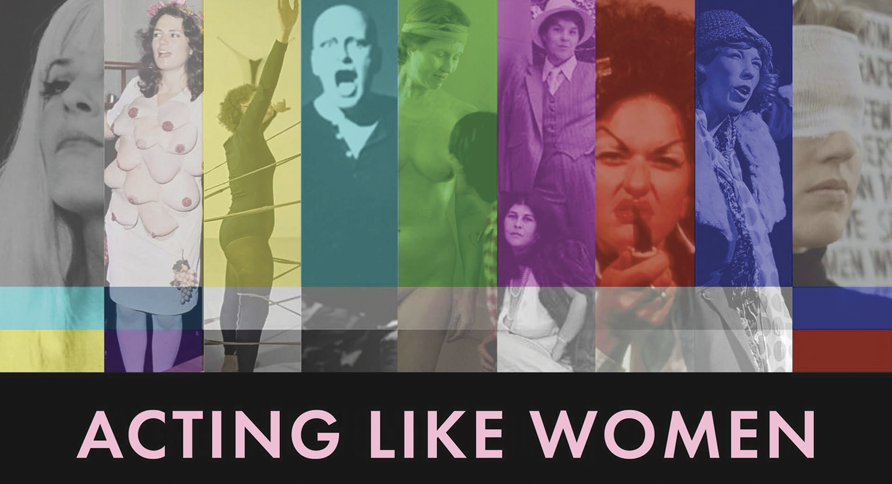
Acting Like Women (June 21, 3:30 pm, BAMPFA) is a worthwhile documentary by out lesbian performance artist Cheri Gaulke. She recounts how the Woman’s Building, a feminist artists’ space in Los Angeles that opened in 1973, was her “second mother; a place where I was reborn as a woman and an artist.” Gaulke interviews dozens of feminist artists she knew and worked with over the past few decades at the Woman’s Building and elsewhere. They discuss how they developed (or raised) a feminist consciousness, and railed against the patriarchy, processing their collective experiences of shame through art and “actions.” The personal became the political as they created positive, provocative images and reclaimed their bodies through nude performances. In the 1980s and 1990s, a climate of fear took over, closing the space, and Gaulke was targeted by Senator Jesse Helms. Nevertheless, she persisted. Acting Like Women features marvelous interviews and artwork, and one of the best clips addresses how Black women responded to their lack of inclusion. This documentary will likely prompt viewers to dig deeper into these artists’ works.
Public Access (June 21, 3:30 pm, Castro)is an entertaining documentary about the Manhattan Cable Television’s “experiment” that gave people the freedom for self-expression. Back in the early 1970s, anyone with an idea for a TV show could create their own programming—and they did. Director David Shadrack Smith traces the evolution of the medium of public access TV (and the power it had) with commentary by staff members and content creators. While providing a platform for alternative culture was a strength of public access TV, tensions around transgressive programming ignited first amendment debates and lawsuits. Anton Perich pushed boundaries early on with one of his programs featuring a man being anally penetrated with a lightbulb. Another show, Midnight Blue, featured pornographic content that raised all kinds of censorship issues. Smith’s documentary provides a handful of fascinating case studies, with the most interesting being about the content targeted to the LGBTQ community. This included the first gay talk show, The Emerald City, and Lou Maletta’s Gay Cable Network in the 1980s, which showed salacious content, but also provided programming that featured AIDS education and information during the height of the epidemic. Public Access certainly predicts the phenomenon of YouTube, as this well-edited documentary offers a quaint, nostalgic trip back to interesting and not-so-innocent times.
Lucio Castro’s sophomore feature, Drunken Noodles (June 21, 6:30 pm, Castro) has Adnan (Laith Kalifeh), a grad student, arriving in New York to intern at a gallery for the summer. He orders take out. He goes out cruising for sex. And he meets Yariel (Joél Isaac), who delivers food and has sex with Adnan. But then, Drunken Noodles shifts back in time and shows how Adnan met Sal (Ezriel Kornel), the artist whose embroideries are being displayed at the New York gallery. A third section of the film goes back in time further to Adnan’s getaway with his boyfriend Iggie (Matthew Risch), which precedes Adnan’s encounter with Sal. Castro plays with time, but his film investigates the frictions and connections as Adnan has various intimate encounters. There are elements of magical realism, such as one episode involving a Faun (Guillermo García Arriaza), and quotidian scenes of Adnan just staring out the window watching cute guys walk by. This film may be slippery, but it delivers real food for thought.
Ephemera (June 22, 6 pm, Vogue Theatre) isa mostly playful two-hander set in Shanghai about Asher (Yvonne Shuyu Zhang), an actress, who asks her dance instructor Tori (Shu-Yi) out for coffee after class. The women talk and eat, and talk and wander, and eat some more, slowly getting to know each other. When Tori demonstrates her “spatiotemporal cube,” the screen shrinks to enclose her and Asher. There are other stylized moments, as when the young women play out scenes inspired by other movies, or they encounter another couple speaking gibberish. However, true to its title, the relationship in Ephemera may not be lasting. The leads are attractive and watching them connect over the course of a single day provides a passable time filler.
Director Mike Doyle’s modest, feel-better comedy-drama Bookends(June 22, 8:30 pm, and June 26, 12:30 pm, Vogue Theatre) has budding novelist Nate (writer Noam Ash), moving in with his grandparents, Miriam (Caroline Aaron) and Saul (F. Murray Abraham), after he catches his boyfriend cheating on him. Anxious about his career, his heartbreak, and his future, Nate hopes to crash at Miriam and Saul’s retirement community until he “figures things out.” Nate’s despair lifts a bit when he starts seeing his grandparent’s hot, gay doctor, Daniel Green (out gay Charlie Barnett). As Nate takes care of other people, he realizes he can take care of himself. It’s a sweet message, told in a sitcomic film featuring a cast that plays the material a bit broadly. Nevertheless, Bookends offers charm and schmaltz in equal measure.
The Passion According to G.H.B.(June 22, 10 pm, Roxie) is Gustavo Vinagre and Vinícius Couto’s provocative drama-cum-documentary that unfolds almost entirely inside a São Paulo apartment where Matias (Couto) invites various guys over for chemsex. The camera acts as a fly on the wall as the men—which include Matias, Ricardo (Igor Mo), Free Wolf (Rodrigo Campos), and Lucas (Luciano Falcão)—cheekily pantomime taking copious amounts of drugs while also having explicit, unsimulated sex. Matias also candidly discusses his HIV status, and the guys read various passages from Clarise Lispector’s book, The Passion According to G.H., which inspired this film. (Matias also chats with G.H. (Christiane Tricerri) in one sequence.) Vinagre and Couto shrewdly end their film by interviewing Jessé Jorge, who recounts the harsh reality of his battles with addiction. It adds a somber and necessary counterpoint and puts all the hedonism in bold relief.
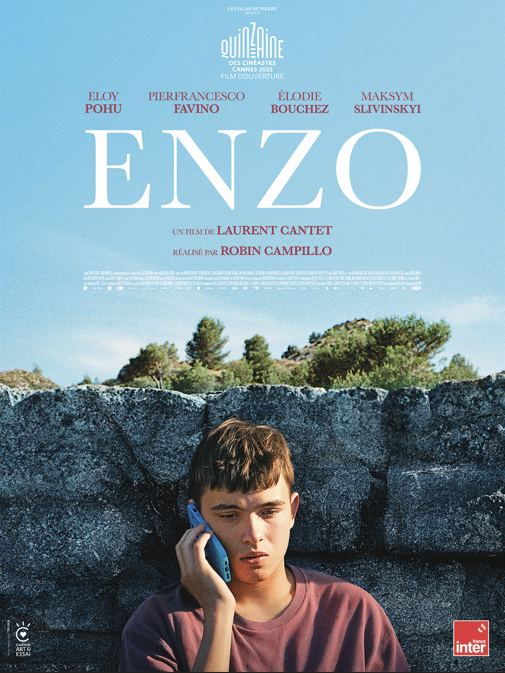
Enzo (June 23, 5:30 pm, Vogue Theatre) is out gay director Robin Campillo’s excellent drama about a well-off 16-year-old (Eloy Pohu), who angers his father Paolo (Pierfrancesco Favino) by taking an apprenticeship on a construction site rather than go back to school. Enzo is a sloppy worker, but he improves after he befriends Vlad (Maksym Slivinskyi), a handsome Ukrainian colleague. Enzo develops a serious crush on Vlad, and, as the sexual tension between them percolates, Enzo’s strong emotions prompt him to act out in ways that are concerning to his parents. The pleasure of Campillo’s engaging film is watching Enzo work through his feelings about his sexuality, his class difference, belonging, and his values to become his own self. This is a sensitive drama that has a restrained intensity; a fight/hug between Enzo and Vlad expresses their dynamic beautifully. In their screen debuts, Pohu and Slivinskyi both give striking performances. This film is a real gem.
Dreamboi (June 23, 7:15 pm, Roxie) has the trans Diwa (EJ Jallorina) along with her trans friends, experiencing hardships in Quezon City, where they are often misgendered and encounter transphobia and violence. (One character delivers a terrific rant about facing and fighting oppression.) Diwa’s only escape is “Dreamboi,” (Tony Labrusca), a handsome virtual fantasy man whose audio recordings of his sexcapades awaken a passion within her. Diwa imagines Dreamboi when she is forced to use a restroom in the basement of her office building, and their stolen glances take her on a journey from fear and humiliation to empowerment. Dreamboi features a nifty visual style that shifts from gritty to trippy along with an upbeat soundtrack, and Jallorina portrays all of Diwa’s pain and emancipation well. In support, Migs Almendras makes a nice impression as Diwa’s flirty coworker.
“Labrador – Autopsy of Silence”(June 23, 8:30 pm, New Parkway) is an absorbing mystery from Canada that unfolds slowly and deliberately. Alupa (Christopher Angatookalook) and Alex (Alexandre Landry) work together on a freighter where Alupa is an engineer and Alex is a cook. Their relationship is secret—but some of the ship’s crew members are aware that Alex is having forbidden sex with Michelle (Gabrielle Poulin B.), the cargo ship’s First Officer. When Alex is killed, Alupa is a primary suspect. He, along with Michelle and Shakir (Jassinth Thiagarajah), the assistant cook, are questioned by the police, but no one is saying anything. Alupa, in particular, believes that anything he does—or doesn’t—say will backfire on him, emphasizing the danger for a gay Inuk man to be accused of murder. Director Rodrigue Jean’s atmospheric film provides considerable ambiguities even though it reveals whodunnit. His conceit to have Alupa seeing Alex’s ghost adds depth to their relationship, but it is the impact of Alex’s death on Alupa that makes this mystery resonate.
Tiger (June 23, 8:45 pm, Vogue Theatre) is an involving Japanese film about Taiga (Takashi Kawaguchi), a gay man who works as a masseur in Tokyo. Visiting his older sister Minami (Maho Nonami), and their ailing father (Kenzo Shirahama) in his hometown, Taiga reconnects with his former lover Koji (Yûya Endô), who is now married to a woman and a father. Koji wants the “freedom” Taiga has as a gay man in Tokyo, and Taiga wants a child. When Taiga’s father tells him he can inherit the family home if he marries and has a family, the closeted Taiga investigates “friendship marriages.” Writer/director Anshul Chauhan based his film on real stories from the queer community, and this accounts for various supporting characters and detailed subplots. If the film feels overstuffed, the performances by Kawaguchi and Nonami are superb.
Mickey & Richard(June 23, 10 pm, Roxie) is an ingratiating documentary about Mickey Squires aka Richard Bernstein, a model and porn star who “had a look photographers liked.” Richard poignantly recounts his life and career as Mickey by acknowledging, “I couldn’t live up to the image I created.” Through interviews, film clips, and photographs, Directors Ryan A. White and A.P. Pickle show how Richard rarely felt like he belonged—in his family, at school, and even during the gaps in his career. He found fame as a model and porn star, but he also became overexposed. Richard had a relationship with Dan, the love of his life, but both men became HIV-positive. While Mickey was not shy on stage, Richard was often lonely. Mickey & Richard shows how its subject continually reinvented himself. Ultimately, this film exposes Richard’s most real and naked self—which is much more revealing than any of his nude photo or film clips.
Mineshaft: The Cruising Murders (June 24, 5:15 pm, Roxie)is Jeffrey Schwarz’s engrossing documentary that investigates the origin, controversy, impact, and legacy of director/screenwriter William Friedkin’s 1980 thriller Cruising, which is screening after the doc at 7:45 pm. Even before its release, Friedkin’s negative portrayal enraged the gay community; activists protested both the production and release of Cruising. In Mineshaft—named after a popular private club from that time—Schwarz shows how Paul Bateson’s murder of Addison Verrill inspired Friedkin to write a film about a cop (Al Pacino), who goes undercover in New York’s gay leather scene to ferret out a killer. Mineshaft features commentary by Verrill’s sister and his partner Bob Geary, as well as a friend of Bateson’s to humanize the victim and his killer. Schwarz also includes interviews with actors and gay men who appeared in Cruising, protestors, as well as filmmakers Charles Lum and Todd Verow, and columnists Dan Savage and Michael Musto, to provide context on the film, the gay community, and Cruising’s place in our culture—then and now. The result is an illuminating case study of a divisive film that sparks reevaluation.
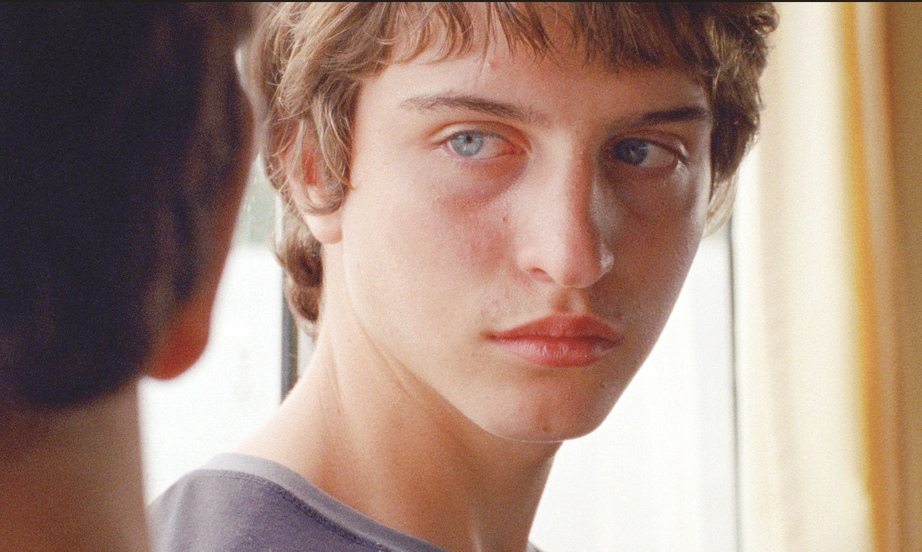
Director Jaume Claret Muxart’s Strange River (June 25, 5:30 pm, Vogue Theatre) is a hypnotic film about 16-year-old Dídac (Jan Monter) on a bike-and-camping vacation in Germany with his family. When he floats away in a river one day, he encounters a nude boy, “Alexander” (Francesco Wenz), who may or may not be real. Dídac is intrigued by the stranger whom he searches for—and sees—at various times throughout the trip. Dídac is growing away from his family, and his budding sexuality may be an impetus for his longing and feeling different. While both his parents, Monika (Nausicaa Bonnín) and Albert (Jordi Oriol Canals), are encouraging about Dídac’s kiss with Gerard, a boy back home in Barcelona, Dídac bemoans that he feels the frustration of not being desired. This also may be why he becomes obsessed with Alexander, who does not speak, but who looks at Dídac with wonder and affection in his eyes.
The scenes of the teens together are quietly intimate, and Strange River becomes more spellbinding (if also narratively ambiguous) as Dídac and Alexander, “cruise” each other before they connect, holding hands, kissing, and taking a boat trip, leaving Dídac’s family behind. Their loving interactions are wordless—which suggest they are Dídac’s imagination—but also powerful, which makes the film especially satisfying. Muxart coaxes an impressive performance from Jan Monter (his screen debut), which captures the restlessness of adolescence and the thrill of discovering first love. This film is magical.
© 2026 Gary M. Kramer
Gary M. Kramer is the author of “Independent Queer Cinema: Reviews and Interviews,” and the co-editor of “Directory of World Cinema: Argentina.” He teaches Short Attention Span Cinema at the Bryn Mawr Film Institute and is the moderator for Cinema Salon, a weekly film discussion group. Follow him on IG @garyemkramer
Film
Published on June 11, 2026











Recent Comments