




By Kippy Marks—
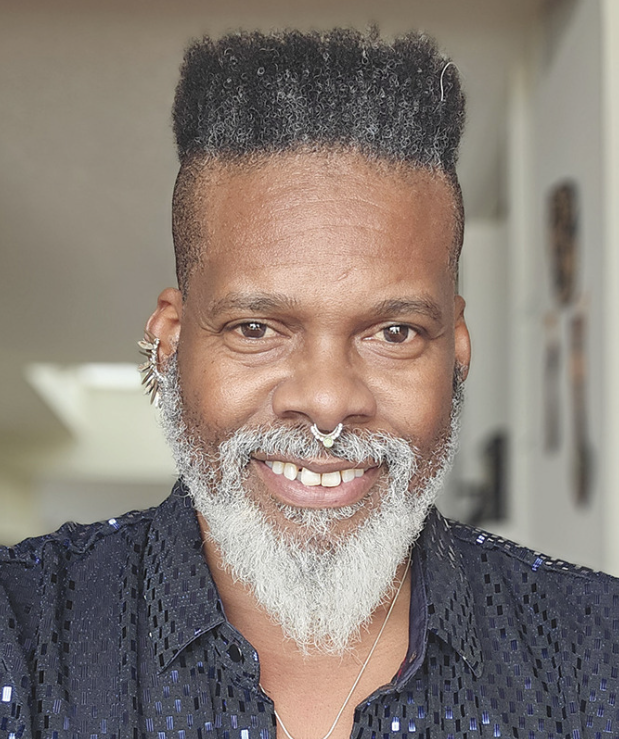
John Weber enters this month’s PMLE column, not just as the 17th individual to be spotlighted here, but as one of the beating hearts of San Francisco’s LGBTQ+ community. This year, he stands in a well deserved spotlight as a 2026 San Francisco Pride Community Grand Marshal, a role that reflects decades of service, leadership, and unwavering devotion to the people who make this city shine.
John’s community work is not loud, but it is powerful. He has been a bridgebuilder, a mentor, and a steady hand in moments when others faltered. His advocacy spans generations—supporting queer youth, uplifting elders, strengthening organizations, and reminding us that community is not an event, but a practice. He has served on boards, guided initiatives, and shown up for countless individuals in ways that never make the headlines but always make the difference.
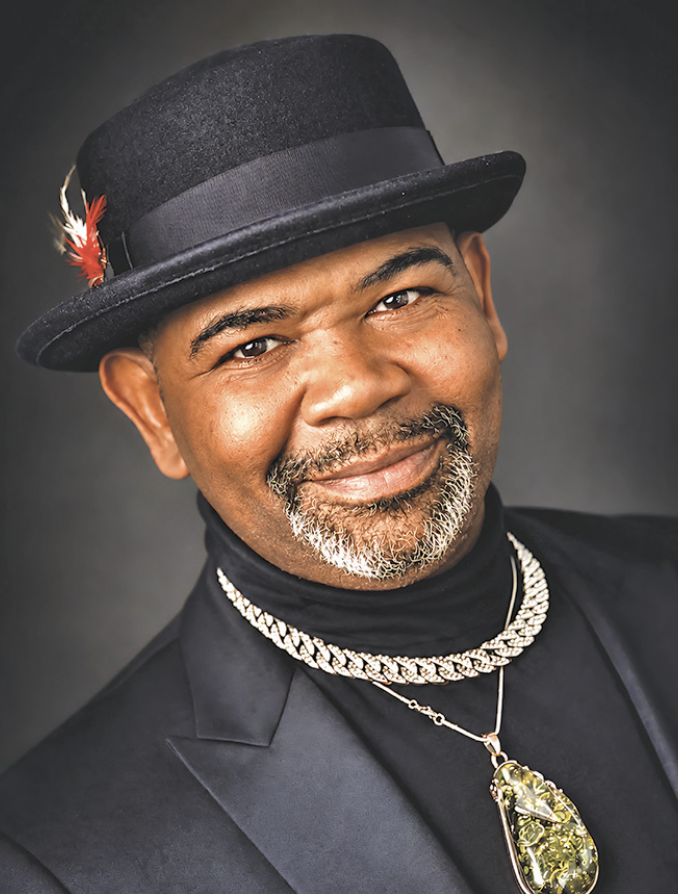
For me, this recognition is deeply personal. John has been one of my mentors—one of the people who held space for me, guided me, and reminded me of my own strength during my liver transplant journey. When my world narrowed to hospital rooms, uncertainty, and the slow work of healing, John showed up with the kind of love that PMLE is built on: intentional, patient, and rooted in compassion. He didn’t just check in; he walked with me. He reminded me that community is a lifeline, not a slogan.
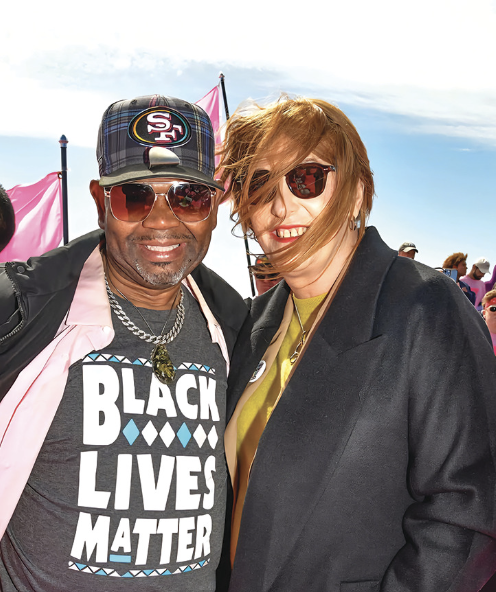
That is who John Weber is: a man who practices love the way some people practice music—daily, deliberately, and with a devotion that transforms everyone around him.
As a 2026 Community Grand Marshal, John carries our stories, our struggles, and our triumphs with him. In this column, he joins a lineage of individuals who understand that love is not a theory; it’s a discipline. And, as my mentor, he is a reminder that healing is never done alone.
John Weber doesn’t just represent PMLE. He embodies it—one act of service, one moment of grace, and one life touched at a time.
Kippy Marks: How long have you been involved with the practicing of PMLE values in your work?
John Weber: I have been actively engaged with PMLE for about 15 years. I want to thank you for introducing me to this concept in its modern form.
Not digesting poison in my body is a smart practice. The same applies to my mind and consciousness. By poison, I mean toxic thoughts—self-doubt, feelings of unworthiness, or being unseen and unappreciated. I practice love by infusing my mind with positive thoughts, confidently walking into any room. I carry the energy of my ancestors—those who fought for the gay and Black communities—bringing their strength, dreams, and experiences into every conversation and interaction. This is how I make love easy and natural.
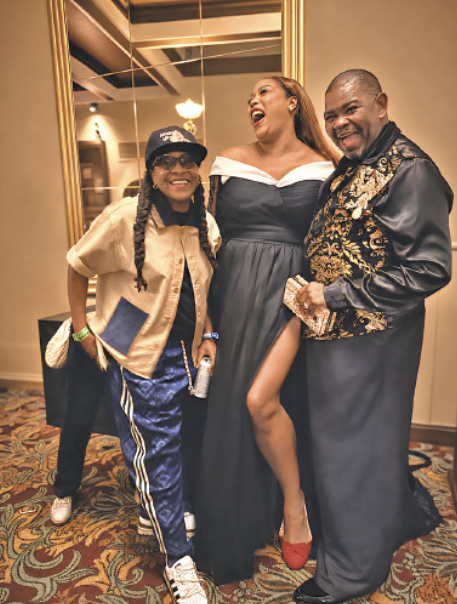
Kippy Marks: Who or what motivated you to become the community activist you are today?
John Weber: I think my greatest influence was my mother, and also an event—the Hurricane Katrina disaster, which struck my hometown of New Orleans. Both of these things truly impacted me in a significant way, shaping me into someone who sees himself as a community servant rather than just a social activist.
I watched my mother at a very young age in New Orleans host parties for people who couldn’t afford their rent, because, back in the South in the late ‘60s when I was growing up, times were very hard for many people. The only way to survive was to support each other as a united community.
My mother was very resourceful and philanthropic. Even though my family had little more money and resources than others in my neighborhood, my mom would notice how other families couldn’t make ends meet. She often organized rent parties by selling hot meals—plates of fried chicken, potato salad, and red beans. I would take orders in high school and sell these to-go plates to my teachers, faculty members, administrators, and other families. My mother would deliver them on the scheduled delivery date.
The money she earned helped people pay their rent. This experience helped me understand community and the importance of being a public steward.
During the Katrina disaster, I personally witnessed communities fighting for each other firsthand. When I arrived here from New Orleans, my gay community rallied around me and encouraged me. They donated frequent flyer miles to help the rest of my other family members travel to San Francisco. My family has since rebuilt and moved back home, but the entire gay community—with all its diverse tapestries—is the community I hold most dear. I am proud to be a Black and gay man in San Francisco.
The first organization I encountered was Krewe de Kinque (KdK), a San Francisco-based Mardi Gras crew that helped Katrina victims and survivors. The founder of this organization is Gary Virginia, who is still active in the community fundraising today.
I also credit Michael Petri, my drag mother and Absolute Empress 31, who brought me into the Imperial Court System here in San Francisco. As you know, I later became King 7 of the KdK organization, and Mr. Gay SF, the first Black Elected-Emperor, and five years later, the first Black Board Chair of the Imperial Council of San Francisco.
Kippy Marks: How old were you when you made the decision to dedicate much of your life to community service?
John Weber: I was exactly 8 years old when I made the decision to become a community servant—and I’ve literally been serving my community in some way, shape, or form since that time. Community service is a part of my DNA and pedigree.
Kippy Marks: What advice would you give to others on how to practice love on the daily?
John Weber: In our community, I see survivors. I see leaders. I see people who have created community when the world didn’t always make space for us.
As a Black man, a gay man, and someone who has dedicated years to philanthropy, leadership, and community service, I have learned a crucial truth: If we don’t tell our stories, someone else will—and they won’t always tell them accurately. Too often, people want only parts of our truth. They seek celebration without acknowledging struggle; the success without understanding sacrifice; the Pride without recognizing the protests.
Our communities have been built through resilience, especially in Black, immigrant, and trans communities, and especially within LGBTQ+ communities. This is particularly true for those of us living at the intersection of two or more of these communities. That’s why mentorship is essential.
To our elders and mentors: Share the full story. Speak openly about joy and love—also address loss, rejection, racism, HIV/AIDS, survival, and perseverance. To our young people: Ask questions. Listen intently.
Kippy Marks: If you were granted two universal wishes, what would you wish for?
John Weber: I would make a wish to give every gay person a superpower: the ability to instantly see an individual and change their hateful thoughts, intentions, acts, or deeds into loving ones. This would certainly make the world a better place if gay people had this superpower.
My second wish would be to have the chance to speak directly with Martin Luther King, Jr., Harvey Milk, James Baldwin, and Marsha P. Johnson within 48 hours. I would invite them all to dinner, where we could have a deep conversation and I could learn from their insights. I’d ask what we can do today to navigate the challenges facing our community, with all its diversity. I would listen intently to every word they share and then develop a strategic plan to implement their suggestions and recommendations.
Kippy Marks: Please share any current practices that our readers may find useful, and update us on what you are doing now.
John Weber: Keep your dreams’ size firmly in your own hands and refuse to let others define them or you. Be cautious of anyone who says, “You belong here,” “Stay in your lane,” or, “This space isn’t for you,” as these are subtle forms of control disguised as restrictions. Society can confine us with cages or even teach us to build them ourselves. Don’t settle for decorating your cage; leave it behind. As someone who identifies as Black and gay, I understand what it’s like to navigate multiple realities with strength and resolve. Intersectionality isn’t a burden; it’s evidence of the beautiful complexity of human beings.
Dubbed San Francisco’s “King of Strings”, Kippy Marks is a spirited solo entertainer whose shows are permeated with an infectious joy. His distinctive sound arises from his heart, through his 1822 violin consort, Izabella. Marks› rare talent, broad smile, and radiant warmth will brighten any event to create lasting impact. He is also Grand Duke XL of The Grand Ducal Council of San Francisco. He is the first ever elected African-American Grand Duke.
Practice Makes Love Easy
Published on June 25, 2026








Recent Comments