








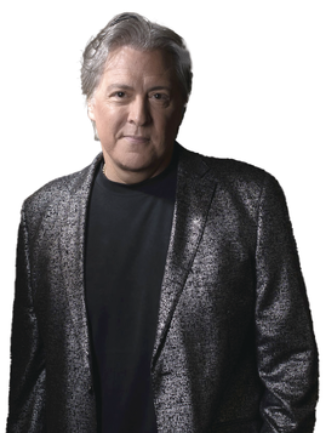
By Dan Ashley—
Every June, rainbow flags appear in storefronts, on city streets, in neighborhood windows, and across social media feeds. For some, Pride Month is a celebration. For others, it is a political statement. For many people outside the LGBTQ+ community, it may simply feel like someone else’s event, meaningful, perhaps, but distant from their own lives.
But Pride is not just about one community.
Pride is about all of us.
At its core, Pride is the story of human dignity. It is the belief that every person deserves the freedom to live honestly, love openly, and walk through the world without fear. That idea should never belong to only one group of people. It belongs to everyone.
The history of Pride is rooted in struggle. It emerged from years of discrimination, silence, rejection, and violence directed at people whose only “offense” was being themselves. Long before corporate logos turned rainbow-colored every June, countless LGBTQ+ Americans faced losing their jobs, their homes, their families, and even their lives simply because of whom they loved or how they identified.
And yet they stood up.
They marched.
They insisted that their humanity be recognized.
That courage changed America.
It is easy now, decades later, to forget just how isolating life once was for many gay, lesbian, bisexual, and transgender Americans. I often think about a friend I had in middle and high school named Doug. Doug was different and, more often than not, he would sit alone at lunch or keep to himself during recess. One day, I went over to say hello and we became friends. It broke my heart even then that he didn’t have very many friends. Sadly, Doug died of AIDS in his twenties. No one really talked about why Doug was different back then, but he was ostracized because of it. These days, younger generations have grown up in a world where openly LGBTQ+ actors, athletes, journalists, musicians, and public officials are part of everyday life. That visibility matters enormously. But it did not happen automatically. It happened because brave people risked everything to make it possible.
Pride honors those people.
But Pride also serves another purpose. It reminds us that progress is never guaranteed.
Rights can advance, but they can also retreat. Acceptance can grow, but division can reemerge. History has shown us repeatedly that fear and finding scapegoats often return during difficult cultural moments. That is why Pride still matters—not because equality is a special interest, but because equality is the foundation of a healthy society.
When any group is told they are less worthy of respect, less deserving of opportunity, or less entitled to safety, every one of us should pay attention.
Because history teaches something important: prejudice rarely stays contained.
And that is why Pride should matter to those of us who are straight as well. It should matter to conservatives and liberals. To parents and grandparents. To people of faith and to those with no religious beliefs at all. It should matter to anyone who believes basic humanity is not negotiable.
For me personally, this understanding deepened profoundly through more than three decades of involvement with the San Francisco AIDS Walk.
When I first became involved with AIDS Walk in the mid-90’s, the AIDS epidemic was devastating communities across America, especially in San Francisco. At the time, fear was everywhere. So was misinformation. So was stigma.
People were dying, not only from disease, but also often from abandonment.
Families sometimes turned away from loved ones and the sick sometimes suffered alone. Many Americans were uncomfortable even speaking openly about AIDS, much less confronting the humanity of the people most affected by it.
But something extraordinary also happened during those years.
People showed up.
Not just members of the LGBTQ+ community, but neighbors, nurses, clergy members, business leaders, straight allies, volunteers, families, and complete strangers. Thousands upon thousands of people came together because they recognized something fundamental: compassion matters more than fear.
That lesson has stayed with me ever since.
AIDS Walk was never simply about raising money. It was about refusing to let people disappear. It was about visibility. About dignity. About standing shoulder to shoulder and saying, “You matter. Your life matters.”
In many ways, that is also what Pride says.
You matter.
And when society sends that message clearly, lives change.
Young people feel less alone. Families find understanding. Mental health improves. Suicide rates decline. Communities become stronger. Innovation flourishes and creativity thrives. People stop wasting emotional energy hiding who they are and instead invest it in contributing to the world around them.
That benefits everyone.
One of the great misunderstandings about Pride is the idea that inclusion somehow takes something away from others. It does not. Human rights are not pie charts. Expanding dignity for one group does not diminish dignity for another.
That does not mean everyone will agree on every political or cultural question surrounding gender and sexuality. In a diverse democracy, disagreement is inevitable. Honest conversations are healthy. But there is a profound difference between disagreement and dehumanization.
Pride asks us to remember that distinction.
You do not have to fully understand someone’s sexuality to affirm their humanity. And you certainly do not have to be LGBTQ+ to believe LGBTQ+ people deserve safety, fairness, and respect.
That principle feels especially important right now.
We live in a time when outrage often dominates public discourse. Social media rewards conflict. Cable news amplifies division. Political rhetoric increasingly encourages Americans to see one another, not simply as opponents, but as enemies.
Pride pushes against that instinct.
Pride is about visibility, resilience, joy, and shared humanity. It is about creating a society where fewer people feel forced to hide.
And, honestly, isn’t that something almost all of us want in our own lives? To be accepted, to be seen, to be loved as we are.
The rainbow flag itself is a powerful symbol because rainbows contain many colors. No one color diminishes another. Together they create something brighter than any single shade could alone.
America has always been strongest when we embrace that truth.
Not perfect. Not finished, but always striving to widen the circle of opportunity and belonging.
That is the larger meaning of Pride.
It is not simply a parade or a festival. It is a reminder of the unfinished work of empathy. A reminder that democracy requires more than elections and laws. It requires acceptance of one another, even when it would be easier not to.
Pride matters profoundly to the LGBTQ+ community, and it always will. But it also matters to every parent raising children in a complicated world. To every young person searching for belonging, and to every family hoping that love will overcome fear.
In the end, what really matters is we recognize the dignity in one another despite our differences.
That is the promise of Pride.
And that is something worth celebrating together.
Dan Ashley is a lead news anchor at ABC7 (KGO-TV), where he has coanchored the top-rated evening newscasts since 1995. Over his distinguished broadcasting career, he has earned numerous Emmy, DuPont-Columbia, and Edward R. Murrow awards for his high-profile interviews and dedicated investigative reporting. Beyond the news desk, Ashley is a passionate philanthropist and musician who supports AIDS Walk San Francisco, fronts his own band, and founded the annual “Rock the CASA” benefit concert to support children in need.
Celebrating Pride 2026
Published on June 25, 2026












Recent Comments