






By Gary M. Kramer—
As we continue to mourn the loss of the iconic Dolly Parton, her music and her film performances will live on in our hearts. While she only had leading roles in a handful of theatrically released films, her personality—which was as big as her hair—shined through. Here is a rundown of some of her key screen appearances with a bonus film cameo included. (Out of courtesy, Rhinestone was not reviewed.)
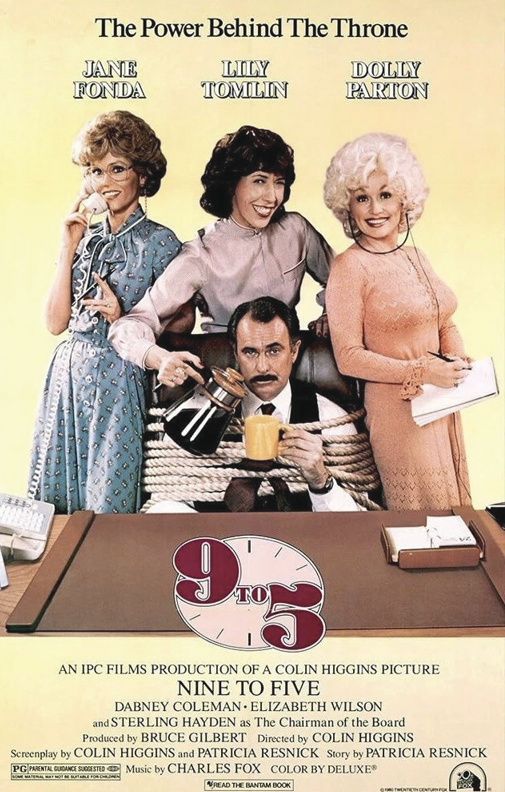
9 to 5 will always be better known for Parton’s catchy, Oscar-nominated theme song than her first big-screen appearance, but she still sparkles in this female empowerment comedy. As Doralee Rhodes, the secretary to the “sexist, egotistical, lying, hypocritical bigot” Franklin Hart, Jr. (Dabney Coleman), Parton knows how to handle her lecherous boss. Sure, she can overlook him deliberately knocking over his pencils to ogle her, but she is righteously angry to learn everyone in the office thinks she is his mistress. And when she is cornered, Doralee threatens to get her gun and change Hart “from a rooster to a hen with one shot.” She is also unafraid to hogtie him, which she does in an act of revenge. 9 to 5 is played as broadly as its humor, but the film coasts along on the solid chemistry Parton has with her costars, Lily Tomlin and Jane Fonda.
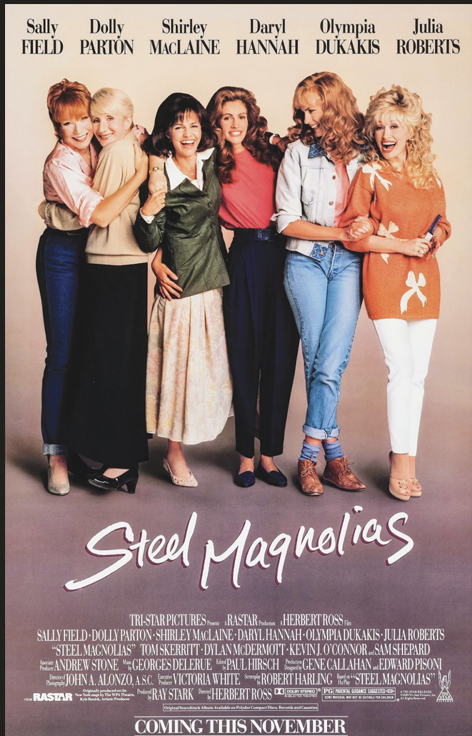
Steel Magnolias may be pure southern-fried cornpone, but this crowd-pleaser still manages to elicit Dolly’s character, Truvy Jones’ favorite emotion, “laughter through tears.” The story concerns the trials and tribulations of six women who frequently congregate at Truvy’s beauty shop in a small Louisiana town. Truvy has just hired newcomer Annelle (Daryl Hannah) when Shelby (Julia Roberts, in an Oscar-nominated performance) comes in with her overprotective mother, M’Lynn (Sally Field), to get her hair done for her wedding. Rounding out the cast are the wealthy Clairee (Olympia Dukakis) and the cantankerous Ouiser (Shirley MacLaine). Dolly delivers sass and home truths effortlessly, fitting into her role as a big-hearted Southern woman who loves gossip and romance and who can “spot a bottle job at twenty paces.” And it’s hard not to smile when she advises, “There’s no such thing as natural beauty. It takes effort to look like this,” possibly acknowledging her own efforts with plastic surgery. But the real joy of Dolly’s performance is watching her brighten things—especially when there is bad news. Dolly’s upbeat disposition shines through in a role that fits her like a glove.
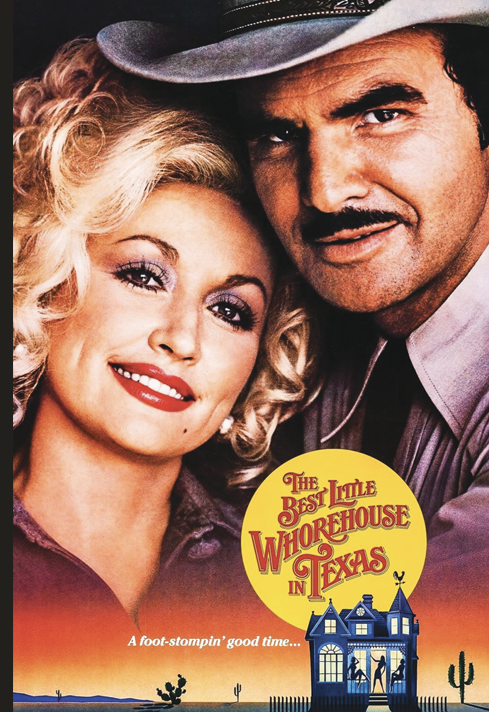
Parton reteamed with her 9 to 5 director, Colin Higgins, for the screen adaptation of The Best Little Whorehouse in Texas. As Miss Mona, the madame at the title institution, Parton got to use her vocal talents in several catchy songs, and she also got dozens of fabulous costumes that displayed her other talents. Parton plays Mona with a wink and a smile—“It’s always a business doing pleasure with you, Charlie!”—that makes this one of her best screen roles. She is fun to watch as she romances co-star Burt Reynolds with Frederick’s of Hollywood lingerie, but she also holds her own fighting with him when she makes a mistake that causes trouble, and may even end their relationship. The Best Little Whorehouse in Texas is mostly good clean fun, though, and most of that is Parton’s appeal. When she sings “I Will Always Love You” during an emotional moment, it generates goosebumps. (Of course, that song was a smash hit for Whitney Houston in The Bodyguard, but Dolly wrote and sang it here first.)
Straight Talk was also the name of Parton’s first single from the titular film that starred Parton as Shirlee, an Arkansas dance instructor who moves to Chicago to start a new life and is accidentally mistaken for a licensed radio psychologist. She becomes a hit with listeners but feels uncomfortable living a lie. (Cue the tune: “Livin’ a Lie.”) The film has the plot of a sitcom and could benefit from a laugh track, as the jokes are mostly tired and uninspired. Parton elevates the material with her shoot-from-the-hip style that disarms all the city slickers, from her boss, Alan (Griffin Dunne), to her love interest, Jack (James Woods, miscast), a newspaper reporter secretly assigned an exposé on Shirlee. The inoffensive Straight Talk offers nine new Parton songs on the soundtrack, as well as a re-recording of her classic, “Light of a Clear Blue Morning.” That just might be reason enough for fans to listen up—or watch.
There are equal parts faith and heart in the enjoyable comedy-drama Joyful Noise, where Dolly co-stars with Queen Latifah as rivals in a church choir. While it is fun to see them fighting, it is the music that makes this film truly sing. The plot, about a Pacashau, GA, gospel choir trying to win a national competition, is just an excuse to hang songs, but oh, what heavenly music. Out gay writer/director Todd Graff (Camp, Bandslam) judiciously uses pop tunes, from Michael Jackson and Sly and the Family Stone to Stevie Wonder, to make everyone—the characters as well as the audience—rejoice and shout. The high-spirited numbers are infectious, and if Parton is underused, she delivers her patented blend of down-home grit and charm and gets to perform a lovely duet, “From Here to the Moon and Back,” with Kris Kristofferson.
Parton had many cameos as herself over her career (see Miss Congeniality 2, as a fun example). One of the lesser-known such appearances is in the entertaining documentary Hollywood to Dollywood. The adorable gay twins (and reality TV stars) Gary and Larry Lane trek 2,247 miles in an RV named Jolene to give their screenplay to their idol, Dolly Parton. The mission takes a backseat to the messages about being gay and experiencing rejection, self-acceptance, and acceptance from family and others. Parton’s inspirational songs provide the buoyant soundtrack as Larry, Gary, and Gary’s boyfriend, Mike, meet and talk candidly and poignantly with friends and strangers about being gay and what Dolly means to them. And it’s not a spoiler to say Dolly makes an appearance. What she tells the twins is, of course, pure Parton charm.
© 2026 Gary M. Kramer
Gary M. Kramer is the author of “Independent Queer Cinema: Reviews and Interviews,” and the co-editor of “Directory of World Cinema: Argentina.” He teaches Short Attention Span Cinema at the Bryn Mawr Film Institute and is the moderator for Cinema Salon, a weekly film discussion group. Follow him on IG @garyemkramer
Film
Published on October 8, 2026










Recent Comments