









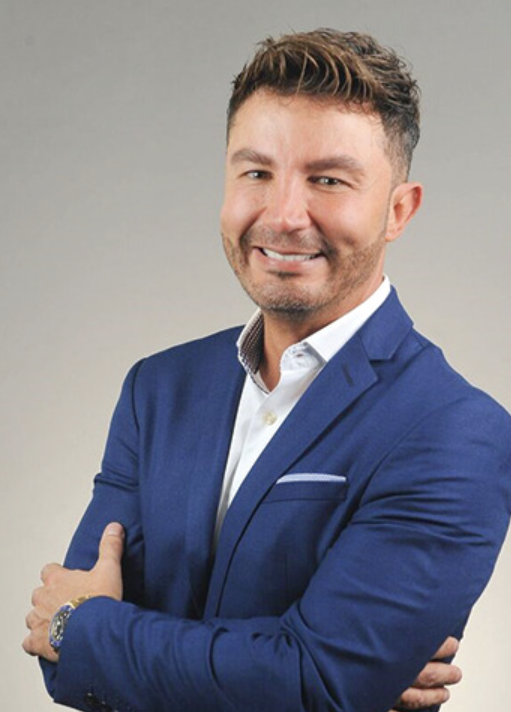
Claudio Bono, who is President of the Cupertino Chamber of Commerce and founder of GiveaRoof.org, was invited to the White House a few months before the midterms to present a privately funded plan to end street homelessness in the United States within three years. The proposal says the rooms, nonprofits, clinicians, and unused travel rewards already exist. What is missing, it adds, is one coordinated system, one record for each person, and a deadline.
GiveaRoof.org’s model rests on Welcome Centers, shared intake, medical and behavioral health referrals, short-term hotel placement for screened participants, and donated airline miles, hotel points, and credit-card rewards. “It does not call for new taxes and does not call for replacing groups already doing the work,” Bono told the San Francisco Bay Times. “The nonprofit would try to line those groups up behind one intake process, so the same person is not processed again and again, and so funding, donated points, and outcomes can be followed.”
“Three years; that is the clock,” he added. “Welcome Centers and a shared database come first, with hotels reserved for people who have been screened and prepared. Those who need clinical care should be connected with professionals who can provide the treatment they need. That order is the core of the pitch. Hotels are not the first stop. They are a later stop for people who can function there. Welcome Centers provide food, showers, clothing, grooming, and basic help before anyone moves into a guest room, a treatment program, or another placement. Dignity comes first. The next step is matched to the person. The three-year plan has five parts.”
First, he explained, there are centralized Welcome Centers and intake, “so each participant has one coordinated record.” Second, there are clinical screenings and referrals for people who need mental health, substance use, or other medical care. Third are temporary hotel stays for screened participants, paid with donated travel rewards and partner resources. Fourth are coordinated transition services, such as jobs, transportation, family reconnection, treatment, and a path toward stable housing. Fifth is private funding with accountability, “so donated miles and points are tracked against what actually happened to the person.” Bono sums it up as “screen, prepare, place, treat, and track. Welcome Centers take care of people first. Clinicians handle those who need care. Hotels receive guests ready for that setting.”
In June, the organization joined United Airlines’ MileagePlus Miles on a Mission program, giving members a way to donate unused miles. A 30-day drive brought in more than 500,000 miles. Bono treats that as proof of concept: one founder, one airline partnership, more than half a million miles. “Extend that across airlines, hotel groups, credit-card rewards, companies, and millions of individual accounts,” he says, “and unused loyalty value becomes shelter and transportation.”
He is also seeking a change to Section 170 of the Internal Revenue Code. Qualifying corporate donations of airline miles and hotel points would receive a charitable deduction based on fair market value. The aim is to give airlines and hotel companies a reason to move points that would otherwise expire.
The national argument started with one local stay. Bono traces the idea to a man living on the street in Cupertino. Using his own rewards points, Bono paid for a 10-night hotel stay that included a room, food, and internet access. By the eighth night, the man had reached his family. He later left to reunite with them. Bono, who manages The Cupertino Hotel and The Grand Hotel Sunnyvale for De Anza Properties, took that as evidence that an empty room plus a short stretch of stability can be an intervention, not just a bed.
Learn more at https://www.givearoof.org/
Published on November 19, 2026















Recent Comments