





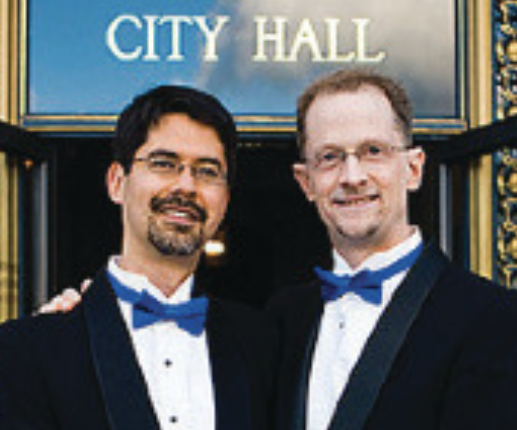
By John Lewis—
Stillness—
the cicada’s cry
drills into the rocks.
The renowned Japanese poet Bashō wrote this haiku four centuries ago after hiking for days to reach a remote mountaintop temple in northern Japan. Last week, I stood surrounded by giant oak trees filled with cicadas in front of Red Bridge Elementary School in Kansas City, Missouri, where 63 years ago I began a journey myself when I entered kindergarten. Like Bashō, I too found myself immersed in the mesmerizing hum of cicadas, for me echoing off the red brick facade of the school. I, too, experienced profound peace and a sense of well-being.
I was in Kansas City, along with Stuart, for my fiftieth high school class reunion. Attending the long reunion weekend with numerous classmates with whom I had spent hour upon hour, five days a week (except for summers), year after year—some for 17 years—was deeply grounding for me. As the oak saplings planted not long before we entered kindergarten grew into mature trees, our brains, bodies, and hearts transformed from small children to young adults during those formative years.
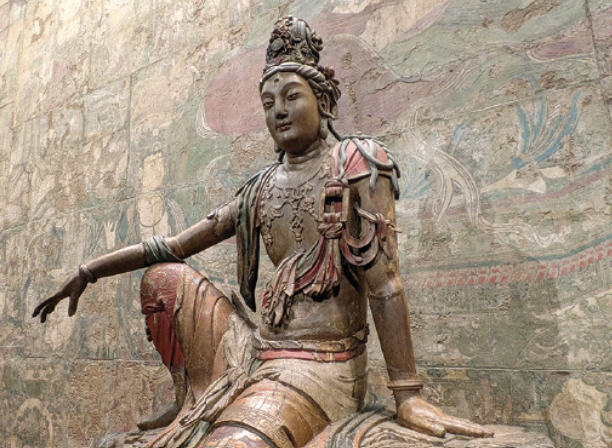
Today, the neighborhood of “Red Bridge,” after which the school is named, is a solidly middle-class neighborhood of ranch house subdivisions in southern Kansas City. When my family moved there, new ground was being broken on many of the houses, including ours. It is in no way a queer or particularly progressive neighborhood.
After visiting my elementary school, I checked out Red Bridge Shopping Center, which my family often frequented a half-century ago. What I saw astonished and delighted me. Red Bridge was the community where, growing up, I had repressed, concealed, and struggled with my sexuality. When I arrived at the shopping center, nearly the first thing I saw was a massive Progress Pride Flag hanging behind the counter of a coffee shop and café, which occupies the combined storefronts of the old barber shop and the Baskin Robbins, where our family enjoyed milkshakes after summer little league baseball games. Seeing the flag was enormously gratifying to me and made me feel triumphant. I was eleven years old and living in Red Bridge when the Stonewall riots took place. Since then, millions of LGBTIQ+ people created a highly successful movement that, among other things, transformed places like Red Bridge into neighborhoods where today we have spaces where we are embraced and celebrated.
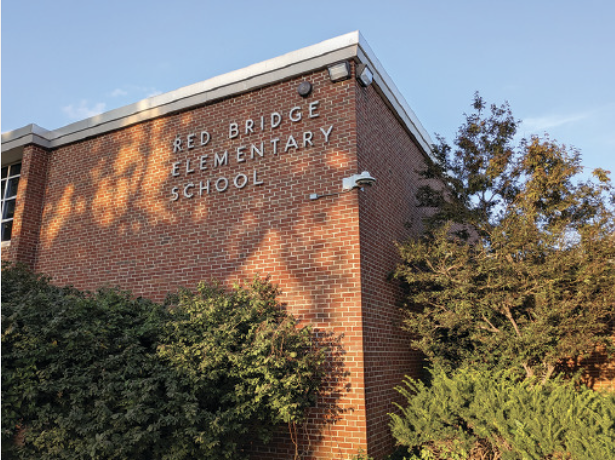
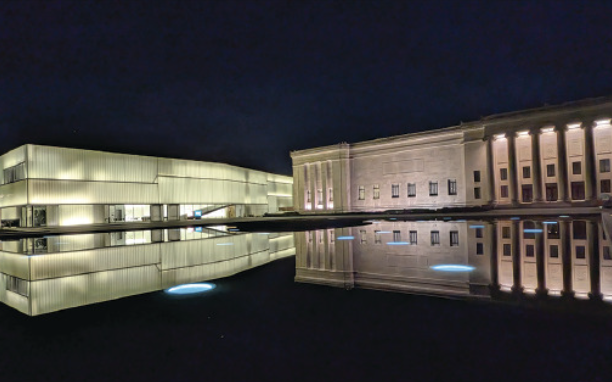
Although Kansas City is a large American city with urban ills such as high crime and homelessness, this August, much of the city seemed luxuriant. Lush green tree canopies shaded streets, boulevards, green parks, and lawns. For us, a highlight of a Kansas City trip is a visit to the Nelson-Atkins Museum of Art. I have been fortunate to have seen a lot of Buddhist statuary while living and traveling in Asia, but I have found no more sublime Buddhist statue than the one-thousand-year-old Chinese Guanyin statue, surrounded by ancient Buddhist temple walls at the Nelson-Atkins Museum. I think of it as my home Buddhist statue.
Finally, many don’t realize that greater Kansas City was the home of President Harry S. Truman, arguably one of the most influential presidents in American history. Of course, Truman made the fateful decision to drop atomic bombs on Japan at the end of World War II. Among many interesting exhibits at the Truman museum and library are two artifacts related to the bombing.
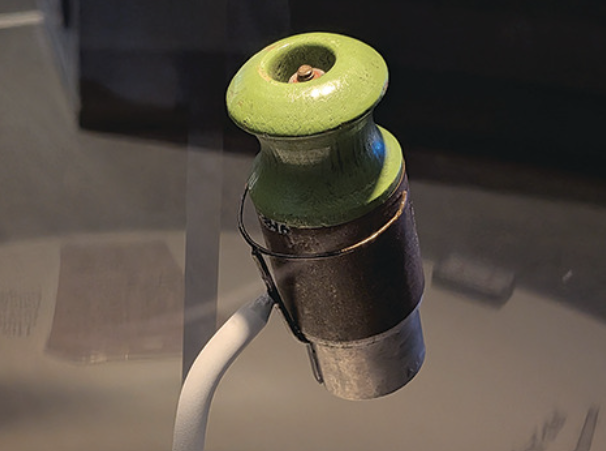
The first is the green safety plug which, while installed in the plutonium bomb that was dropped on Nagasaki, prevented its accidental detonation. When Naval Commander Frederick Ashworth removed the green plug and replaced it with the red activating plug, the bomb became lethal. It is the only surviving part of the bomb. As I gazed at the green plug, it symbolized to me the old, pre-nuclear age, when humans did not have the capacity to bring about the complete mutual destruction of our species through war. When the green safety plug was removed, a new, dangerous era began.
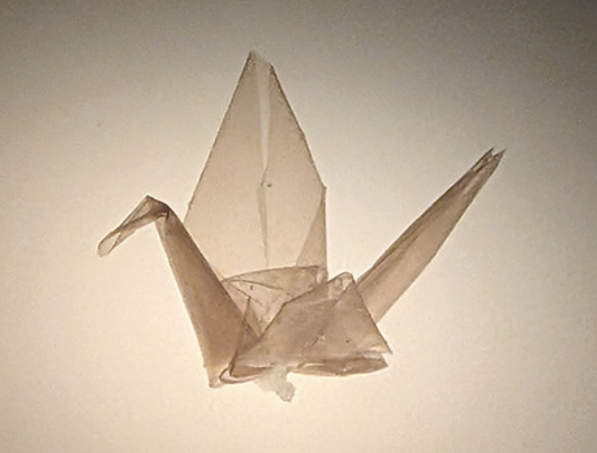
An equally stunning artifact is on display nearby: one of the very few remaining origami cranes of the one thousand paper cranes that the little girl Sadako Sasaki famously folded as she lay dying from leukemia, caused by radiation exposure at Hiroshima. Sadako folded the thousand cranes because, according to Japanese tradition, doing so would enable her to have a wish come true. Her wish was for peace. Sadako’s origami crane is delicate and fragile, perhaps like the hope for peace itself, but it survives and is very carefully preserved and protected at the museum, just as many people still hold strong to the vision of a peaceful world.
There is yet another place where I had a profound experience of feeling enveloped by the powerful electric hum of cicadas: Nagasaki itself. By chance, we visited that city in early August several years ago. At exactly 11:02 am, the minute the bomb had exploded, a bell rang out over the sound of countless cicadas buzzing in the summer heat and humidity. It was then I realized that cicadas were very likely buzzing loudly on the morning of August 9, 1945—stillness, just before everything changed forever.
Class reunions represent a coming together of people who shared something deeply meaningful together, but whose lives diverged over the years in myriad ways. Could the sense of wholeness that my class reunion evoked for me and many of my classmates suggest a way forward for the broader world? I will continue to contemplate this question in stillness.
(English translation of the Bashō haiku by Robert Hass, The Essential Haiku, Versions of Basho, Buson, & Issa.)
John Lewis and Stuart Gaffney, together for over three decades, were plaintiffs in the California case for equal marriage rights decided by the California Supreme Court in 2008. Their leadership in the grassroots organization Marriage Equality USA contributed to making same-sex marriage legal nationwide in 2015. Today, they continue to educate and advocate for marriage equality and LGBTIQ+ rights worldwide.
6/26 and Beyond
Published on August 27, 2026









Recent Comments