





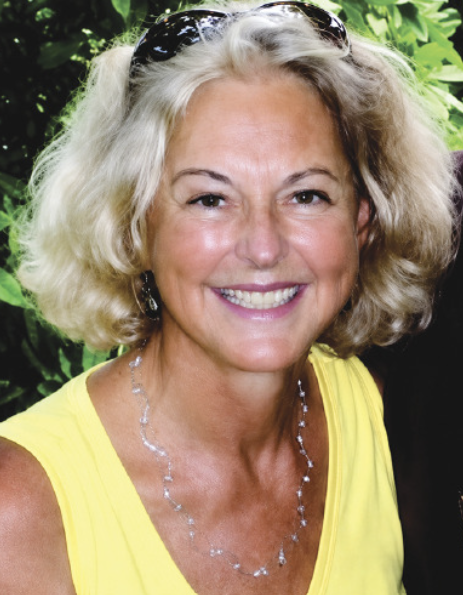
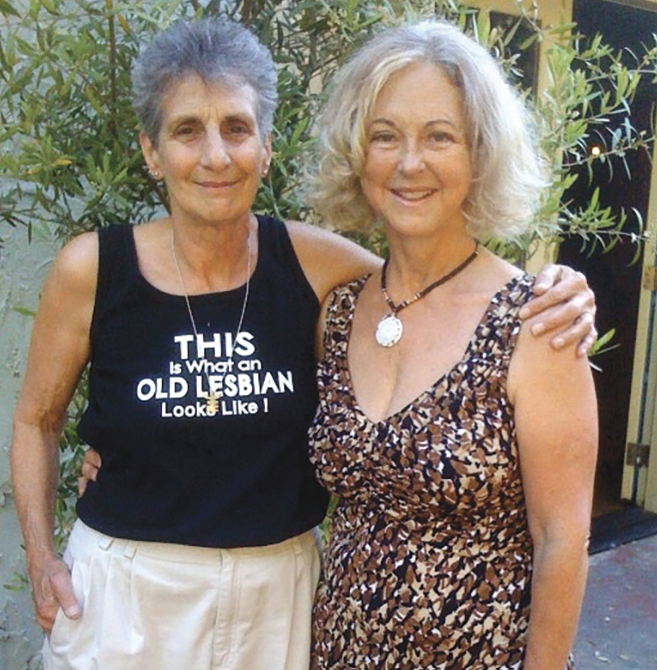
When Barbara “Boo” Price—also known as Barbara Kay Price and Barbara Price García-Dobles—was growing up in Lafayette, Indiana, she would gather her friends and cousins to produce talent shows in her family’s backyard for all the neighbors to attend. That early theatrical and musical entrepreneurship never left her, nor did her commitment to protecting and fostering women’s rights.
She was born on October 8, 1943, to Eleanor Easter Price and George E. Price. Eleanor was a homemaker and a proponent of social equity in quiet but effective ways. George was the founder, with his brother, of National Homes Corporation, which pioneered the making of prefabricated homes on a scale large enough to meet the demands of returning war veterans and the baby boom generation. Price and her younger brother William spent many of their weekends working in the family business, with her serving as a greeter at the show homes.
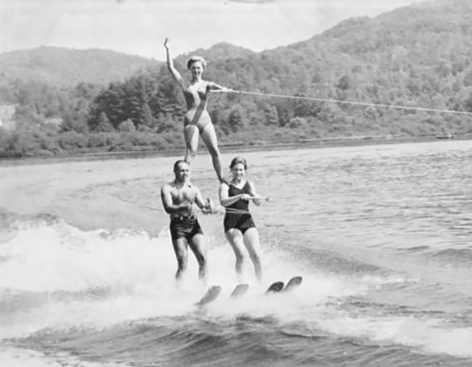
She was a dedicated student at Sunnyside Middle School in her hometown. At nearby Jefferson High School, Price held multiple leadership roles evidencing her many varied skills that she would later develop and use to benefit others. Among the class officers she was a treasurer and also was a popular athlete who was even on the “Yell Leaders Advisory Board” helping direct student spirit leaders.
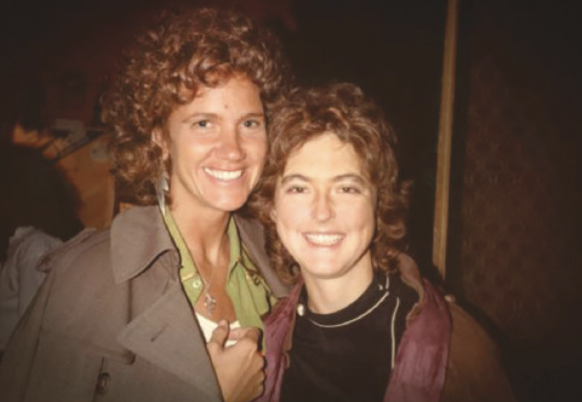
In Massachusetts at Mount Holyoke College, one of the historic Seven Sisters colleges, she again excelled in academics and valued the opportunity to learn alongside other ambitious women. She earned her B.A. in political science in 1965. Two years later, in Fayetteville, Indiana, at St. Thomas Aquinas Catholic Church, she married Stanford University graduate Alberto García-Dobles of the Inter-American Development Bank. His father was from Costa Rica and his mother was from Venezuela, cultures that Price valued as she was interested in international travel and different global perspectives. Although the marriage ended in divorce, it resulted in her only child, Andrés “Drew” García-Price, with whom she would remain close to throughout her life. García-Price is now a Hollywood storyboard artist, illustrator, and educator.
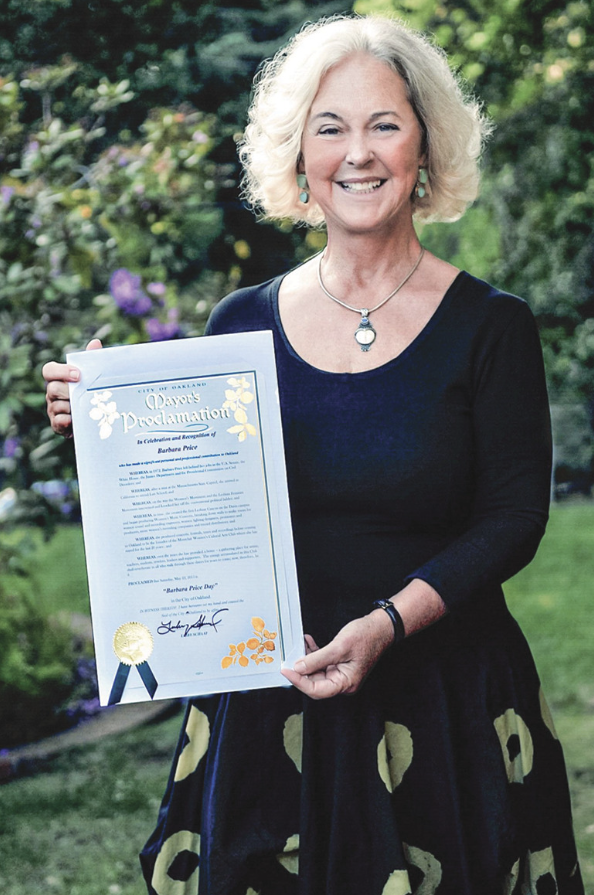
Development of Litigation Strategies to Counter Anti-Lesbian Judicial Bias
Her early public service efforts included work at the State House in Boston, and, later, in Washington, D.C., for several years in the Senate and White House. She was involved in at least two major federal initiatives: the international Food for Peace Program and the National Advisory Commission on Civil Disorders (Kerner Commission). This commission was the first major federal government entity focused on investigating the root causes of urban civil unrest and systemic racism in the U.S. In 1972, she participated in a pivotal American Psychiatric Association (APA) panel discussion in Hawaii on homosexuality with psychiatrists and gay activists, which directly set the stage for the APA Board of Trustees’ historic vote the following year to declassify homosexuality as a mental disorder.
She moved to California to attend law school at the University of California at Davis (UC Davis). In 1973, Price created the lesbian caucus, which was the first and, for some time, only lesbian caucus on campus for graduates and undergraduates. While at UC Davis, she was introduced to what became known as “women’s music,” referring to music performed by, about, and for women. In 1974, still in law school, she produced her first concert. It was a political fundraiser to support opposition to what would become a landmark U.S. Supreme Court case, Regents of the University of California v. Bakke, which concerned discrimination in college admissions. The concert featured multiple artists including Cris Williamson, Margie Adam, and Vicki Randle, who all went on to successful careers.
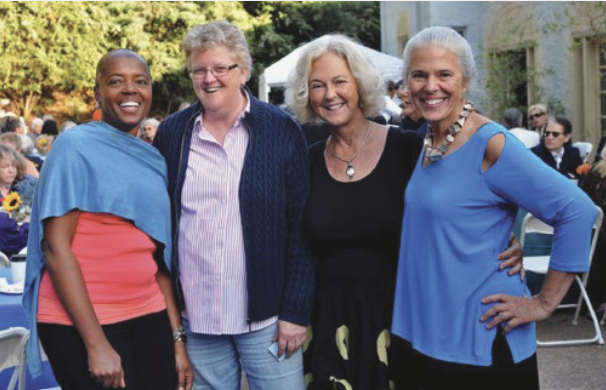
Soon Price was juggling attending law school with producing women’s music concerts and raising her young son. After earning her J.D. in 1976, she established a sole practitioner law practice focused on family law, custody, entertainment law, and small business support for women. Price in 1979 co-authored the legal treatise “Trial Strategy in Lesbian Mother Custody Cases: The Use of Expert Testimony” (published in the Golden Gate University Law Review) alongside then attorney Donna Hitchens, founder of the Lesbian Rights Project. (Hitchens later became the first openly-gay elected female judge in the U.S. and co-founded the National Center for Lesbian Rights, which is now the National Center for LGBTQ Rights.) During an era when courts routinely denied custody or visitation rights to openly lesbian mothers, their work provided litigation strategies and psychological expert testimony frameworks to counter anti-lesbian judicial bias.

Co-Founder of Pleiades Records and Co-Producer of the Michigan Womyn’s Music Festival
In 1975, Price co-founded Pleiades Records with singer-songwriter Adam, establishing an independent platform designed to circumvent mainstream corporate labels and safeguard complete artistic and financial autonomy. Together, they championed a guiding ethos of women’s music: “Women’s music by women about women for everyone.”
Price additionally spearheaded efforts to dismantle gender barriers behind the scenes. Founding her venture Women in Production in 1976, she actively trained women in audio engineering, lighting, stage production, and event logistics, equipping them to thrive in male-dominated technical fields.
Price’s operational talent proved pivotal to the growth of the Michigan Womyn’s Music Festival, the largest and most influential gathering of its kind in North America. Beginning with stage production in 1976, she later served as co-owner and co-producer from 1983 to 1994, helping secure the festival’s permanent 650-acre home near Hart, Michigan. In addition to securing land, she engineered complex production systems that elevated the festival’s scale, placing a signature emphasis on creative presentation and immersive sound design for the festival’s iconic Night Stage.
Highlights from this period include her production of the landmark Women on Wheels Tour in 1976, coordination of a 50-city national tour for Adam that culminated at the historic 1977 National Women’s Conference in Houston, and production of numerous high-profile political arts events. These included the opening celebration in 1979 for Judy Chicago’s The Dinner Party and the close of the Equal Rights Amendment Campaign at Constitution Hall in 1982.
Founder of the Montclair Women’s Cultural Arts Club
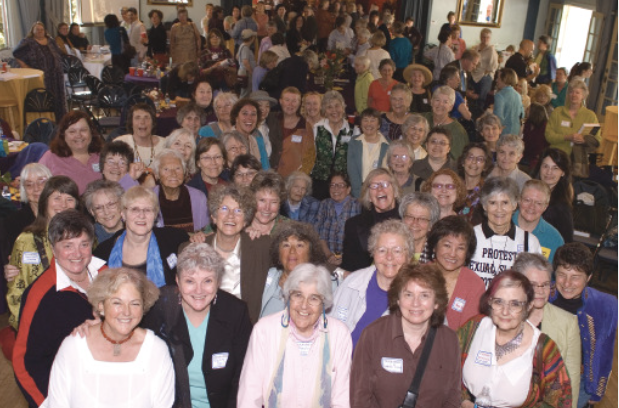
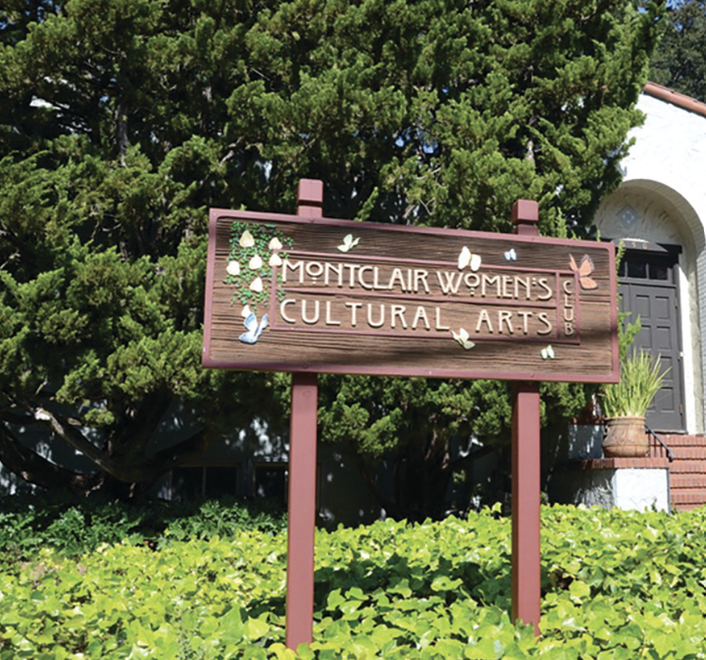
Price’s law practice in San Francisco ended in 1986 after a decade of pioneering work. She began to lease the former Montclair Woman’s Club in the Montclair District of Oakland for concerts and other gatherings for lesbians and allies. In 1996 she eventually purchased the Spanish Colonial Revival building, located at 1650 Mountain Boulevard, and renamed it the Montclair Women’s Cultural Arts Club.
Until its closing in July 2015, the club served as a crucial brick-and-mortar sanctuary for women’s culture, spiritual practice, and LGBTQ+ community building. By transforming a historic 1920s venue into an accessible performance space, salon, and education center, Price through the club filled a vital void left by the closure of earlier feminist physical spaces across the Bay Area. It established an inclusive home where women, regardless of sexual orientation, could gather to attend concerts by iconic female musicians, host progressive political discussions, engage in artistic expression, and participate in classes offered through its School of Women’s Mysteries.
Beyond serving as a local gathering spot, the venue functioned as an enduring cultural incubator that bridged grassroots activism with professional production standards. Designed with dedicated performance staging, library facilities, and community meeting areas, it regularly hosted prominent lesbian and feminist performers, acoustic showcases, comedy acts, and spiritual activist workshops. In doing so, the club preserved the independent, community-driven spirit of women’s music within a year-round, permanent urban setting, ensuring that feminist arts and culture remained deeply rooted and accessible in the Bay Area. The May 14, 2015, issue of the San Francisco Bay Times highlighted Price and the Montclair Women’s Cultural Arts Club: https://bit.ly/4zsYI5F
Producer of Record-Breaking Gathering of Women’s Music Stars at SF Pride Parade
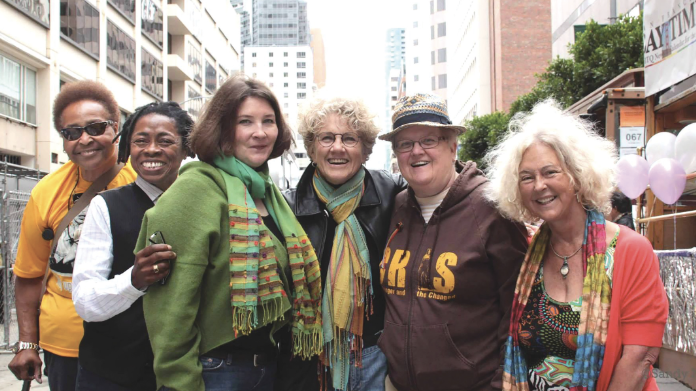
Just a month before the club closed, Price with the San Francisco Bay Times produced the largest-ever gathering of women’s music stars at the San Francisco Pride Parade. The assemblage, within the Bay Times contingent, followed that of Community Grand Marshal Judy Dlugacz, who was then the president of Olivia Records (now Olivia Travel). Among those who participated were Linda Tillery, Leslie Ann Jones, Melanie DeMore, Carolyn Brandy, Mary Watkins, Jen Foster, Karen Williams, Woody Simmons, Anna Maria Flechero, Ellen Seeling, Sharon Washington, Jean Fineberg, Afia Walking Tree, and Page Hodel. Holly Near, Barbara Higbie, Adam, and Williamson also helped with this Bay Times commemoration of 40 years of women’s music.
Following the club’s closure, Price continued to enjoy time with her son; the Bay Times publishers often saw them at local events and neighborhood hubs. An animal lover, Price in 2009 entered a treasured pup, Little Bear, in the Montclair Village “Pet Mayor” contest, and won! She beamed at the event, which was a fundraiser for animal welfare efforts that earned close to $20,000. A Bay Times video of her and Little Bear at the event is at
https://bit.ly/3St9DLM
Boo and Little Bear enjoyed many adventures together, including walking together in local parades. For several years, he was her constant companion, except for when she traveled abroad. An expert swimmer and diver, Price organized scuba diving trips for women that took place all around the globe, from the Caribbean to the Solomon Islands.
When her health began to decline, she moved to an East Bay assisted living center where she continued to hold court with friends and to contribute her production savvy to events. She remained committed to inspiring and empowering women to be their fullest selves.
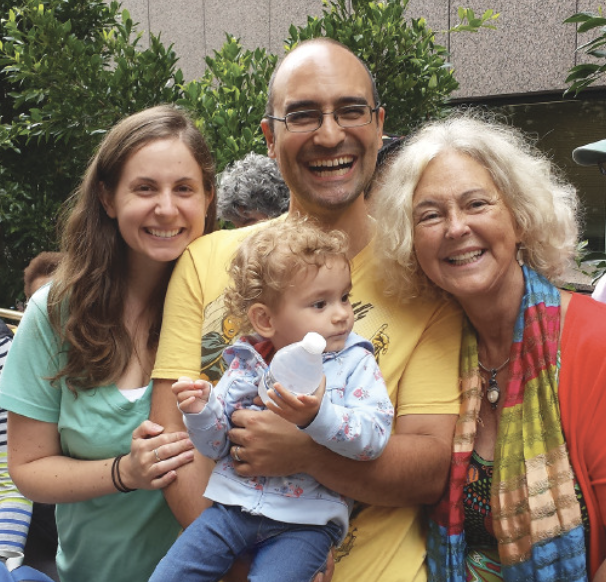
Price died of heart failure on August 4, 2026, in Alameda, California. She is survived by her son Andrés “Drew” García-Price; daughter-in-law Katie García; granddaughter Tallulah Katherine García; nieces Melissa Price and her husband Donal, and Cynthia Price Czabala, and her husband Tom; her closest lifelong friend, Kathryn Willmore; and numerous chosen family members and other friends.
A celebration of life is being planned. Details will be shared as soon as they become available.
In Memoriam
Published on August 27, 2026










Recent Comments