




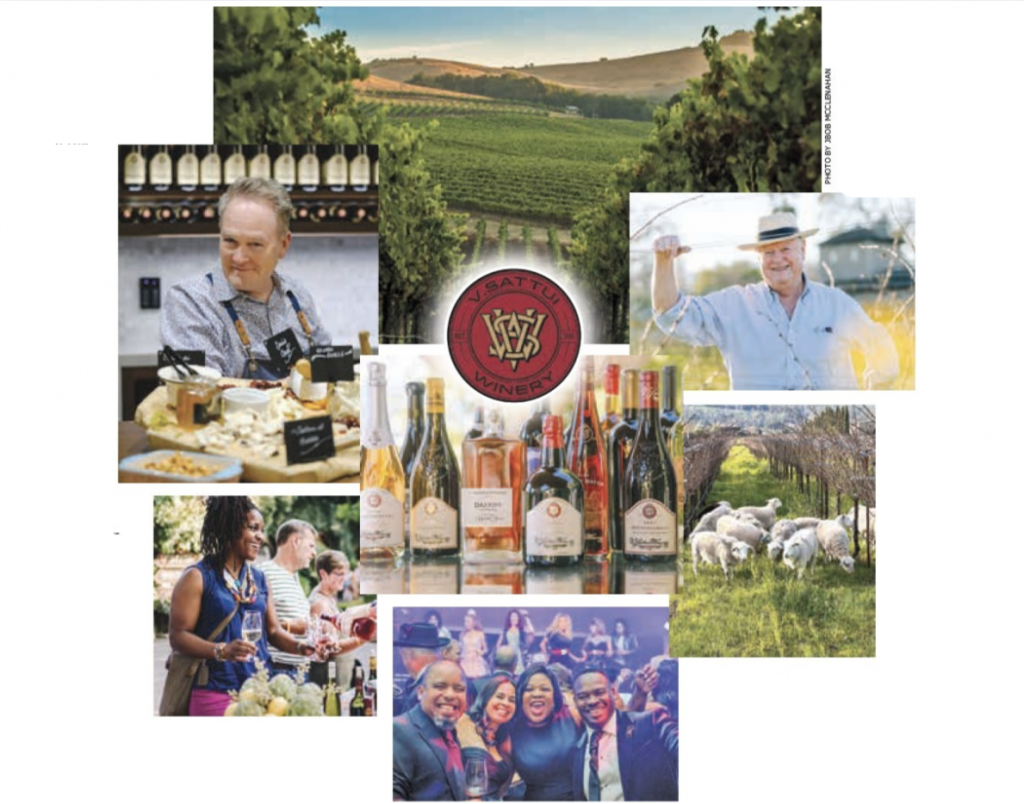
When the San Francisco Bay Times lost its longtime wine sponsor a few years ago, the publishers desired a replacement that, not only produces quality delicious wines, but also is supportive of the LGBTQ+ community and inclusivity and is as eco-conscious as possible. After considering many wineries, and with the help of columnist and wine and beverages expert Leslie Sbrocco, a new sponsor meeting all of desired attributes was found: V. Sattui Winery.
For decades, V. Sattui—located in St. Helena in the heart of the Napa Valley—has produced award-winning wines, such as earning Double Gold for its 2022 Napa Valley Cabernet Sauvignon at the San Francisco Chronicle Wine Competition. V. Sattui has also led green initiatives that safeguard Napa Valley’s vineyards and land while addressing its broader global footprint. The winery prioritizes partnerships with suppliers and organizations that share its dedication to an eco-friendly future. It believes that collective effort is essential to protecting this fragile, beautiful ecosystem.
“Sustainability goes far beyond the land,” says V. Sattui President Tom Davies. “It is our livelihood. It is about caring for employees, vendors—everyone tied to the company. Our approach to ensuring the health and vitality of the wine industry takes all of this into account. We care for the land, and we care for the community.”
Grapes Were Here Before You Were
Grapes are inextricably tied to the California ecosystem. Four primary grape species are native to California and first emerged on this land roughly 50 million years ago. When Native Americans arrived starting around 13,000–20,000 years ago, they used these grapes extensively. They ate them as is, dried them into raisins, used grape vines to make twine, cordage, and baskets, and added them to medicinal remedies such as poultices and even haircare tonics.
Many indigenous communities in what is now the U.S. made fermented beverages out of agave, prickly pear, corn, honey, and more, with evidence building that they made grape wines too. Such products required more time and effort and appear to have been reserved for special rituals and ceremonies.
Naturally fermented beverages were produced natively on every inhabited continent on the planet, so there has been a thirst for such drinks over the millennia. Numerous large-scale studies show that light to moderate wine consumption can benefit human health, although the scientific community remains divided on why this is the case. Interestingly, studies of people who live to be over 100 reveal that many drink wine, especially in regions like Sardinia and Ikaria where they drink it moderately with meals and surrounded by friends as a daily ritual.
V. Sattui Values These Time-Honored Practices
V. Sattui Winery reflects these time-honored practices and is a world leader in holistic sustainability. They prioritize such efforts through 100% organic and regenerative farming techniques across 200 acres spanning four counties. By eliminating harsh chemicals like RoundUp and utilizing cover crops alongside grazing livestock, the winery naturally improves soil health, enhances biodiversity, and controls weeds. To conserve critical resources, they employ drought-resistant rootstocks, strategic irrigation, and traditional dry farming methods.
Operational eco-consciousness continues through aggressive waste reduction, carbon footprint mitigation, and regional land conservation. The marketplace (which is incredible and alone worth the trip to St. Helena) and winery minimize landfill waste by utilizing biodegradable utensils, cutting out plastic packaging, composting organic waste, and offering water refill stations.
Incorporating Modern Innovations to Promote Sustainability
V. Sattui’s commitment to efficiency extends to energy conservation, anchored by a warehouse solar panel system installed in 2006. The business also transitioned 1,800 bulbs to LED lighting to dramatically lower annual power consumption.
To curb emissions, V. Sattui has integrated zero-emission electric tractors and hydraulic weeders into their farming. The winery also sponsors rideshare and vanpool programs for commuting staff. The winery’s dedication to the environment is additionally cemented through permanent land conservation, having protected over 550 acres of Napa Valley land from future development since 1999 to safeguard local wildlife and natural ecosystems in perpetuity.
With all of this and more, it is little wonder that V. Sattui is a Napa Green Certified Winery, a Napa Green Certified Vineyard, is CCOF (California Certified Organic Farmers) Certified Organic, and has received the Fish Friendly Farming certification. The business is even dog-friendly; leashed dogs are welcome on the winery’s expansive outdoor picnic grounds and lawns.
A Winery That Embraces Diversity
V. Sattui has long embraced an inclusive culture where employees are encouraged to be their authentic selves. This carries over to the winery’s welcoming space, which offers a relaxed atmosphere that encourages diversity and an open-door policy that does not require reservations.
Over the past few years, several wineries have pulled out of LGBTQ+-related sponsorships, most notably scaling back support for major events like San Francisco Pride. This retreat follows broader corporate trends away from diversity programming and toward scaled-back budgets. Conversely, everyone the Bay Times has met and spoken with from V. Sattui has been extremely supportive of the LGBTQ+ community.
Like the team at Orphan Andy’s, featured in this issue of the Bay Times, the team at V. Sattui genuinely cares about its customers and surrounding community. The winery supports local schools, Meals on Wheels, and other nonprofits. SF Gate even recently reported that V. Sattui is offering free tastings of three wines, with a wine educator, for an hour on certain days. Children receive free grape juice flights (made from the same premium grapes as the wines and without added yeast) while adults taste the vino.
Here’s the Catch
V. Sattui Winery operates exclusively on a direct-to consumer model, which avoids distributor markups and ensures quality control. It also keeps the winery’s growth inherently in check, which further supports the sustainability goals. It additionally promotes wine drinking as a relaxed experience to savor.
The beautiful grounds in St. Helena feature the 8,000-square-foot artisan marketplace Mercato del Gusto with Italian-inspired small plates and charcuterie crafted by Chef Stefano Masanti, who operates a Michelin-starred restaurant in the Italian Alps. The picnic grounds are dotted with giant oak trees, which offer comforting shade. On weekends, the winery’s outdoor food truck fires up the grill, serving BBQ, brick-oven pizzas, and more.
The Napa Valley Wine Train stops at V. Sattui. A combination of BART, the San Francisco Bay Ferry (beautiful trip via the Vallejo Ferry Route) and bus takes visitors to a short, safe walk from the appropriately named Zinfandel Lane stop.
Visiting V. Sattui offers the best experience, but the highly acclaimed, small-lot release wines—many with 90+ point ratings—and additional related goods are also available for purchase at https://www.vsattui.com/
Bay Times Dines
Published on July 16, 2026









Recent Comments