




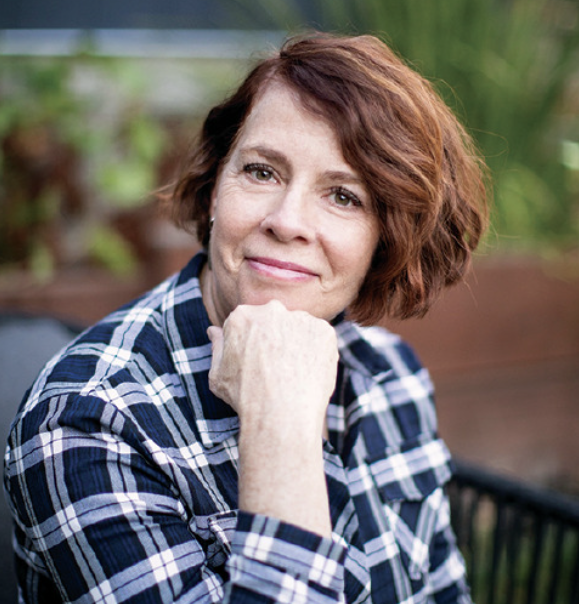
By Zoe Dunning—
I wanted to kiss her.
If I were wrong, the consequences would be ruinous. I leaned in, ready to pull back at the first sign the feelings weren’t mutual. She leaned in too, and we hesitated, each waiting to see who would pull away first. I didn’t; she didn’t. I had my first kiss with a girl.
It was 1982; I was nineteen, a sophomore at the U.S. Naval Academy. I felt the thrill and comfort of what felt like home in her arms, quickly followed by the terror of realizing what it meant. If this is who I am, I will have to hide it or lose my scholarship and my military career. And that’s what I did for the next ten years: hide.
National Coming Out Day (October 11) wasn’t a thing then. On October 12 of this year, I realized it had come and gone without my noticing. After being out for so many years, I take it for granted. That realization made me reflect on why it still matters today and every day.
As many of us have experienced, coming out isn’t a one-time event. It’s not something to knock off your to-do list. “Let’s see: 1. Clean out fridge, 2. Reschedule dental appointment, 3. Come out as queer.” It’s a daily, sometimes hourly, thing.
Members of the LGBTQ+ community have a microprocessor hidden in our brains, always calculating risk and reward: Am I safe? Will they hurt me? Will I lose my job? Will I be rejected? Will they respond by telling me all about their gay uncle/non-binary neighbor/trans niece?
Every new job assignment, new semester, new colleague, new neighbor, and new interaction offers an opportunity to be more fully known. When I order coffee and the barista compliments my blouse, I have a choice. I could respond with a simple, “Thank you.” I could say, “Thank you—I love this color.” Or I could say, “Thank you—it’s my girlfriend’s! I borrowed it today.” All are true, but how much truth can they handle, and how much am I willing to share? An interaction with a barista in the Castro might be easy, but what about one in Fresno? The constant risk-and-reward calculations can be exhausting.
According to Gallup, LGBTQ identification has more than doubled, from 3.5% in 2012 to 9% in 2025. Among adults under 30, the figure is much higher: 23%. Yet this increase in numbers and visibility does not guarantee safety. Gallup also reported that 6% of gay and lesbian adults experienced poor treatment or harassment at least occasionally in the last year.
There is no one-size-fits-all formula for coming out—how, when, where, or with whom. It is deeply personal. Yet it is so impactful when we do! We create safe harbors where others can be more of their authentic selves.
I recently attended a storytelling event featuring LGBTQ veterans, presented by Minority Veterans of America
(https://wwww.minorityvets.org). The show closed with Navy Veteran Lindsay Church sharing their story, titled 120 Miles. They described their military service, including attending the Defense Language Institute in Monterey in 2009, before the repeal of Don’t Ask, Don’t Tell. In this excerpt, Lindsay and seven other service members travel to San Francisco for Pride weekend.
“So we piled into a couple cars and we made the great trek: 120 miles. We had 48 hours to live 17 lives, to dance, to fall in love, and to break our own hearts. To be gay, and do crime.
The first night we went out, we went to the Castro. We didn’t know the history. We didn’t know that World War II veterans who had been discharged for being gay were some of its original founders. We just knew that here, we could dance.
An unknowing gift from a previous generation of us who knew we would one day need this place.
On the dance floor, we found places that words couldn’t reach, we found the connection we were being starved of, we found the touch we’d craved so badly.
For a moment our love wasn’t a crime. For a moment we were free.”
How might we make each day our own Coming Out Day? What small steps can we take to be more visible and create spaces where others feel free to dance and find places that words couldn’t reach? It could be something as small as a laptop sticker, a rainbow bracelet, or sharing a photo of you and your partner. You never know who will “one day need this place.”
Zoe Dunning is a retired U.S. Navy Commander, a leader in the repeal of Don’t Ask, Don’t Tell, and the former 1st Vice Chair of the San Francisco Democratic County Central Committee. She lives in Oakland with her rescue dog, Bobo, and is writing her memoir, “Incompatible” (working title).
Do Ask, Do Tell
Published on October 22, 2026









Recent Comments