





By Dina Novarr—
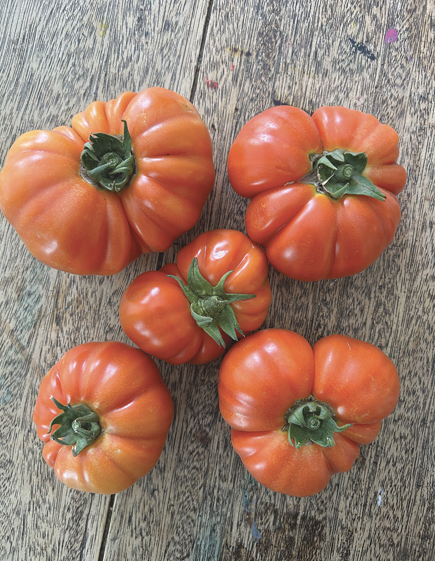
Everything good happens when it’s hot. If you got your hands on a Dirty Girl tomato this month, firm, sun-ripened and just a little too juicy for company, congratulations. You helped them make payroll. That’s not a figure of speech. Joe Schirmer has been getting dirty with Dirty Girl Produce since 1999, and nearly all of the farm’s revenue arrives in two sweaty months: September and October. The rest of the year is expensive foreplay.
“A great year of farming is breaking even,” Schirmer told me. He wasn’t joking. Farmers rarely joke about money. Turns out even the hottest thing at the market can’t get by on looks alone.
Here’s how the farm year breaks down. December, January, and February are a total wash. Then March arrives, the sun comes out, and the spending begins: seed, labor, diesel, boxes, and enough twine and metal stakes to tie up every tomato on the property. Yes, the tomatoes get tied up. It’s that kind of farm. Until about July, Schirmer gives a lot more than he’s getting.
Savings used to cover that gap. Now he draws on a credit line every year and waits for the crop to pay it off. The money used to start coming in July. Then August. Then early September. This year, it was mid-September. Meanwhile, the bills still show up right on time. Climate change is like a terrible date. It is unpredictable and unreliable every year, and always keeps us on our toes.
At least the farm used to have one steady partner. Then it started acting up too. The new diesel trucks Dirty Girl runs on are the highest-maintenance partners, quietly making farmers want to divorce the shiny new technology. It’s a cost nobody prints on a restaurant menu. From tractors in the field to box trucks hauling tomatoes more than 100 miles round trip to San Francisco and back, diesel used to be the farm’s most reliable relationship. Cleaner-diesel standards, written to keep soot out of city lungs, require a filter system on every new engine that traps particulates and periodically burns them off. Schirmer supports the goal. “We need to regulate the hell out of capitalism,” he said.
The problem is the execution. A diesel engine shakes like a paint mixer, and these modern engines are stuffed with computer sensors that rattle themselves to death. Past 100,000 miles, the trucks spend their lives in the shop, waiting on a mechanic with the right software. Schirmer figures the cost of keeping a diesel fleet running has roughly doubled in a decade, and that’s before buying fuel, which isn’t getting cheaper either. His mechanic’s dark joke: in some countries, people just cut the emissions system off and bolt it back on for inspection day. California farms play by the rules and eat the bill. Schirmer still keeps one old box truck he calls bulletproof, and his crew can fix everything on it themselves.
His real fix? Skip the patch jobs and go electric. Farming, he argues, is one of the easiest industries in America to electrify. Tractors don’t go far. Trucks are big enough to haul extra batteries. A 120-mile round trip to the city is well within EV range. He already lives this logic at home in Santa Cruz, where solar panels charge the family’s electric cars and the monthly solar panel payment costs less than his old PG&E bill. This is a man who used to drive a Suburban.
The farm is a different animal. Pumping irrigation water from deep wells runs about $3,000 a month in electricity every summer. Solar would slash that expense. But, like many California farmers, Schirmer rents, and the property owners (often family trusts with, as he puts it, 16 second cousins on the deed) have no reason to pay for panels on land they’ll never work. For a tenant, spending $30,000 on an installation that takes 15 to 20 years to pay off makes no financial sense. So, one of the sunniest businesses in California runs on the grid. Turns out the hottest thing on the farm isn’t the tomatoes. It’s the electric bill.
The double-edged sword is that Schirmer knows he can’t simply pass these rising costs onto consumers, because we won’t pay for them. We want our tomatoes ripe, local, and organic. But we also want them affordable. Labor costs are another factor. California’s farm minimum wage is $16.90 an hour, and overtime rules have tightened. Schirmer supports both. His two managers have been with him for 25 years, and his crew spans generations of the same families, including a grandfather from Oaxaca who picked tomatoes this summer. “Anybody who tells you field work is unskilled has a farm that’s gonna go out of business,” Schirmer said. Cutting corners on how he farms would mean abandoning the reason he started, so the squeeze has landed on acreage instead. Dirty Girl is down to 26 acres, its smallest footprint in a decade.
Here’s the real kicker: The problem isn’t demand. Restaurants feature Dirty Girl produce by name on their menus. Shoppers line up at the farmers’ market. The problem is timing. The money arrives in September, but the bills show up in March. That’s fixable. Restaurants, grocers, office kitchens, and anyone with a weakness for a juicy one could buy next year’s crop now. Pay in March, get it hot in August. Wine people call it buying en primeur (futures). CSAs have done a version of it for decades. Either way, it moves the risk off a single farmer holding a credit line and a shovel.
So, the next time you place a fat, red, juicy tomato slice on a burger and feel the juice drip down your wrist, remember someone floated that pleasure for six months.
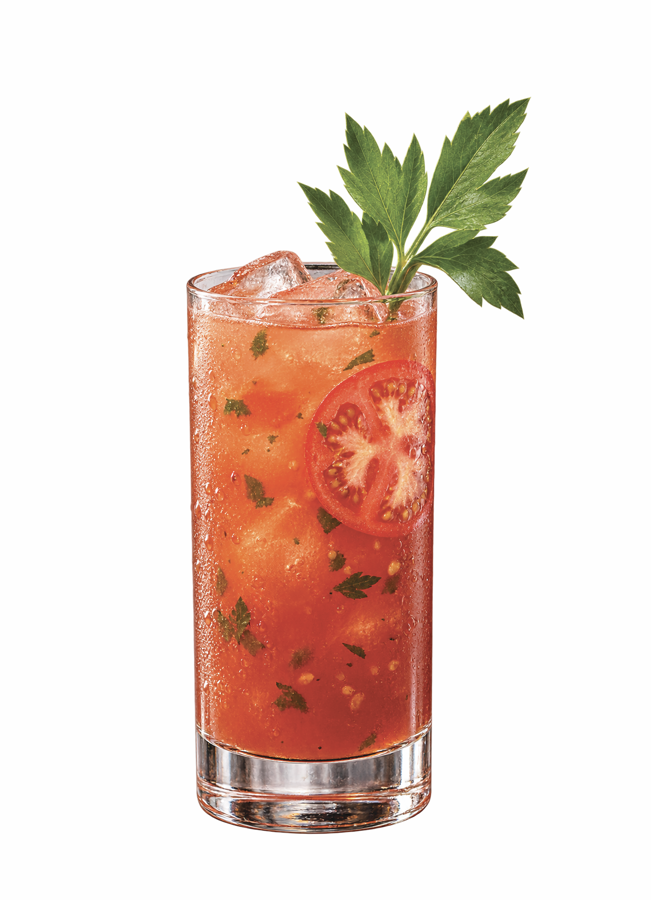
Dirty Girl in the Garden
Adapted from Matthew Biancaniello’s Lovage in the Garden
45 grams (about 1/4 cup chopped) Dirty Girl Chaco tomatoes
4 lovage leaves
1/4 ounce agave syrup
2 1/2 ounces Veso Tomato Vermouth
3/4 ounce freshly squeezed lime juice
2 dashes Angostura bitters
Pinch of sea salt
Garnish: lovage sprig
Add the chopped tomatoes, lovage leaves, and agave syrup to a shaker and muddle gently.
Add the tomato vermouth, lime juice, bitters, sea salt, and ice. Shake until well chilled.
Strain into a rocks glass over ice.
Garnish with a lovage sprig and serve immediately.
San Francisco-based Dina Novarr enjoys sharing her passion for fine wines, spirits, non-alcoholic craft beverages, and more with others.
Cocktails with Dina
Published on October 8, 2026










Recent Comments