




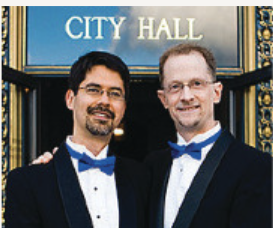
By Stuart Gaffney and John Lewis—
California law strongly protects the health and wellbeing of transgender and nonbinary school children. As such, it prohibits school districts in the state from forcing school employees to “out” queer students to their parents when the students are open about their sexuality or gender identity at school, but not at home.
But last week, the Supreme Court’s Republican supermajority struck down that law until final resolution of a legal challenge to it, by employing its notorious “shadow” docket, which fails to provide enough time for the Court to deliberate and reflect on the consequences of its decision. The effect of the decision is that California school districts can now force school personnel to disclose the sexual orientation or gender identity of students to their parents without the student’s consent, potentially putting LGBTIQ+ youth without parental support at great risk.

The Court’s supermajority, all of whom were raised Catholic, seemed results driven. The case was brought by two pairs of very conservative Catholic parents and other plaintiffs, who are represented by well-known conservative Catholic attorneys who have vigorously fought against LGBTIQ+ rights in other cases and seek to have conservative Judeo-Christian values dominate American life.
The Supreme Court’s decision was based on the parents’ asserted religious rights, as well as overall parenting rights. Justice Elena Kagan blasted the decision, questioning the supermajority’s sincerity and integrity: “The court is impatient: It already knows what it thinks, and insists on getting everything over quickly.”
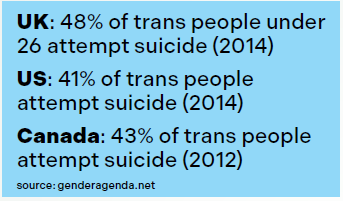
Perhaps the most disturbing aspect of the decision was that the Court seemed not to be carefully considering what should have been its paramount concern—the welfare of the two trans and gender nonbinary teens, whose parents put their lives, we’re guessing without their assent, into the center of the lawsuit. We quickly became concerned about their wellbeing as soon as we read the Supreme Court’s decision, as well as the district court’s order in favor of the parents, issued by a conservative George W. Bush appointee.
The first red flag was the descriptions of how both sets of parents did not accept the very existence of transgender and gender-nonbinary people, like their own children. The mother of one of the students declared: “As devout Catholics, my husband and I believe that there are only two genders—male and female—and that God made every person as either male or female. We accept the Church’s teaching that nobody can be born in the wrong body, that nobody can change their sex, and that efforts to do so are both sinful and harmful.”

The mother of the other student stated: “As the leaders of a devout Catholic family, my husband and I believe the Catholic Church’s teaching that there are only two sexes, male and female, that each one of us was made as male or female by God for a reason, and that one’s sex cannot be changed. We also believe that as parents we have a special duty to protect our children and raise them according to our faith tradition.”
Our minds immediately flashed to the late transgender youth Leelah Alcorn, who twelve years ago took her own life due to the extreme mental distress she experienced, because her parents, their religion and church, and others did not accept her as a transgender person. Leelah left an online public suicide note, which she hoped would help other queer youth.
In that note, Leelah recounts how, when she joyfully came out to her mom as transgender because she finally understood who she was after years of suffering, her mom “reacted extremely negatively.” In words that bear a chilling similarity to the way the parents who brought the current lawsuit describe their religious beliefs, Leelah’s mom told her: “I would never truly be a girl, that God doesn’t make mistakes, that I am wrong.”
Then Leelah directly implores parents like the ones who brought this lawsuit:
“[P]arents, please don’t tell this to your kids. Even if you are Christian or are against transgender people don’t ever say that to someone, especially your kid. That won’t do anything but make them hate them self. That’s exactly what it did to me.”
We fear for the two trans or gender nonconforming teens who are at the center of this lawsuit. From sparse information available in the courts’ opinions, one of the queer teens began presenting as a boy, contrary to his sex assigned at birth, and using a typically male name and male pronouns in seventh grade. At some point in middle school, he was president of the PRISM club, a peer support group for LGBTIQ+ students and allies, similar to former GSAs (Gay-Straight Alliances).
This teen, whose parents consider trans and gender nonbinary people living in accord their true gender to be “both sinful and harmful,” attempted suicide at the beginning of eighth grade, was hospitalized, and then re-hospitalized because he “was at risk for self-harm.” His parents transferred him to a new school for ninth grade where the parents instructed the school to refer to him as a female. Nevertheless, their child himself “once again began identifying as a boy.” And now the parents have put the child in therapy and under psychiatric care.

The other teen, whose gender assigned at birth was female, began identifying as a boy in fifth grade. Based on the parents’ representations to the courts, he apparently continued to do so until the end of seventh grade, stopped for a period of time, and once again began identifying as a boy near the end of eighth grade. The teen’s current gender identity is not specified in the Supreme Court decision, but we know that the teen’s parents have placed the teen in therapy.
Public health research is crystal clear, as even the district court that ruled in favor of these parents acknowledged based on expert testimony: “the best possible outcome” for trans and nonbinary children is for parents to “fully affirm their child’s new gender identity” and for their “child’s gender identity [to be] affirmed in both school and home life.” The two gender nonconforming kids whose lives are at issue in the current case appear not to have such parental support and show signs they may be suffering the consequences.
Under U.S. Supreme Court precedent, “religious beliefs need not be acceptable, logical, consistent, or comprehensible to others” to receive First Amendment protection. Here lies the real danger when the ideologically driven Supreme Court supermajority elevates parents’ religious views that lack grounding in reality over the best interests of the children from a research-based health perspective, putting vulnerable queer youth at risk.
The California Legislative LGBTQ Caucus condemned the Supreme Court decision. While recognizing the importance of parents, it declared: “Our commitment is unwavering: California schools must remain safe, inclusive environments where every student, including LGBTQ+ youth, can learn, grow and be the truest version of themselves.”
At age 17, Leelah already knew what was needed: “Gender needs to be taught about in schools, the earlier the better.” Trans people need to be “treated like humans, with valid feelings and human rights.” For the sake of the two teens whose parents brought this lawsuit and for the sake of all LGBTIQ+ youth, we all need to respond to Leelah’s final entreaty: “Fix society. Please.”
John Lewis and Stuart Gaffney, together for over three decades, were plaintiffs in the California case for equal marriage rights decided by the California Supreme Court in 2008. Their leadership in the grassroots organization Marriage Equality USA contributed to making same-sex marriage legal nationwide in 2015. Today, they continue to educate and advocate for marriage equality and LGBTIQ+ rights worldwide.
6/26 and Beyond
Published on March 12, 2026









Recent Comments