





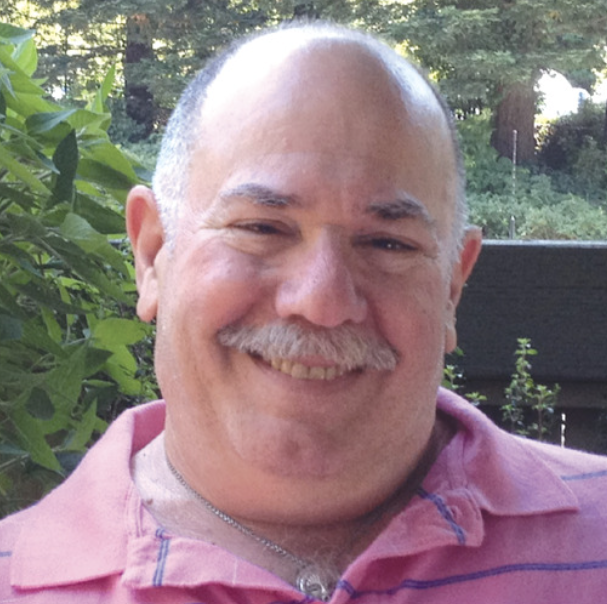
By Dr. Bill Lipsky—
It was the worst of times and the best of times for San Francisco’s temperamentals (then the most common term for lesbians and gay men). Starting in the 1910s, around the time homosexuality was considered to be a pathology, not a behavior, California’s State Legislature began passing more and increasingly severe laws against all expressions of same-sex intimacy. Eventually San Franciscans, among others, fought back, winning their first great success in 1975, when state government, after decades of increasing oppression, repealed the laws against consensual same-sex intimacy. The city’s LGBTQ+ community entered a golden age.
1901
The city boasted any number of places where men met each other for intimacy, including Union Square, Ocean Beach, Land’s End, the Embarcadero, and Lower Market Street.
A gift to the street, Douglas Tilden’s Mechanics Monument, dedicated by Mayor James Phelan, featured five nearly nude machinists, a fashion choice not recommended for actual foundry work.
1904
Julia Morgan, the first woman to be registered as an architect in California, opened her office in San Francisco.
1906
Built after the earthquake, the Sultan Baths (originally known as the Burns Hamman Baths, and not to be confused with the Sutro Baths) became the city’s earliest known “gay-friendly” business, where likeminded men could bring or meet new friends.
1908
City officials closed the Dash, the city’s first known homoerotic dance hall, because of its “degenerate female impersonators.”
1915
The California State Legislature proclaimed “acts technically known as fellatio and cunnilingus are hereby declared to be felonies.”
Famed anarchist Alexander Berkman gave what was possibly the city’s first public lecture defending homosexuality. (With fellow anarchist Emma Goldman, Berkman lived at 569 Dolores Street while they published the subversive periodical The Blast, which was later shut down by the federal government. More information, including photos, is at: https://bit.ly/4ahmgQ2 )
1918
Without legal authority, the Army instigated a raid on two Baker Street flats, leading to the arrest of more than 30 men for homosexual acts and creating the city’s first same-sex scandal.
1919
In Re Lockett, the State Supreme Court overturned the law prohibiting oral sex because it used terms that were not in an English dictionary.
1921
The California State Legislature passed a new constitutional amendment, written entirely in English, that made oral sex illegal for both women and men.
Without including specifics, a second statute banned “any act … which openly outrages public decency,” giving police permission to arrest people for virtually anything.
1924
Ending its unstated policy of essentially ignoring homosexuality unless it received complaints about such goings-on, the Police Department formed a Parks and Squares Detail, which, for the first time, actively monitored, entrapped, and arrested gay men in public places.
1929
Finocchio’s opened as a speakeasy near Union Square, then moved to North Beach in 1936, where it showcased female impersonators until the venue’s closing in 1999. (Finocchio’s star Holotta Tymes is still going strong and is the co-owner of Club 1220 in Walnut Creek.)
1933
When police invaded Tait’s Café to close down “Frisco City’s first pansy show,” the raid was inadvertently broadcast live on local radio.
1934
Mona’s, San Francisco’s first lesbian bar, “where girls will be boys,” opened on Union Street, then moved to North Beach two years later.
1944
Poet Robert Duncan published The Homosexual in Society, one of the first works of explicitly out writing in modern American history.
1949
Black Cat owner Sol Stoumen sued the State Board of Equalization to overturn its policy of revoking the licenses of bar owners who served drinks to homosexuals.
California passed legislation that allowed indefinite detention of “sexual psychopaths.”
1952
The American Psychiatric Association updated its Diagnostic and Statistical Manual (DSM) to define homosexuality as a sociopathic personality disturbance and mental disorder.
1954
Lovers Douglass Cross and George Cory wrote “I Left My Heart in San Francisco.’’
1955
Del Martin, Phyllis Lyon, and six other women formed The Daughters of Bilitis, the first lesbian civil rights organization in the United States.
1957
The Mattachine Society, the first national gay organization, relocated its corporate offices to San Francisco.
1959
The “Gayola” scandal rocked the Police Department after LGBTQ+ bar owners accused officers of taking bribes to avoid being raided.
1960
The Why Not, San Francisco’s first leather bar, opened in the Tenderloin.
1961
Female impersonator José Sarria became the first openly gay man to run for public office in the United States, receiving enough votes to prove that a bloc of LGBTQ+ voters existed in the city who could decide a close election.
The League for Civil Education (LCE), created to develop a political voice for LGBTQ+ individuals in the city, began publishing the LCE News, San Francisco’s first gay newspaper and the first in the country.
Police arrested 89 men and 14 women in the largest—although not the last—vice raid of a gay bar in the city’s history.
The Tool Box, which featured Chuck Arnett’s murals of masculine men, opened as the city’s first South of Market leather bar.
1962
Lesbian and gay bar owners formed the Tavern Guild, the first LGBTQ+ business association in the United States.
The Wild Side West, San Francisco’s longest-lasting lesbian bar, opened in in Bernal Heights.
1963
The Missouri Mule opened at 2348 Market Street, the first gay bar in Eureka Valley, now called the Castro, where “Vivacious Vivian played the honky-tonk piano as all order of Gay men gathered round.”
1964
Life magazine named San Francisco the “homosexual capital” of the United States.
The Big Glass, the city’s first Black gay bar, opened in the city’s Western Addition.
The newly founded Council on Religion and the Homosexual (CRH) sponsored a costume ball on New Year’s Eve at California Hall, where police took photographs of revelers entering and leaving the event before they raided it. The next day, ministers associated with CRH denounced the officers’ actions as “deliberate harassment and bad faith.”
Community activists launched the Society for Individual Rights (S.I.R.), whose stated goals included public affirmation of lesbian and gay identity and creation of a sense of a lesbian and gay community; within four years, it was the largest homophile organization in the country. Vector, its monthly magazine, was available at newsstands throughout the city.
1965
Crowned “Queen of the Beaux Arts Ball,” José Sarria, arguing that, because he was already a queen, declared himself “José I, Empress of San Francisco.”
Citizens Alert began operation as a 24-hour hotline that responded to incidents of police brutality against lesbians and gays.
1966
S.I.R. opened the first LGBTQ+ community center in the United States.
Gay activists rallied on the steps the Federal Building in San Francisco’s Civic Center to publicly protest the exclusion of homosexuals from the military.
Maud’s Study, which became one of the country’s most influential lesbian gathering spaces, opened in the Haight at a time when women could not be hired as bartenders.
With cross-dressing still illegal, transgender people rioted when police harassed them once again at Compton’s Cafeteria in the Tenderloin.
With help from urban ministers, anti-poverty organizers, and homophile activists, self-described “drug addicts, pillheads, teenage hustlers, lesbians, and homosexuals who make San Francisco’s ‘Meat Rack’ their home,” founded Vanguard as an organization for queer street youth.
1969
The Gay Liberation Front (GLF) protested the San Francisco Examiner’s insulting depictions of homosexuals on what became known as “Friday of the Purple Hand” after the newspaper’s employees dumped printer’s ink onto demonstrators.
1970
Thirty self-described “hair fairies” marched down Polk Street from Aquatic Park to City Hall to celebrate the first anniversary of the Stonewall Riots.
Several thousand revelers rallied at Speedway Meadows in Golden Gate Park for the “Christopher Street Liberation Day” Gay-In.
1971
Police arrested 20 trans people at the Cinnabar during a sweep of the Tenderloin.
1972
The Twin Peaks Tavern installed large plate-glass windows, a first for an establishment whose customers in previous years typically desired anonymity and privacy from passersby.
San Franciscans witnessed their first official Pride parade.
Bill Lipsky, Ph.D., author of “LGBTQ+ Trailblazers of San Francisco” (2023) and “Gay and Lesbian San Francisco” (2006), is a member of the Rainbow Honor Walk board of directors.
Faces from Our LGBTQ Past
Published on June 25, 2026





Recent Comments