




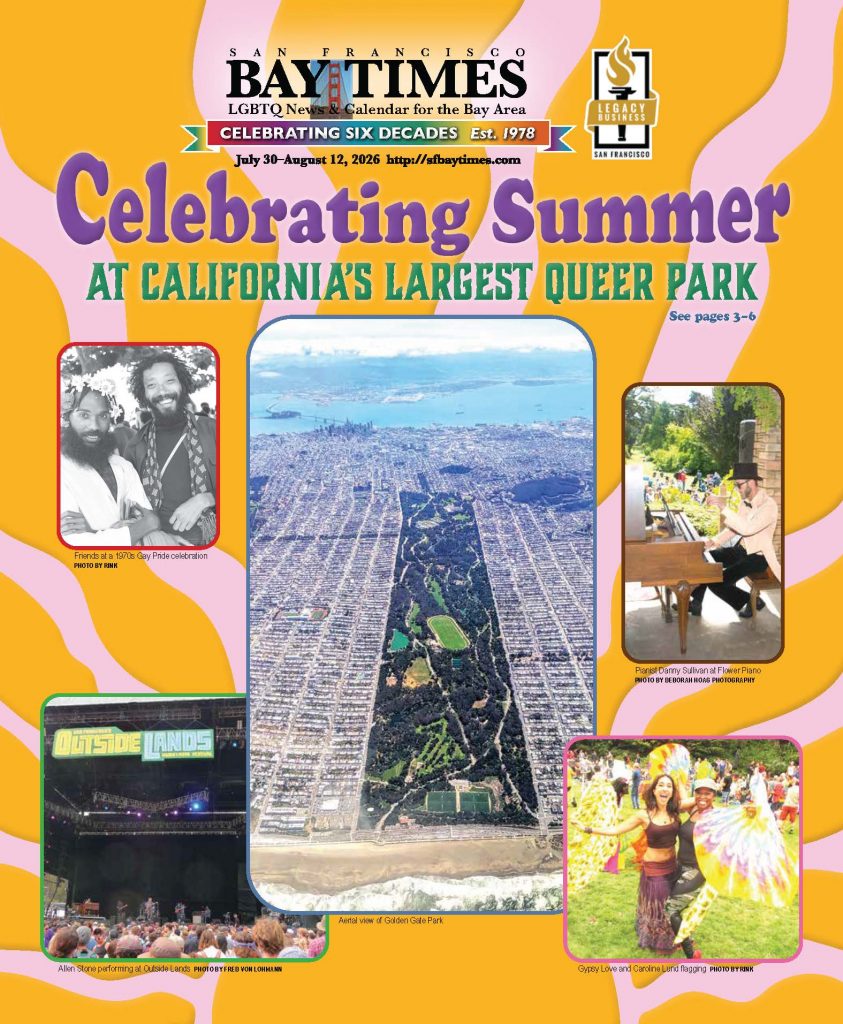
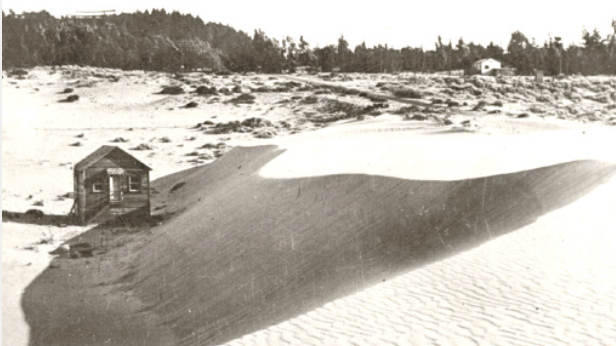
When nineteenth-century critics dismissed San Francisco’s ambitious park plan as a foolish attempt to grow greenery on barren ocean dunes, few could have predicted the triumph that would rise from the sand. Today, Golden Gate Park stands as an engineering and ecological miracle, spanning over 1,017 acres—a massive emerald corridor stretching three miles long from the heart of the city straight to the crashing waves of the Pacific Ocean.
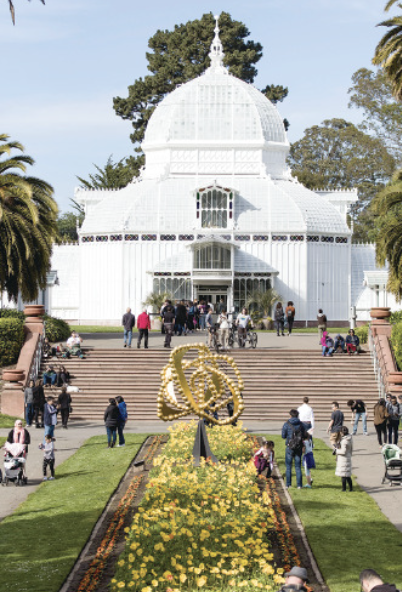
Larger than New York’s Central Park, this sprawling urban haven defies simple categorization. Where else can visitors wander beneath towering eucalyptus groves, spot a resident herd of American bison grazing in an open meadow, step into a glass Victorian conservatory, and explore world-class art and science museums, all within a single afternoon? More than just green space, Golden Gate Park is the soul of San Francisco, offering a seemingly endless, living tapestry where culture, history, and wild coastal nature intertwine.
It is also the queerest park of its size in California. While Mission Dolores Park, with its “Gay Beach” sunny southwest slope, is widely viewed as the gayest park of San Francisco, and Buena Vista Park holds the number two spot, Golden Gate Park has its own significant gay cred and is nearly 20 times larger than both of these smaller parks combined. Rounding out our list from a statewide perspective are Elysian Park and Griffith Park in Los Angeles, Russian River/Armstrong Redwoods in Guerneville, Plummer Park in West Hollywood, Will Rogers State Beach/”Ginger Rogers Beach” in Pacific Palisades, and West Street Beach in Laguna Beach. All are culturally significant or popular within California’s LGBTQ+ community and with queer visitors from outside the state.
A Past Rooted in Queer History
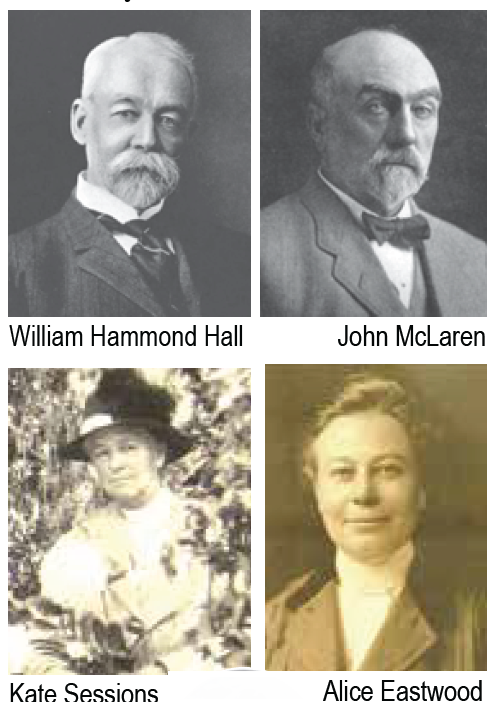
The primary initial visionaries of Golden Gate Park, engineer William Hammond Hall and horticulturalist John McLaren, were in the same bohemian creative and cultural circles as power park duo Kate Sessions (the “Mother of Balboa Park”) and Alice Eastwood, who built the botanical collection at the California Academy of Sciences. Sessions once wrote to Eastwood, with whom she was close to for decades: “Our friendship developed through flowers … our children, which I am growing and you are naming.”
Renowned architect and engineer Julia Morgan, who also never married yet championed same-sex couples, was additionally in that elite group, and was so interested in the creation of Golden Gate Park that she designed a Museum of Medieval Art that was meant to house the historic stones of a 12th century Spanish monastery. Newspaper tycoon William Randolph Hearst had purchased the dismantled monastery, Santa María de Óvila, but World War II halted the museum project and then a series of fires obliterated much of the stones’ identifying markings. Fragments of these historic stones are scattered in parts of today’s Golden Gate Park! Visitors can look for them in the Botanical Garden’s Liberty Terrace Garden (carved arch stones and blocks displaying their original medieval mason marks) and in the Succulent and Fragrance Gardens, where they are integrated into the pathways and garden beds. They also help form the low circular arrangements known as the “Druid Circles” within the historic oak grove of Monarch Bear Grove located near Nancy Pelosi Drive.
Isabella “Bella” Worn was yet another powerful horticulturist in this circle who never married. Worn frequently collaborated with Morgan. She is more remembered for her decades-long work at the majestic Filoli Historic House & Garden, but her influence was much broader as she was a defining figure in early-to-mid 20th century California design.
As Sessions indicated, many of these individuals never had children but dedicated their lives to creating buildings, gardens, and other spaces for all to enjoy over countless generations. Morgan’s burial site is near that of former San Francisco Bay Times columnist Elaine Viegas at another extraordinary property, park-like Mountain View Cemetery in Oakland designed by Central Park’s landscape architect Frederick Law Olmsted; Morgan’s stone there is simple and barely noticeable. Hall has a similar simple burial at Cypress Lawn Memorial Park in Colma, California, where McLaren is also buried. It is thought-provoking to consider their legacies, forged more in their immeasurable, lasting work for the public rather than focusing on themselves.
Couple Nurtures Iconic Urban Landscapes
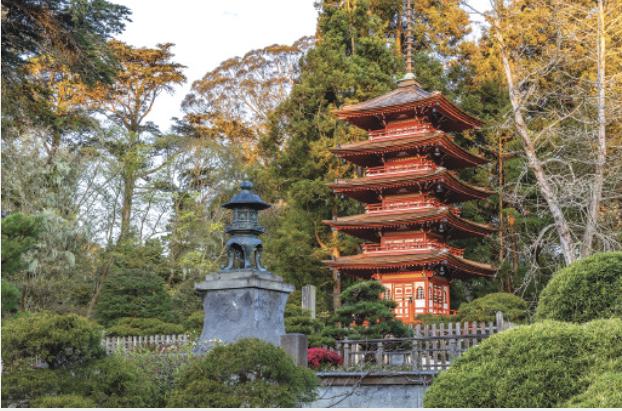
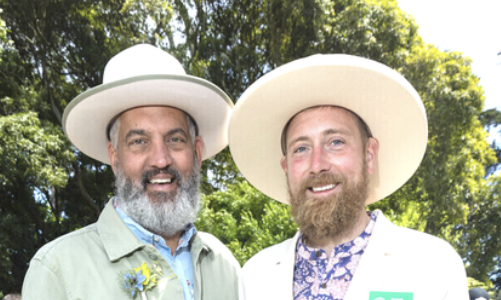
Joe Rothleutner and his husband Jim Salyards are two of Northern California’s most influential leaders of garden management and design. Rothleutner plays a vital role in nurturing the Bay Area’s iconic urban landscapes as the Garden Director for the Gardens of Golden Gate Park—which encompasses the San Francisco Botanical Garden, the Conservatory of Flowers, and the Japanese Tea Garden. With a rich background in urban forestry and public horticulture, Rothleutner oversees the stewardship and conservation of thousands of rare plant species while championing civic partnerships that expand green spaces across San Francisco. By focusing on plant health, sustainable facilities management, and seamless public accessibility, his leadership ensures that these world-class botanical collections remain vibrant, welcoming sanctuaries for over a million visitors each year.
Down the peninsula in Woodside, Salyards has dedicated decades to transforming how historical and public spaces approach modern gardening at the renowned Filoli estate. Serving as Associate Director of Horticultural Initiatives, Salyards has spearheaded climate resiliency efforts, transitioning traditional display beds toward sustainable, water-wise plantings, organic soil management, and reduced pesticide usage. Beyond Filoli, his active advocacy for regional public gardens—including supporting historic botanical sites across the Bay Area—helps educate both home gardeners and professional horticulturists on how to maintain beautiful, eco-friendly landscapes suited to California’s evolving climate.
Important Historic LGBTQ+ Events
Thanks to the efforts of Rothleutner and his colleagues, along with other staff and volunteers, Golden Gate Park remains San Francisco’s ultimate green space. The park has also played a pivotal role in LGBTQ+ history, serving as a sanctuary for radical visibility, athletic milestone events, and early community organizing. Here are just five of the many significant historic LGBTQ+ events that took place within the park:
1. Summer of Love (1967)
The Summer of Love was a 1967 social phenomenon in San Francisco’s Haight-Ashbury district that spilled into nearby Golden Gate Park where 100,000 young people converged to promote peace, alternative lifestyles, and free love. It connected to the LGBTQ community by fostering an emphasis on personal authenticity and sexual liberation that paved the way for modern gay liberation.
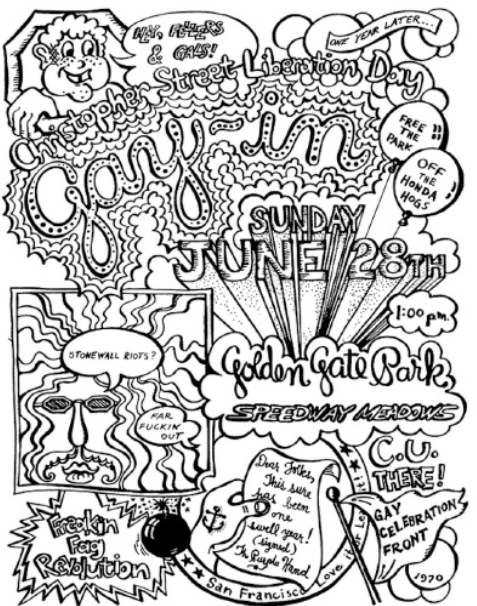
2. The Inaugural “Gay-In” Picnic (1970)
On June 28, 1970—the day after a small group marched down Polk Street to mark the one-year anniversary of the Stonewall Riots—roughly 200 people gathered for a “Gay-In” picnic in Speedway Meadows (now Hellman Hollow). This informal picnic and political gathering directly inaugurated what would eventually evolve into San Francisco Pride.
3. Early Gay Freedom Day Rallies (1970s)
Throughout the early-to-mid 1970s, before San Francisco Pride outgrew park capacity and moved its primary festivals to Civic Center, Golden Gate Park’s open fields, including Marx Meadow and Speedway Meadow, served as the main destination for post-parade rallies, performances, and activist speeches during Gay Freedom Day celebrations.
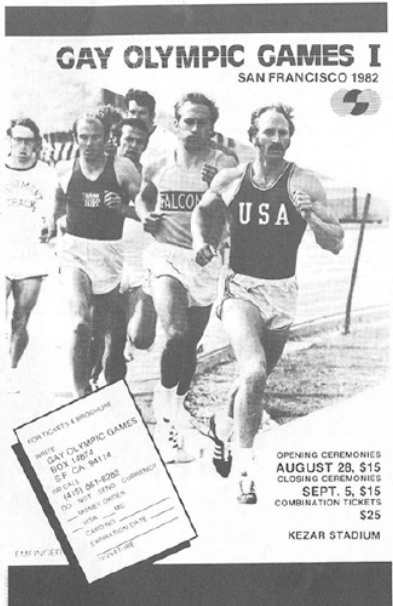
4. The First Gay Games at Kezar Stadium (1982)
In August 1982, Kezar Stadium, located on the southeastern edge of Golden Gate Park, hosted the inaugural Gay Games. Founded by Olympic decathlete Tom Waddell, the international sports and cultural event brought together over 1,350 LGBTQ+ athletes from 10 countries competing across 17 sports, establishing a global tradition promoting inclusion in athletics.
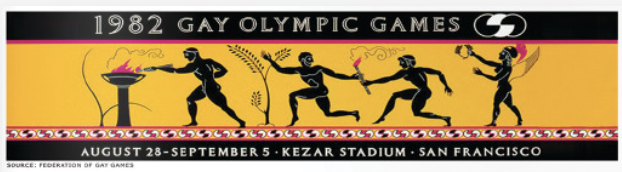
5. Counterculture & Queer Liberation Crossroads (1960s)
During the 1960s counterculture movement, Golden Gate Park’s Polo Field and meadows hosted massive gatherings like the 1967 Human Be-In. The park provided open public space where gay liberation activists, beat poets, and “hair fairies” (early gender-nonconforming and trans activists) could socialize and organize openly at a time when police raids frequently targeted indoor queer gathering places across the city.
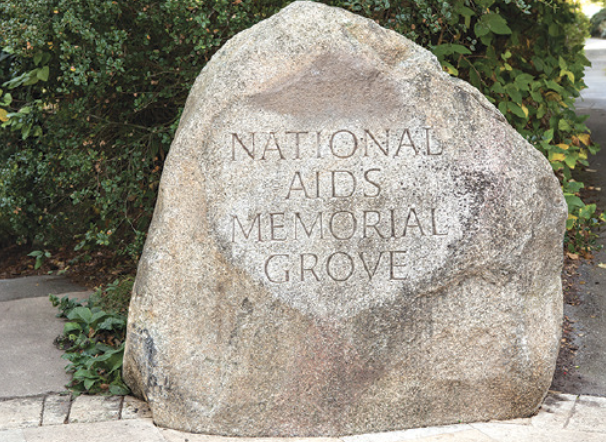
National AIDS Memorial Grove
Nestled in the lush de Laveaga Dell in the eastern end of Golden Gate Park lies the National AIDS Memorial Grove, a serene ten-acre sanctuary created as a living memorial to all those affected by the HIV/AIDS pandemic. Conceived in 1988 at the peak of the crisis, when San Francisco’s LGBTQ+ community was facing unfathomable loss, a small, dedicated group sought to transform a neglected, overgrown ravine into a sacred public space for healing, grief, and remembrance.
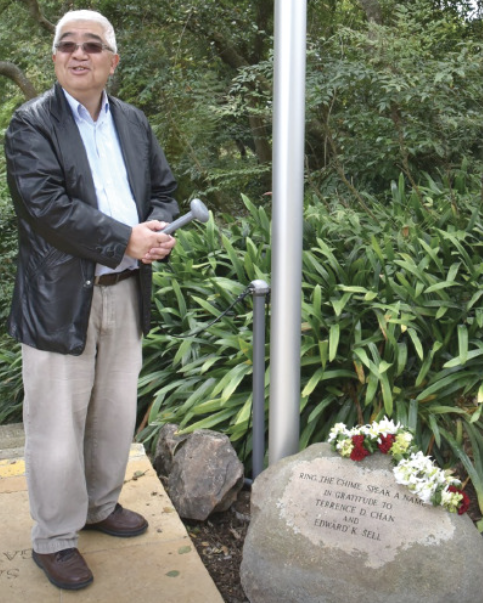
Officially breaking ground in 1991 and designated as a national memorial by Congress in 1996, the grove features peaceful stone pathways, towering redwoods, fern valleys, and engraved stone portals where thousands of names are carved into granite. Rather than a static monument of bronze or marble, it remains a dynamic, living landscape maintained through decades of community care and monthly volunteer workdays. Bay Times columnist Joanie Juster is one of the long-time volunteers.
The creation of the grove was driven by the resilience and vision of local LGBTQ+ community leaders, landscape architects, and allies who channeled their collective grief into radical civic action. Early gay visionaries and advocates—such as landscape designer Stephen Marcus, who worked tirelessly on the project while battling AIDS himself, alongside community leaders like James Hormel and David Linger—collaborated with local environmental planners to design a space rooted in restoration and hope.
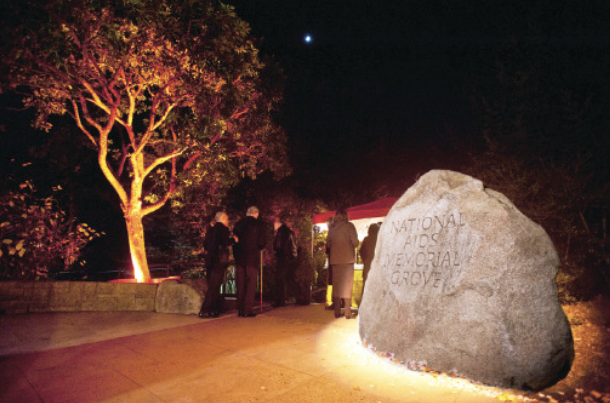
Queer artists, gardeners, and activists, joined by grieving loved ones and allies, volunteered hundreds of thousands of hours clearing brush, planting trees, and building stone terraces. By physically reclaiming the land, these individuals built, not only a sanctuary of solace for a devastated community, but also an enduring piece of national historic infrastructure that ensures the lives lost to AIDS will never be forgotten.
Queer Ecology Realized
Queer ecology—an interdisciplinary field that examines the intersections of nature, sexuality, gender, and environmental justice—challenges the traditional, rigid binaries of what is considered “natural” versus “unnatural.” Rather than viewing nature as an orderly, heterosexual backdrop designed strictly for human utility, queer ecology embraces fluidity, adaptation, non-normative relationships, and human-nature interdependence. Golden Gate Park aligns with queer ecology in several deep, structural ways. The park:
– has reclaimed and transformed “unnatural” space;
– deconstructs the “designed” purpose of urban parks;
– showcases biological fluidity and non-normative flora and fauna;
– is simultaneously synthetic and wild, engineered and organic;
– and evidences that nature and human culture are fluid and constantly evolving.
A near-constant of the park, however, is its generally fresh and clean air. Onshore winds push maritime air straight across the western edge of the city, helping prevent heavy pollutant buildup in the park, while thousands of mature trees and open plant life aid in filtering localized urban impurities inside the park boundaries.
Whether you are counting the days to a summer vacation in faraway places or are planning to spend the months here in the Bay Area, block off time to spend in San Francisco’s own Golden Gate Park. Summer is a prime blooming season across the park’s gardens, visitors can escape much of the heat in the site’s microclimate, and some of the city’s largest and best music festivals and concert series take place in the park. And here’s one more thing to keep in mind: There is no public record of President Donald Trump ever having visited Golden Gate Park.
California’s Largest Queer Park
Published on July 30, 2026







Recent Comments