




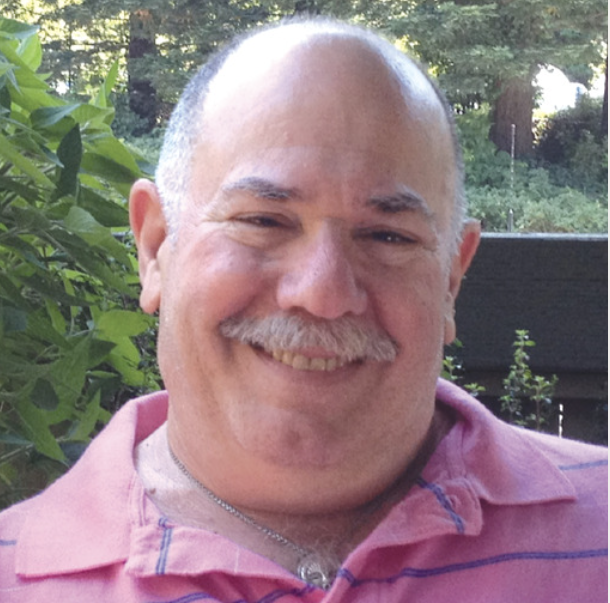
By Dr. Bill Lipsky –
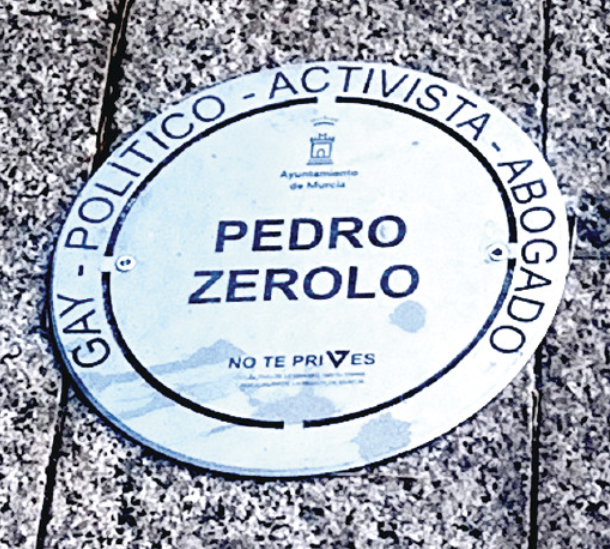
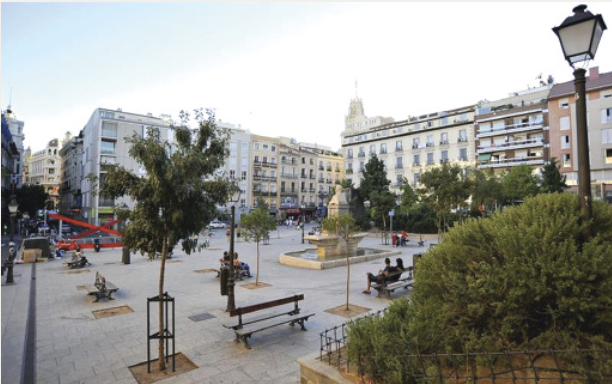
The Plaza de Pedro Zerolo, the vibrant heart of Madrid’s Chueca neighborhood, is a public square located in the center of Spain’s ancient capitol. Named for one of the most prominent figures in the country’s crusade to win equal rights for its LGBT residents, it is not only a tribute in the community he championed, but also “a monument to remember all the lesbian, gay, bisexual, and transgender individuals who have been persecuted throughout the centuries for their sexual orientation and gender identity.”
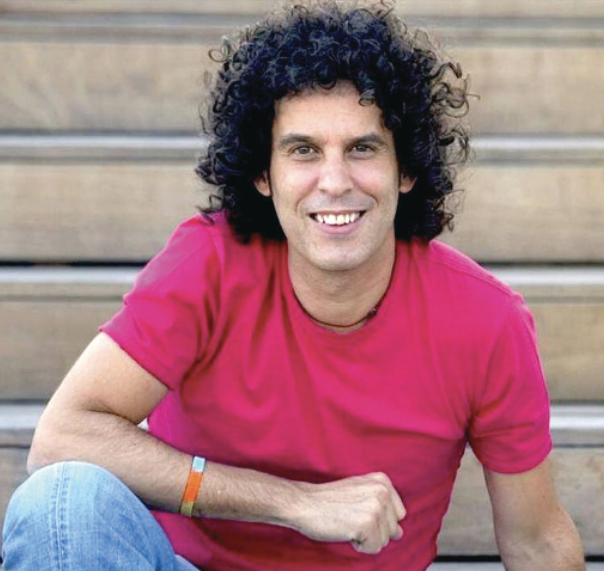

Pedro Zerolo was born in 1960 in Caracas, Venezuela; his father, a painter and progressive civic leader, had moved there from Tenerife, the largest of Spain’s Canary Islands, as a republican exile of the Spanish civil war. After the fall of Spain’s fascist government in 1975, his family returned to the island, where Zerolo completed a law degree before moving to Madrid in 1982. First as a lawyer, then as a politician, but, especially as an advocate for social change, he became a passionate activist of equality for LGBTQ+ people.
In 1992, the always openly gay Zerolo was named legal consultant for the organization Colectivo Gay de Madrid(COLGAM), founded in 1988. He then worked to create the Spanish Federation of Lesbians, Gays, Transsexuals, and Bisexuals (FEGL), which is today the largest coalition of LGBTQ+ organizations in Spain. He became the organization’s president in 1998 and was reelected in 2000 and 2002. Then, as a leading figure in the Spanish Socialist Workers’ Party (PSOE), Zerolo was elected to the City Council of Madrid in 2004.

The same year, José Luis Rodríguez Zapatero, Spain’s newly elected prime minister, chose Zerolo to be his principal advisor about civil rights. His first assignment: a key role in the efforts to change the Spanish civil code so that it unquestionably guaranteed marriage equality to the country’s LGBTQ+ residents. Although it seemed a task too difficult to achieve against the conservative opposition, Zerolo refused to be intimidated and he refused to compromise. “Do you want rights?” he asked. “Be united and aim for the best.”
The bill to recognize marriage equality in Spain was concise and specific, adding a single paragraph to Article 44 of the nation’s Civil Code: “Matrimony shall have the same requisites and effects regardless of whether the prospective spouses are of the same or different genders.” It passed the legislature on June 30, 2005. King Juan Carlos I gave his royal assent the next day. The new law appeared in the July 2 Boletín Oficial del Estado and went into effect on July 3.
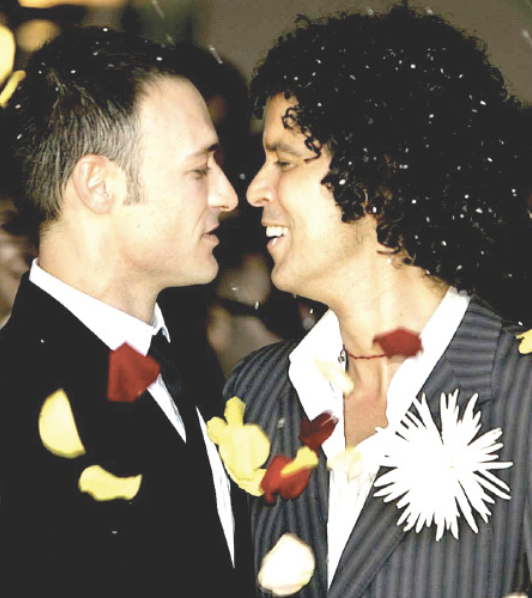
Spain became only the third nation in the world to recognize marriage equality, following the Netherlands and Belgium, 17 days before Canada did the same, and ten years before the U.S. Supreme Court invalidated all state barriers to same-sex marriage on June 26, 2015. “We are expanding the opportunities for the happiness of our neighbors, our colleagues, our friends, and our relatives,” Prime Minister Zapatero stated before the final vote on the legislation. “At the same time, we are building a more decent society.”
Asked to describe his feelings after the first wedding of two men in Madrid, Zerolo said it was “a triumph of common sense and the state of law.” The following October, he married Jesús Santos, his partner of ten years. He also officiated at the marriage of feminist activist and politician Ángeles Álvarez, author of a pioneering study about gender violence, to Teresa Heredero, the first women to marry each other. Since then, more than 75,000 same-sex marriages have taken place in Spain.
Zerolo clearly understood that no one has equal rights unless everybody has them. For him, the marriage law was only a beginning. It was not, he stated, “a law born from an isolated action. It is a measure that is part of a very specific overall policy, aimed at ensuring full equality among men and women in the country and among heterosexuals, homosexuals, transsexuals, bisexuals,” He also had in mind the Romani, and immigrants. How do you achieve that full equality? He said, “By fighting, not only for our own rights, but for the rights of all.”
Zerolo died too young in 2015 at the age of 55, but his great unifying strategy for change endured. When Spain enacted its landmark Comprehensive Law 15/2022 for Equal Treatment and Non-Discrimination in 2022, it was named the “Zerolo Law” in his memory. A broadly encompassing civil rights act, it explicitly protects individuals from discrimination based on their sexual orientation, gender identity, sex, race, age, disability, illness or health status, genetic features, language, and socioeconomic status. In addition, it guarantees gender self-determination and bans conversion therapy.
Ten years later, on the twentieth anniversary of marriage equality in Spain, Pedro Sánchez, elected to serve as the nation’s Prime Minister in 2018, joined the stellar celebration “of pride, memory, and gratitude” organized by the LGBTQ+ State Federation and the Ministry of Equality. He began by noting that, for the more than eight million people who had been born in Spain since 2005, “the idea that two men or two women can marry or form a family is absolutely normal.”
He acknowledged the great leadership of former Prime Minister Zapatero, who also attended and spoke at the event, and “the courageous vote of the parliamentary groups that made this majority possible.” In addition, he said, “We cannot remember this achievement without mentioning the person who gave it a face, a heart, and a lot of eloquent words, Pedro Zerolo.” His own next words were: “for the bravest, for the greatest leader, for the one who did the most to recognize this right.”
The Prime Minister concluded by affirming, “We have learned that freedom is not a destination; it is a daily commitment.” Then he added, “Let them hear it well, both inside and outside. Here we do not go backwards; here we move forward and always look ahead. Here we live with pride, pride in the country and pride in its people.” Zerolo played a crucial role in creating that pride with his greatest and most enduring achievement: the crusade to achieve equal rights for all.
Bill Lipsky, Ph.D., author of “LGBTQ+ Trailblazers of San Francisco” (2023) and “Gay and Lesbian San Francisco” (2006), is a member of the Rainbow Honor Walk board of directors.
Faces from Our LGBTQ Past
Published on December 18, 2025










Recent Comments