





By Gary M. Kramer—
The 2026 San Francisco International Film Festival will screen April 24 through May 5 at various Bay Area venues. There are several features, documentaries, and shorts by queer filmmakers or about LGBTQ themes including Give Me the Ball!,a documentary about Billie Jean King. Here is a rundown of three feature-length documentaries and six shorts from this year’s festival.

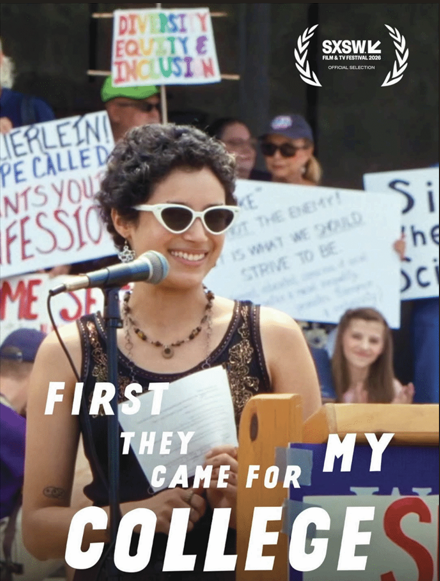
First They Came for My College is director Patrick Bresnan’s galvanizing documentary about the hostile takeover of New College of Florida in Sarasota. This liberal arts honors college, once a community of radical acceptance, was targeted by Florida Governor Ron DeSantis’ campaign to eliminate DEI. His efforts turned the school into a more conservative institution. Bresnan sits in on infuriating board meetings where decisions are made to fire the college president, deny tenure, and discontinue the Gender Studies programs. Students and parents and faculty are seen protesting, but, despite their inspirational efforts, it soon becomes clear that they are fighting a war of attrition. The various queer students do engage in efforts of resistance—such as hosting a screening of The Rocky Horror Picture Show—which provide them with a safe space on campus. However, it is horrifying to see books being removed from the library, or for the garden the students grow being destroyed with chainsaws. First They Came for My College is an allegory for how efforts to change the culture start with destruction. It is guaranteed to make queer viewers’ blood boil.
Adam’s Apple is a tender profile of Adam Sieswerda, a trans teen growing up in New Hampshire. Filmed by his mother, Amy, this personal documentary chronicles Adam’s life through birthdays and other milestones—from learning to drive and starting T, to getting a mastectomy and dating, as well as going off to college and getting a tattoo. Jenkins captures her son’s emotional arcs, from “wanting to do everything I can to just be one of the boys” to his debates with his parents over his deadname. The film shows how he comes to accept himself as he matures. Jenkins also includes her own reactions to her son’s growth from love and pride to fear and her own anxiety. A beautifully realized dual portrait, Adam’s Apple will resonate with both trans teens and their parents alike.
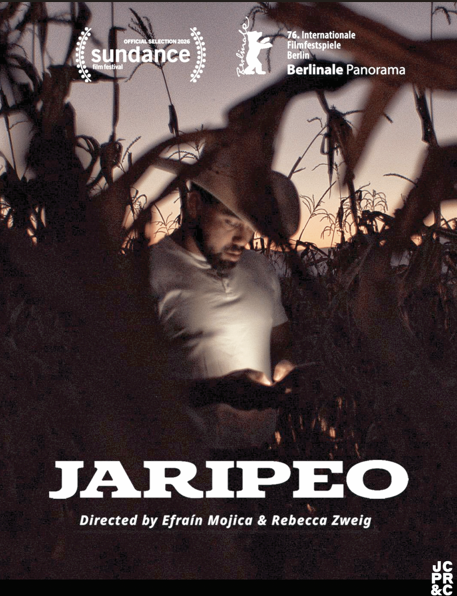
The fantastic documentary Jaripeo immerses viewers in the hidden world of queer rancheros in Michoacán. Efraín Mojica, who codirected with Rebecca Zweig, explores the expectations around masculinity and sexuality in this rodeo culture. There are discussions of the secret glances, flirting, and discrete behavior—usually after drinking— that these men engage in, but the men often fail to form lasting relationships. Jaripeo features interviews with a macho man, Noé, who only wants to be with other masculine men, as well as a guy who is more effeminate and feels he has the support of the community. One segment chronicles a performer who dresses as a “sexy, cheeky lady” for the rodeo. Mojica, who is not out to his family, also talks with guys about the guilt and fear he and some of his fellow rancheros have regarding being open about their sexuality and how attitudes about masculinity, especially in remote areas, are passed down through one’s parents. In between these episodes, Mojica intersperses artfully made Super-8 segments of the rodeo culture, and there are many scenes of the rodeo itself—including bull roping and riding to the dancing after the events. Jaripeo provides a fascinating glimpse into a little-seen subculture.
Shorts Program 1: Human Flow features Drifting, South, director Di Zhang’s poetic meditation on a trio of lives in Guangzhou, China. A pregnant young woman, A Yi (Liang tiantian), is doing makeup for a queer dancer, Xiao Bei (Zhimin Liao), who invites her to see fireworks. However, she encounters a young boy, Enzo (Enzou Wu), and spends time with him, while Xiao Bei couples up with a fellow dancer. This beautiful quotidian short, shot in 16mm, is about its three characters drifting through life, making connections and seeking belonging.
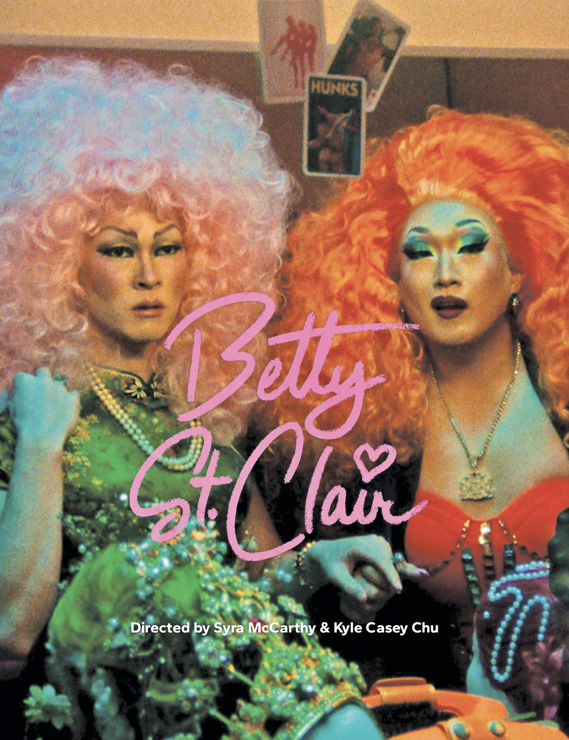
Shorts Block 3: Shapes of Love includes Betty St. Clair, an amusing short about the titular character (Edric Young), a drag queen who gets manic backstage before performing at a senior center. Betty goes into panic mode when she recognizes her grandfather (Victor Lim) is in the audience. The comedy comes from the anxiety Betty feels, but there is also some heart as she and her best friend Candace (Kay Bebe Queue) perform “Just for You” by REO Speedwagon. How Betty reacts to the crowd and how the crowd responds to Betty provide the film with its tension.
Also in the program is Buckskin,non-binary filmmaker Mars (Marianne) Verrone’s elegiac documentary portrait of their grandfather, Dr. Carroll B. Williams, Jr., a forester who was one of the first Black men in the profession. Williams was nicknamed “buckskin” because of the color of his skin, Verrone shrewdly has footage of insects scavenging while Williams describes one episode of racism. The filmmaker features images of redwoods—because they are the masters of the forest and remind Verrone of their grandfather—as well as reflections by Williams to address issues of memory, knowledge, and conservation as well as thoughts on legacy and the end of life. Buckskin also uses text on screen, superimpositions, and visual colleges to make salient points about minorities and the environment—especially when Williams discusses his Kiowa heritage. This is a moving film that was lovingly made.
Shorts Block 4: Shades of Menace includes two gay-themed films. The fantastic short, Callback, written and directed by Matthew Puccini, has boyfriends and actors Max (Justin H. Min) and Will (Michael Hsu Rosen) come to some hard truths about their relationship when one gets a callback for a role. The “good news” sets off a chain of conversations, and an acting contest that lays bare the power dynamics of their relationship—which involve issues of control, jealousy, truth, and trust. Darkly funny and featuring crackerjack timing by the two leads, Callback is a sharp short that blurs the lines between being sincere and being polite.
The Veil,directed and cowrittenby Gabriel Motta, is an effective shocker from Brazil about Ismael (Robson Lima Duarte), who runs a religious service where his son Junior (Phill) provides salvation to those troubled souls who sit with him under a giant veil. After a tragedy at the end of one session, Junior is reluctant to continue—especially when his encounter with a young man stirs up his same-sex desires. When Rebeca (Rafaela Lima) takes over, things really spin out of control. The Veil may be bloody, but it makes salient points about faith, homophobia, and how evangelicals proselytize. Both Puccini and Motta are expected to attend the post-screening Q&A.
Shorts Block 6: Youth Works includes Out of the Blue, Vivian Nguyen’s short (3 minutes) but sweet film that has Blue (Emi Harris) fantasizing about movie nights and a trip to Paris with a customer, Orange (Sophia Delmon), who is checking out with some groceries. The film mixes animation and some visual effects to create a dreamy possible romance.
© 2026 Gary M. Kramer
Gary M. Kramer is the author of “Independent Queer Cinema: Reviews and Interviews,” and the co-editor of “Directory of World Cinema: Argentina.” He teaches Short Attention Span Cinema at the Bryn Mawr Film Institute and is the moderator for Cinema Salon, a weekly film discussion group. Follow him on IG @garyemkramer
Film
Published on April 23, 2026









Recent Comments