




By Dr. Tim Seelig—
We all know the slogan is: “Music Is the Universal Language.” How could we not? It adorns refrigerator magnets, Hallmark cards, and music classrooms all over the world. Quick research shows it is a saying that is used in many countries and many languages.
At face value, it sounds incredibly naïve. If there is a language all people could somehow share, such as music, wouldn’t we stop killing each other? If we had something powerful in common, would it matter that we come in so many varieties? If there is such a language, how do we find it, learn it, speak it, or play or sing it? And where did the slogan come from?
We may have thought the slogan was invented by some marketing firm or music sales company. Nope. It is fascinating that writers and philosophers in the mid 19th century had much to say about the power of music. Henry Wadsworth Longfellow was first with the original in 1835: “Music is the universal language of mankind.” In 1840, Hans Christian Andersen said, “When words fail, music speaks.” It was 1864 when Victor Hugo said, “Music expresses that which cannot be put into words and that which cannot remain silent.” And, finally, in 1890, George Bernard Shaw wrote, “Though music is the universal language, it is spoken with all sorts of accents.”
All of these are amazing and tell me everything I need to know about promoting the addition of queer to the slogan. It’s as if they were describing our queer music. It transcends language. We’ve turned to it when we cannot remain silent, and boy, are there many accents, colors, genres, and meanings.
I wish there were a refrigerator magnet that said, “Queer Music Is the Universal Language.” There should be. Maybe I’ll make them.
We gays love music—of all kinds. I am certainly grateful since queer music has provided me a full-time living for almost 40 years! There is a huge world-wide audience for queer music! Out of around approximately 193 countries on earth, 100 countries have Pride celebrations. Only 90 ban Pride celebrations. We are winning by a small margin. That should make “queer” music the universal language. What would a Pride event be without music? A silent retreat in a monastery. That won’t do for so many reasons (such as the robes; oh the robes. They are a hideous brown and scratchy, so I hear.) Being silent for more than ten minutes makes me itch already.
If you don’t think queer music is the international language, go to any Pride celebration in the world and you will hear much of the same music; some of it translated, some of it not. Take an LGBTQ+ cruise with international passengers from every corner of the globe and, voilà, you’re singing the same songs by the pool. There are gay choruses all over the world, on every continent, and the music is shared from country to country. The gay, lesbian, and trans choruses are exploding, in terms of numbers and reach.
As for the names of queer songs for Pride, here are some gleaned from various internet sources. There are so many more. So many. Please forgive me if your personal favorite has been omitted. I am 100% certain that will happen. But just consider how huge the catalog of queer music is. And it is as wildly diverse as we are.
There are songs that would fit in any bar or cruise anywhere, making them universal. Played loudly over giant speakers, who could not sing along to “I’m Coming Out,” “Dancin’ Queen,” “Mighty Real,” “YMCA,” “We Are Family,” “Sissy That Walk,” or “Pink Pony Club”?!
There are some with deeper messages than just having a KiKi. We proclaim to our family and friends that our orientation is not a phase, a ”sexual preference,” or a “lifestyle choice.” We proclaim loudly, “I Was Born This Way.” In addition, we show our “True Colors” and can always find our way back home “Over the Rainbow.” Few songs deliver such a powerful message as “I Am What I Am.”
Broadway shows tour the world to massive audiences and have promoted our stories like no other theatrical genre. This is a scratch of the surface: La Cage aux Folles, Falsettos, Priscilla, Kinky Boots, Hedwig, Billy Elliot, The Prom, Fun Home, Everyone’s Talking About Jaime, A Strange Loop, and many others.
Queer music has its iconic creators and goddesses including Chappell Roan, Cher, Madonna, Sylvester, Cyndi Lauper, Melissa Ehteridge, Katy Perry, Queen, Diana Ross, Judy Garland, Christina Aguilera, and Pink. Some need only one name: Elton, Lady Gaga, k.d., RuPaul, Beyoncé. Groups and gods include the Scissor Sisters, Indigo Girls, Tegan and Sara, ABBA, The Weather Girls, Village People, George Michael, Sam Smith, Freddie Mercury, and Troye Sivan.
One reason I know queer music is the universal language is the fact that the straights love it, too! Our queer music is not just catchy; it is life-affirming. There is an unspoken bond we feel with people we don’t know or will ever meet when we imagine our queer family members are listening to and singing the same music we are singing. There is deep meaning flowing through all this music—even the songs that may not seem important.
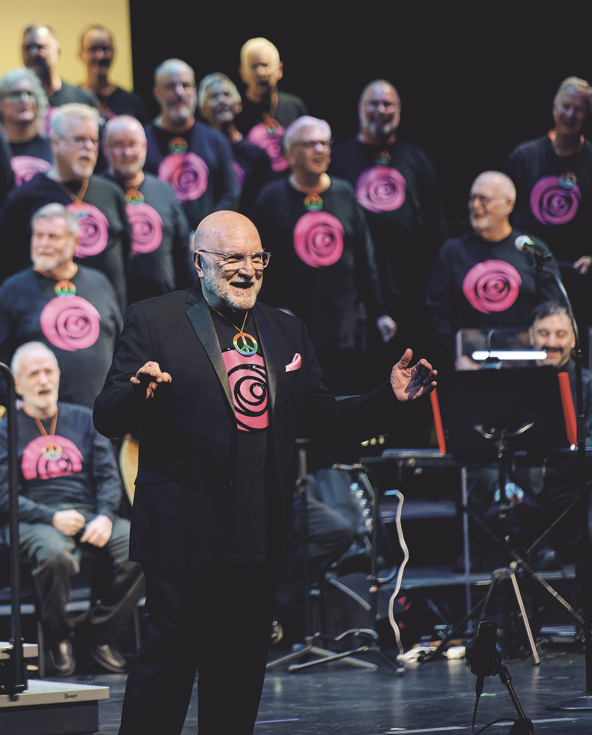
Queer music is essential to us building our family around the world. I love this so much. In fact, I’d like to teach the world to sing in perfect queer harmony. Oh wait. I am. Now it’s your turn! Choose your favorite queer song, your favorite queer artist or ally, and your favorite gay-themed Broadway show. No, Heated Rivalry doesn’t count. It’s not music! Have fun and happy Pride!
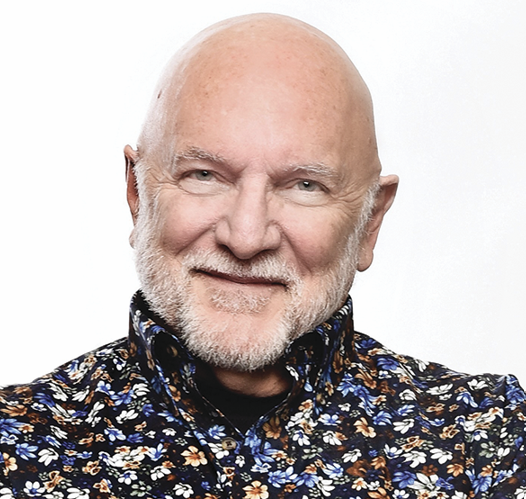
Dr. Tim Seelig is the Conductor Laureate of the San Francisco Gay Men’s Chorus. http://www.timseelig.com/
TLC: Tears, Laughs, and Conversation
Published on June 11, 2026





Recent Comments