





By Stuart Gaffney and John Lewis—
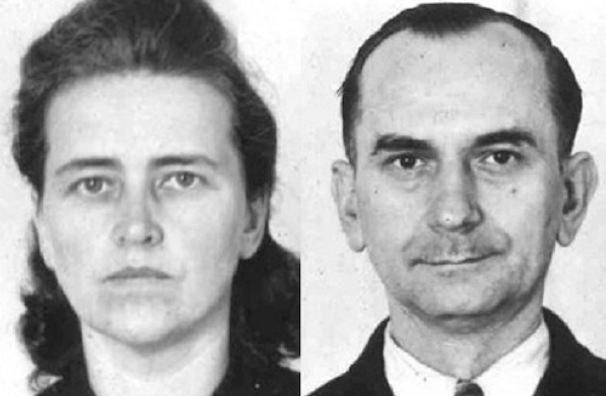
Elise and Otto Hampel were an unremarkable working-class couple living in Berlin in 1940. With little formal education, Elise was employed as a domestic, and Otto worked in a factory. Otto had fought for Germany in World War I, and Elise was now a patriotic member of the National Socialist Women’s League. But everything changed for them when they learned that Elise’s brother had been killed while serving in the German military during the Nazi invasion of France in November 1940.
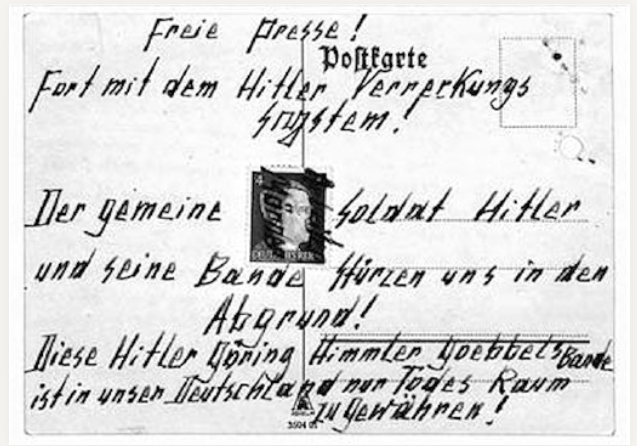
The Hampels did not interpret Elise’s brother’s death as that of a loved one who had heroically made the ultimate sacrifice for the fatherland. Precisely the opposite, they viewed it a waste of a precious life that so disturbed them that they could no longer support Hitler and the Nazis, and compelled them to do something to try to undermine the regime. What they decided to do was disarmingly simple, but highly risky: write anti-Nazi postcards in block handwriting that could not be traced to their personal handwriting, and distribute those postcards one by one, leaving them on stairwells in buildings or dropping them in mailboxes. One note was left outside a dentist’s office, another outside an attorney’s office, and others in myriad residential and other buildings. For their own safety, they told absolutely no one what they were doing.
The Hampels’ postcards contained direct and straightforward messages to their fellow Berliners, urging them not to serve in the military, to stop donating to Nazi support organizations, to refuse to cooperate with the Nazi government, and to overthrow Hitler. The cards contained no strategic approach for how Berliners could carry out such dangerous missions; neither did the Hampels have one. The postcards merely offered simple inspirational slogans, such as, “German people wake up!”; “Hitler’s regime will bring us no peace!” “Free Press! Why suffer war and death for the Hitler plutocracy?”; and “Hitler’s war is the worker’s death!”
All in all, the Hampels distributed over 287 postcards throughout Berlin over a period of two years before they were caught by the Gestapo in late 1942. The sheer volume of postcards that were turned in during those years had convinced the Nazi authorities that a significant resistance network was operating in Berlin. In fact, it was just Elise and Otto, who amazingly evaded capture for as long as they did.
Sadly, although we cannot know for sure how many people read the postcards and/or passed them along to others, the overwhelming majority of postcards appear to have been quickly turned over to the police, underscoring the pervasive fear that permeated German society during the Nazi reign of terror. As far as we know, no one upon seeing a card became inspired to start writing and disseminating their own, or engaging in other forms of resistance.
Elise and Otto were executed by guillotine on April 8, 1943. They took full ownership of their actions, expressing no regret. Elise explained in her signed confession that, even though her husband wrote all the cards because she herself could not print well and he distributed all of them as well, she shared in their culpability. Her motivation for their actions was intimately human and deeply personal: “My soul was devastated by the losses of the war, particularly of my brother.”
The German novelist Hans Fallada, in the November 1945 issue of the Soviet-sponsored magazine Reconstruction, recounted the Hampels’ story but appeared unimpressed by it. He characterized the Hampels as “two insignificant individuals,” who were, in fact, “faithful” Nazi supporters until Elise’s brother was killed. He described them as having no “particular skills,” poor spelling, and clumsy means of expressing themselves. Speculating that the few cards that were not turned over to the authorities were likely “read hastily and fearfully and destroyed immediately,” Fallada declared that “the sound of their protest died away unheard.”
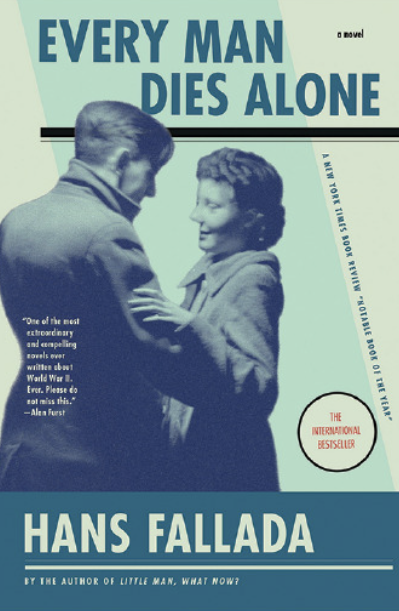
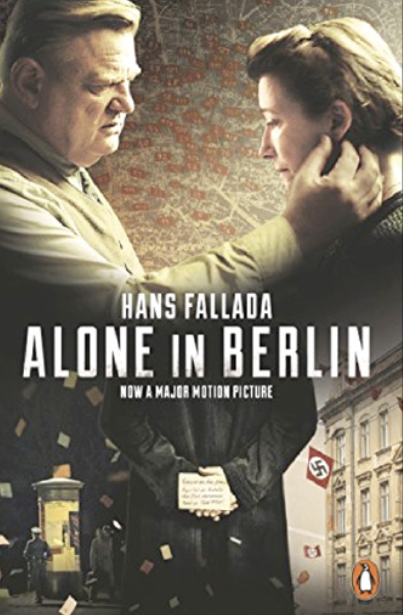
But Fallada quickly had a change of heart and did something that resulted in the exact opposite coming true. Less than a year later, he completed a fictionalized account of the Hampels’ story, maintaining its core, but adding and altering characters and plotlines to underscore what he considered important themes to the rebuilding of Germany. Fallada’s novel Every Man Dies Alone, published in German in 1947, but not published in English until 2009, was described by the renowned Holocaust survivor and writer Primo Levi as “the greatest book ever written about German resistance to the Nazis.” There have been five screen adaptations of the story, including two award-winning feature length films and two television mini-series.
The sound of the Hampels’ resistance did not “die away unheard.” Today, it’s reached countless millions. Perhaps we find the Hampels’ actions so striking, not despite of, but because of how deceptively simple, apparently unsuccessful, and arguably naïve they were when viewed from the narrow perspective of wartime Germany. The Hampels’ undertaking had no chance of stopping the Nazi war machine, but they did it anyway because they genuinely considered it the right thing to do.
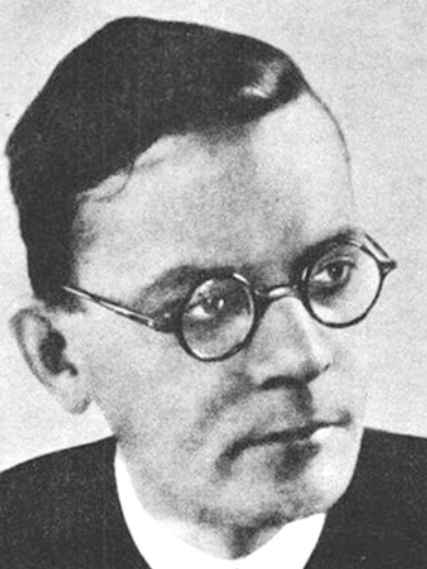
When the Hampels wrote and placed each one of the more than 287 postcards on a particular stair in an individual building, they had no idea what their impact would be. Very likely, they hoped against hope that their postcards would somehow spark a popular revolt that would overthrow the Nazis. They didn’t know that what they did would be recorded and recounted and would inspire yet-to-be-born generations in future seemingly hopeless struggles. As we face daunting challenges today, the Hampels are asking us what we consider the right thing to do from the depths of our beings and to do it—even if it may bear no fruit until after we’re gone.
John Lewis and Stuart Gaffney, together for over three decades, were plaintiffs in the California case for equal marriage rights decided by the California Supreme Court in 2008. Their leadership in the grassroots organization Marriage Equality USA contributed to making same-sex marriage legal nationwide in 2015. Today, they continue to educate and advocate for marriage equality and LGBTIQ+ rights worldwide.
6/26 and Beyond
Published on May 21, 2026









Recent Comments