





By Andrea Chase—
(Editor’s Note: San Francisco Bay Times former columnists Jennifer Kroot and Robert Holgate gave us a sneak peek at their new collaboration, the documentary Hunky Jesus. The film tells the story of the Sisters of Perpetual Indulgence, which is interwoven with their 2023 Hunky Jesus Easter event. The documentary will have its world premiere next month at BFI Flare 40 in London. An exciting U.S. premiere will be announced later this spring. The Bay Times will let you know as soon as that’s made public.)
It was correctly pointed out to me that Jennifer Kroot’s latest doc, Hunky Jesus, can be considered the third part of a trilogy of films addressing the queer experience in these United States from different vantage points. Her first was To Be Takei (2014), in which Star Trek icon and activist George Takei recounted his experiences both as a gay actor in Hollywood, and as a victim of the internment of Japanese-Americans during World War II. The second is The Untold Tales of Armistead Maupin (2017), a survey of the life and times of The Tales of the City author and his triumphs and tragedies as a gay man in the South who found his logical family, and life’s mission, with his serialized story about a wide swath of characters coping with life and love in San Francisco before, during, and after the height of the AIDS epidemic.
Hunky Jesus (2026), with its ebullient celebration of queerness in all its forms, is more than a culmination of what came before; it is the distillation, nay, even apotheosis, of how to channel anger and trauma into a version of a better world that The Sisters of Perpetual Indulgence, and Jesus, envisioned: one of equality, dignity, joy, and, for at least one of those parties, a surfeit of sequins.
It was a treat to reconnect with Kroot and to meet Executive Producer and Kroot co-columnist Robert Holgate for the first time. I’ve been a Kroot fan since her debut with the sci-fi fable Sirens of the 23rd Century (2005), and have always jumped at the chance to interview her for each of her subsequent films, to get some of her trenchant insight and playful erudition.
Andrea Chase: Painfully obvious question to start. How did you discover the Sisters of Perpetual Indulgence and Hunky Jesus?
Jennifer Kroot: Oh, my God. Well, I discovered the Sisters way before I discovered Hunky Jesus. I’m a Bay Area native and I’ve lived in San Francisco since 1989, so I don’t remember a time without the Sisters. I probably first heard about the Sisters in Tales of the City, when I was quite young, but I loved the idea of roller-skating nuns. It turned out they didn’t roller-skate. That was just Armistead Maupin taking artistic liberty. However, they might as well have. I mean, they’re just as crazy as roller-skating nuns, right?
When I moved here, I would go to rallies and politicians would speak, but what was always exciting was when a Sister would speak. They were always so charismatic and just knew how to talk about the issues in such a fun, insane way. You know, punk rock and in your face and no b.s. They’ve always been an inspiring group and I’ve always sort of secretly fantasized about being one. But, you know, I don’t think I could.
Hunky Jesus didn’t start until the late 1990s, and I thought that was genius, subversive, but also filled with warmth. It warms my heart to know that the attendance is bigger than ever, especially post-pandemic.
Robert Holgate: I’ve been a fan of the Sisters since I moved here in the 1980s, just before the AIDS crisis. Even in the earliest days of the epidemic, the Sisters were on the ground fighting for us with their irreverent wit and in your face activism, before anyone else took action. Political leaders ignored us and shamed us. The Sisters created the first safe sex guide Play Fair. In addition to being informative, it was done in a funny, playful manner.
Andrea Chase: I love the way your film catches the dead serious yet playful way they speak truth to power.
Jennifer Kroot: With the Sisters, their focus, like Catholic nuns, is serious, doing charity work and raising money for good causes. Like Jesus, the Sisters walk with the marginalized. And they bring joy while doing the work.
[As for] the approach of the film, well, I always thought: Wouldn’t it be cool to just do like a concert-driven film about Hunky Jesus? You know, like Give Me Shelter, but Hunky Jesus. Fellini doing Give Me Shelter. So, I actually tricked myself into like, okay, I’m just gonna make a short about Hunky Jesus.
But then it just wasn’t the full thing. I wanted to know, who is Roma (Sister Roma There’s No Place Like Rome)? What are they doing? Why does this mean anything? Let’s get into what’s behind all of the religious stuff, and the trauma that people have gone through. In the film, I talk about not being included in religions, because of sexual orientation, whatever the reason, and it just seemed very important to share that that’s behind this, that it’s a reclaiming of spirituality and in a unique way. Many of these people, the Sisters and people who go to the contest, are Christian, which I was actually surprised about. It seemed important to take that seriously.
I went into it thinking it was really going to be harsher on Catholicism and Christianity. Instead, I met real Christians and Catholics. It was hard to find an actual Catholic sister to speak on camera, but we found Sister Barbara (Battista of The Sisters of Providence). It seemed very important to have the voice of an actual sister who is tolerant to speak about the Sisters in a positive way. Positive to neutral, because I don’t think the whole thing is for her.
Andrea Chase: Having worked with, learned from, and documented the legendary Kuchar Brothers, does that sort of prepare you for making this doc?
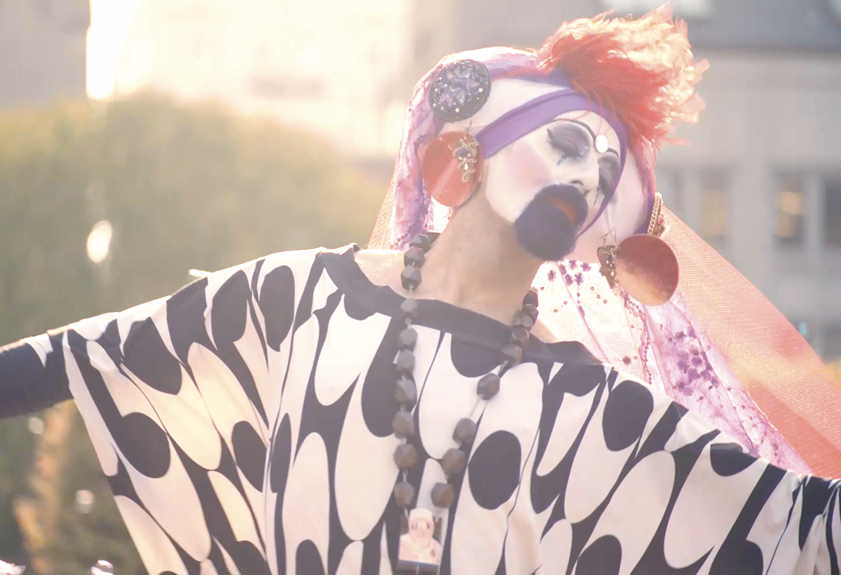
Jennifer Kroot: Yes, yes! I channeled that. The Kuchars’ early melodramas [were] very Douglas Sirkian, vividly colorful, campy before camp was a name. I was really leaning into camp, but a camp where it meets humanity. I wanted it to be open to being as outrageous as it could get. Actually, it could have gotten more outrageous. We did cover up some full frontal.
Andrea Chase: Talk about capturing the 2023 contest and perhaps being barked at by the stage manager.
Jennifer Kroot: Oh, I love the stage manager, Jimmy (Strano). He’s a wonderful person and he was right about everything he was upset about. He didn’t really bark at us, but there were a lot of Jesuses that year and the people controlling the backstage, they just didn’t want to say no. They got barked at.
When I saw Jimmy getting kind of intense as they were hitting their timeline, because they have to get out of the park at a certain time, I told one of the cinematographers who happens to be really good at verité, to follow him. And I’m so glad that that happened.
Andrea Chase: The Jesuses were just so much fun.
Jennifer Kroot: They really range from fun-loving to totally sordid, to political, to twink to, you know, robust.
Andrea Chase: Well, they are celebrating the human experience. And it’s also not just about looks.
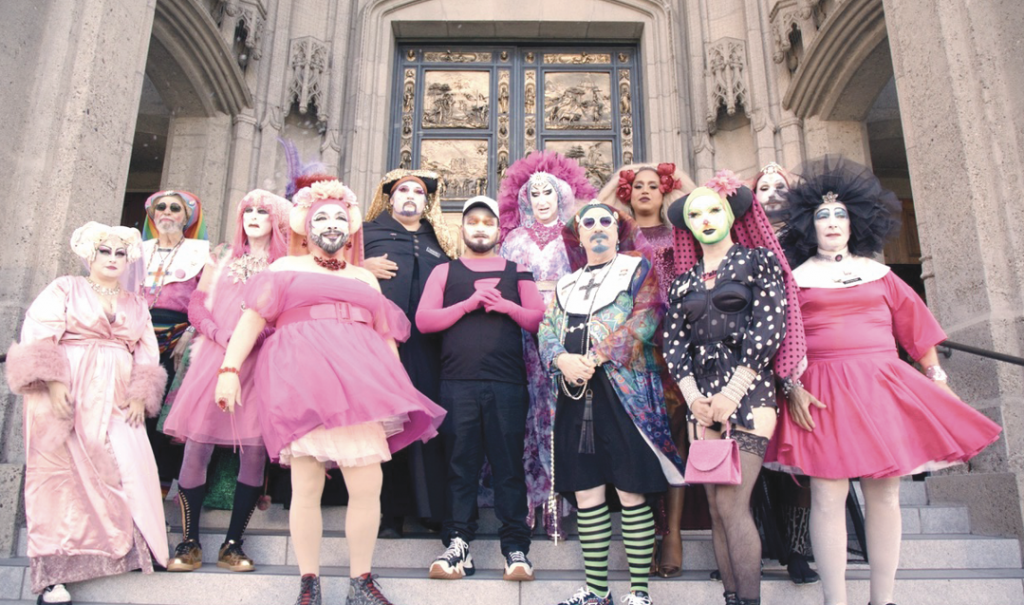
Jennifer Kroot: There are some nice-looking ones, but, yeah, there’s all different types and people prancing, either, you know, proud of something about themselves and wanting to share who they are in more of a very physical way, or people who just want to share a political message, or a message of anarchy. There was an older Jesus, there was the midlife crisis Jesus, who seemed to be more of a genderqueer person, just the whole A to Z.
Andrea Chase: Everybody’s invited to be Jesus. And Foxy Mary, too.
Jennifer Kroot: Yeah. And, you know, the pregnant one. I mean, [there was] a lot of sexuality in that one, for sure. Definitely some politics, but a lot of really slutty Marys, I’d say, reclaiming that word. And it’s also gender neutral. Women can compete for Hunky Jesus and men can compete for Foxy Mary. And anyone in-between.
Andrea Chase: It just reminds us about the sin of putting labels on people.
Jennifer Kroot: Yeah, it just represses everyone, not even just queer people. It’s the restrictions, roles, rules that we’re all trapped in that are manmade.
Andrea Chase: Why is laughter so dangerous to the hierarchy?
Jennifer Kroot: Oh my gosh. Well, radical joy is resistance, right? Laughter is defiant. You’re free when you laugh. I like to infuse my films with humor, even when they’re tough subjects, because otherwise I want to jump out the window. It’s dark out there in a lot of ways.
I think that, anytime you laugh, that’s who you are. You’re owning your joy. Sometimes you’re going to see the ridiculousness of all of the constraints or the absurdity of the stuff that we’re trapped in. I don’t think you can move forward or even help other people if you can’t have a sense of humor or see some absurdity.
Andrea Chase: Jennifer Kroot, thank you so much for fulfilling the Sisters’ mission of expiating stigmatic guilt and promulgating joy with this film!
Andrea Chase has been reviewing movies on radio, television, in print, and via the internet in the San Francisco Bay Area for over 20 years. She has made it her mission to make the world a better place for film lovers and remind everyone that Jason Statham makes every movie better. Follow her on Instagram @KillerMovieReviews.
Arts & Entertainment
Published on March 12, 2026











Recent Comments