





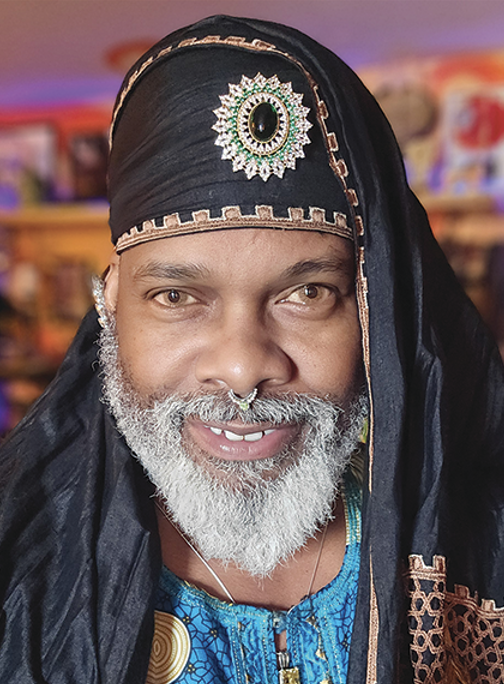
By Kippy Marks –
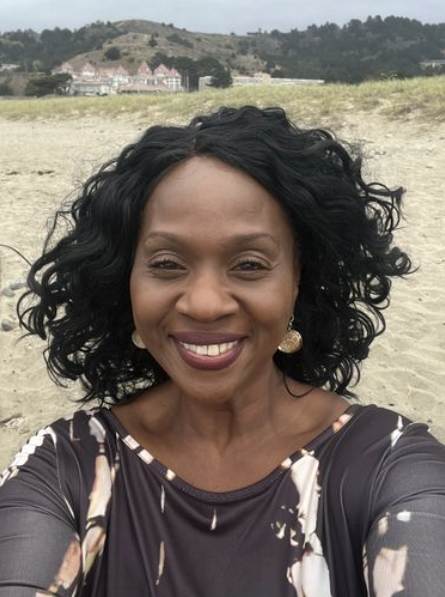
As an artist, I’ve always believed that music and love share the same rhythm: both require practice, patience, and a willingness to give of yourself fully. That’s why I see Tammy Webster Brown as a true embodiment of Practice Makes Love Easy (PMLE), and I am proud to celebrate her as the 11th individual spotlighted in this column.
She lives her life as a daily practice of gratitude and love. Each morning begins with thanksgiving to God, and each evening closes with the same devotion. For Tammy, faith is not an accessory—it is the foundation. “My relationship with my Lord and personal Savior is everything to me,” she affirms. This spiritual grounding is the soil from which her leadership grows, yielding the fruit of compassion, patience, and love.

The PMLE philosophy teaches that love is not abstract; it is cultivated through consistent practice. Tammy exemplifies this truth. Her daily rhythm of prayer and gratitude is a rehearsal of love, a discipline that shapes her interactions with colleagues, residents, and community partners. She demonstrates that, when love is practiced intentionally, it becomes easier to extend, even in the most challenging circumstances.
Music is one of Tammy’s chosen tools of practice. She surrounds herself with positivity and draws strength from songs that inspire resilience and joy. These songs are not just entertainment; they are spiritual exercises, reinforcing her commitment to PMLE by keeping her heart tuned to love and thanksgiving.
Professionally, Tammy serves as Program Manager and Director of Residential Services for LifeLong Medical Care – EBCRP Project Pride, a residential program dedicated to women in recovery. Project Pride provides substance use disorder treatment and mild to moderate mental health services for pregnant, parenting, and adult women. What makes this program extraordinary is its holistic approach: women live in treatment while learning how to parent, with the ultimate goal of reunification with their children.
Tammy’s leadership ensures that every resident is met with dignity and hope. She knows that recovery is not just about overcoming addiction—it is about reclaiming identity, restoring family bonds, and rediscovering self-worth. By guiding women through this process, Tammy practices love in its most transformative form: love that heals, restores, and empowers.
Her work is a living embodiment of PMLE. She does not simply manage programs; she cultivates environments where love is practiced daily, through patience with residents, encouragement in moments of doubt, and celebration of every milestone achieved. Tammy’s leadership style reflects the PMLE ideal that love is not passive but active, not occasional but consistent. She models how love can be woven into organizational culture, turning treatment centers into sanctuaries of healing.
Tammy’s recognition in this column is not just about her professional achievements. It is about the way she integrates faith, music, and service into a seamless practice of love. She reminds us that salvation yields good fruit, that positivity is a choice, and that leadership rooted in love can transform lives.

Kippy Marks: How long have you been involved with the practicing of PMLE values in your work?
Tammy Webster Brown: I have been involved with practicing love ever since I experienced love through my dear mother who passed away when I was 10 years old. It didn’t matter what she had to do or was doing; when I would walk home from school each day, I knew of a warm, loving, and safe space I could retreat to. That place was sitting up on my mother’s lap and cradled in her arms as she read the daily newspaper. She wore this quilted type of bra, and I would rub on her bra while sucking my thumb and be at peace. The way I felt was like no other and I longed to experience that every day, and, because of that experience, I strive to reciprocate that feeling of love and safety with others, more importantly to the clients in the work that I have been doing since 1998, when I was hired as a Child Counselor in a Residential Treatment Program in Oakland. This program is for pregnant, parenting mothers, and adult women working to overcome the disease of substance use disorder while addressing their mild to moderate mental health challenges in an environment that fosters safety and connection first and foremost then treatment. While here, their children up to two are able to live with them depending on their age, and/or visit on the weekend.
Kippy Marks: Who or what motivated you to become the community activist you are today?
Tammy Webster Brown: My mother first and foremost motivated me to become a giver, and my children and the clients we serve [motivated me] to become a community activist. As a mother, you are the only protector your children know and expect to cover for them. I take that seriously. My mother protected and shielded me, and, when I lost that, much was ripped away from me. I developed a fear as a result that took years to overcome. This fear kept me from loving much and loving hard out of fear that I would die and leave my children at an early age. I didn’t want them to experience that depth of loss that I experienced with my mother. However, one day
something clicked inside of me that said: what happened to your mother was an illness. At that time, little to no treatment was available, and, because of the color of her skin, there wasn’t a rush to find alternative solutions to extend her life. [I thought, in terms of myself]: you are healthy and you were given a beautiful gift to encourage and meet the needs of people, starting with your children. I took this [in] and have been making a conscious effort to serve and advocate for those who cannot themselves or who need the support to do so.
Kippy Marks: How old were you when you made that decision?
Tammy Webster Brown: I was turning 25 years old when I made the decision to be present.
Kippy Marks: What advice would you give to others on how to practice love on the daily?
Tammy Webster Brown: The advice I would give others on how to practice love daily is to start with finding a part of you to love and nurture that part as other parts of you are watered and grow in self-love. Remember, love is universal; there shouldn’t be a met criteria to determine if we love or not love others. There are two Bible scriptures that easily come to mind concerning love. For God so loved the world that he gave his one and only son, that whoever believes in him shall not perish but have eternal life, John 3:16 (NIV). And now these three remain: faith, hope and love. But the greatest of these is love. 1 Corinthians 13:13 (NIV).
Kippy Marks: If you were granted two universal wishes, what would you wish for?
Tammy Webster Brown: My two universal wishes would be health and wellness. If I maintain this, I can continue to serve others and show love in all I do.
Kippy Marks: Please share any current practices that our readers may find useful, and update us on what you are doing now.
Tammy Webster Brown: My current practices are I end and start my day with a heart of gratitude and thanksgiving to God. My faith is important to me and my relationship with my Lord and personal Savior is everything to me. Having a foundation of salvation is a daily practice that will always yield good fruit of love, because He first loved us. [I also believe in] surrounding yourself with positivity, finding a song that inspires and motivates you. My life songs are “Happy Feelings” by Frankie Beverly and Maze and “For Every Mountain” by The Kurt Carr Singers.
I work for Lifelong-EBCRP; we are Project Pride the residential division. We provide substance use disorder and mild to moderate mental health treatment services for pregnant, parenting, and adult women. They are able to reside in treatment with us to address and overcome their substance use disorder while learning how to parent their children and be reunified with their children. All residents must have Alameda County Medi-Cal and have a current substance use disorder.
Tammy Webster Brown’s journey reminds us that love is not a passive feeling but a daily practice. Through gratitude, faith, music, and service, she demonstrates how the ideals of PMLE can be lived out in real time. Her leadership at Project Pride shows that, when love is consistently nurtured, it becomes a force strong enough to heal families, restore dignity, and transform communities.
For our readers, Tammy’s example is an invitation: begin and end your day with gratitude, surround yourself with positivity, and find your own “life songs” that keep you grounded in joy. Whether through faith, music, or service, practicing love daily makes it easier to extend compassion to others. Tammy’s work proves that, when love is practiced with intention, it becomes contagious—spreading hope, resilience, and healing far beyond the walls of any program.
Kippy Marks is a spirited solo entertainer whose shows are permeated with an infectious joy. His distinctive sound arises from his heart, through his 1822 violin consort, Izabella. Marks’ rare talent, broad smile, and radiant warmth will brighten any
Practice Makes Love Easy
Published on December 18, 2025










Recent Comments