



By Dr. Bill Lipsky—
The story had everything needed to create a media frenzy in respectable newspapers and scandal sheets worldwide. Hugh Eric Trevanion (1884–1912)—scion of an old and well-known Cornish family, a cousin of Lady Elizabeth Bowes-Lyon, later the Queen Mother, and to many “an eccentric and, to all accounts, effeminate man”—was dead in his flat in Grand Avenue Mansions, Hove, Sussex, of an overdose of Veronal, a drug easily available, highly addictive, and known to be fatal when taken in large quantities.
Wealth, position, even a whiff of homosexuality, then illegal everywhere in the English-speaking world, and the unanswered questions of whodunit and why kept the public engrossed for months. Accidental overdose? Deliberate suicide? Murder must foul? Only 27 years old, but with an estate of some £60,000 (now some $6,000,000), Trevanion willed almost his entire fortune to his “great and good companion” Albert Edward Roe (1878–1926), 34, who, just three weeks before, declared he was leaving him to marry a woman he knew in nearby Swansea.
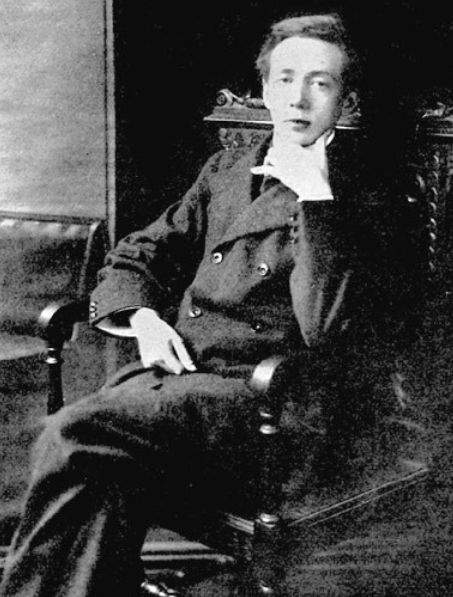
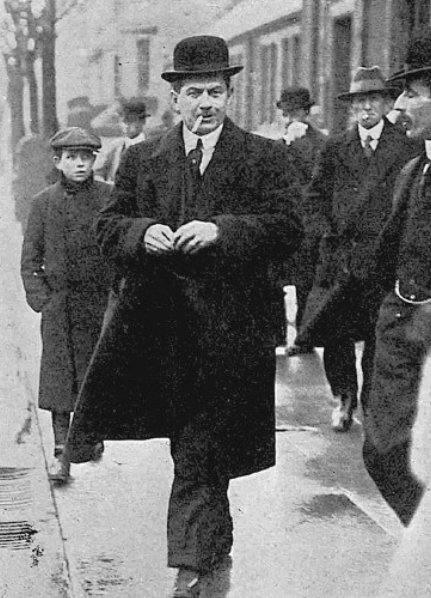
During the investigations that followed his death, Trevanion was described as someone who dressed “more like … a female than a male,” a “frail youth” who “wore a kimono and white kid shoes with high heels in the house.” Roe was his constant companion, caring for him and sleeping with him, he admitted, “to comfort him.” The ending of their relationship, however, was never mentioned as the reason Trevanion might have taken an overdose on Veronal, accidentally or deliberately—or moved Roe to murder him before he could be disinherited.
Testimony that the two men were intimate in all ways, which may have provided a motive for the overdose, was suppressed. A post-mortem examination of Trevanion’s body by Bernard Spilsbury, an eminent pathologist, determined that he was a “sexual pervert,” but, to spare the family any additional sorrow, that was not made public at the time. Neither was a note from Annie Rice, Trevanion’s nurse, which read, “He said that Mr. Roe had been his wife for the last seven months.”
After a “thorough” investigation and two inquests, everyone agreed that Trevanion died from an overdose of Veronal, which they already knew, but “how or by whom administered there was no evidence to show.” Roe finally married Margaret Derrick in Swansea in 1914, but he never did receive his inheritance. Veronal remained as easily available as ever. Some testimonials continued to describe it as “secure and harmless,” but, in fact, it was always highly addictive and its serious side effects, including unintentional—or intentional—overdosing, were often fatal.
In 1913, after completing her first novel, The Voyage Out, Virginia Woolf attempted suicide by taking an excessive amount of the drug. Renowned Austrian writer Stefan Zweig, then one of the most popular writers in the world, succeeded, using the medicine to end his life in 1942. Veronal, classified as a poison in many countries, was finally taken off the market in 1956, when safer alternatives became available. By then, thousands of deaths and near-deaths had been attributed to it worldwide.
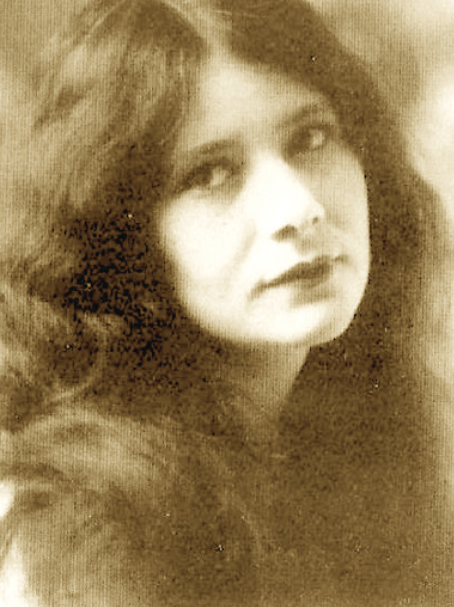
Another sensational story alleging murder by Veronal commandeered the public’s attention “headline by headline” some twenty years after Trevanion’s death. Like his case, it had flamboyant and eccentric personalities, drugs, and illicit sex, plus two adulterous relationships, one heterosexual and one between two women. Although this time the supposed motive was not money, which no one had, authorities struggled to answer the same question: was the overdose from this medication, known by every physician and pharmacist to be poisonous, accidental or deliberate?
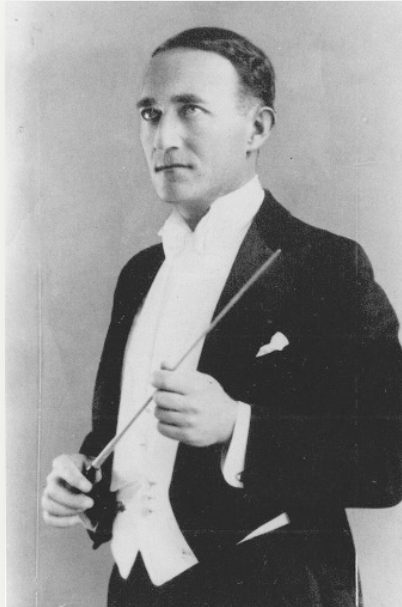
First among the personalities was bandleader Eric Mareo (née Eric Joachim Pechotsch) (1891–1958), who often appeared in public, according to The Observer in 1936, immaculately dressed, with a long white cigarette holder “sufficient to attract attention to the man … one end of it in his mouth, the other sticking out rakishly about a foot in front of him.” He led his musicians using an enormous, tinsel-covered baton where “the stage was decked in crimson roses,” and “every music stand trailed its garland.”
Mareo married the actress Thelma Trott (1905–1935), his second wife, in 1933, the same year she met dancer Freda Stark (1910–1999), when both were touring New Zealand as members of the Ernest Rolls Revue Company; they became dear friends. None of them seemed to respect the marriage vows, however. Eleanor Brownlee (1910–1995), one of his music pupils, became the pianist for his orchestra and his private secretary, with “a considerable degree of intimacy” between them. That also was true of Thelma and Freda.
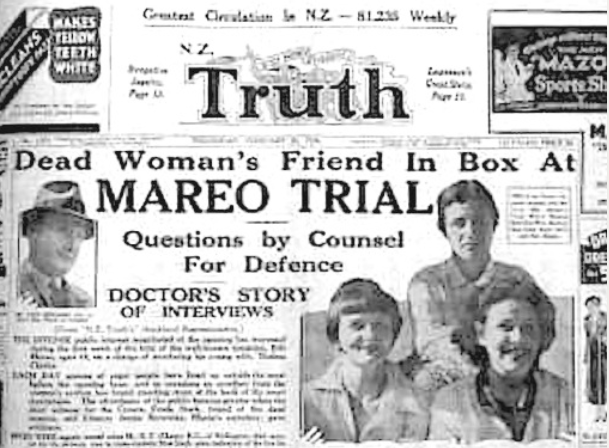
Thelma died in April, 1935 of an apparent overdose of Veronal. Five months later, police arrested Mareo, whom they accused of poisoning his “better half” with the barbiturate, which they both habitually used, stirred into an innocent-looking cup of warm milk. His alleged motive: to be free to marry his mistress. He was tried and convicted twice, spared the hangman’s noose only because of a newly-elected government that did not support the death penalty and commuted his sentence to life in prison. He served 12 years.
At both trials, Stark was the principal witness against him and the truth of her sexuality became public knowledge. Somehow, she survived the scandal surrounding her lover’s death. Six years after Mareo’s second conviction, she met Harold George Robinson (1919–2012), then a soldier in the Army. Never disguising his sexuality, he served in North Africa and the Pacific during World War II, where he was batman (orderly) to then Major John Marshall, who became New Zealand’s Prime Minister in 1972.
In addition to his other duties, Robinson entertained troops as one of the Tui Concert Party, a group of female impersonators, performing in drag as Carmen Miranda and “Minnie from Trinidad.” Stark also “did her bit” for the war effort. During the day, she worked at the Colonial Ammunition Company, but, at night, she danced for visiting servicemen at the Auckland Civic Theatre. Wearing nothing but a feather headdress, a G-string, and a coat of gold paint, she affectionately became known as “the Fever of the Fleet.”
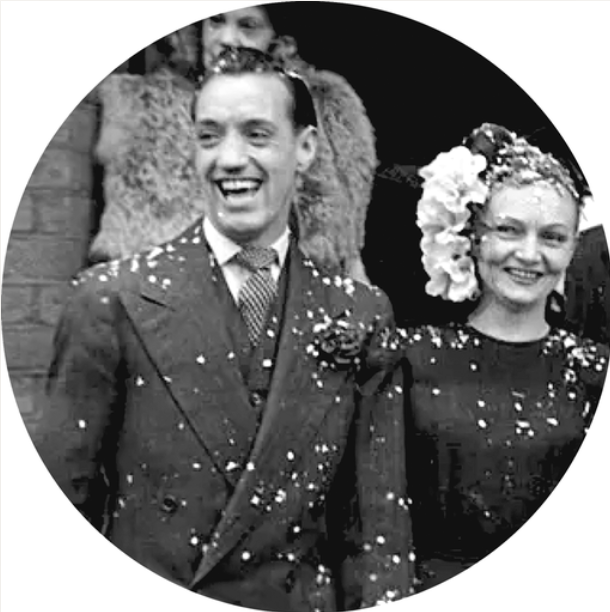
After the war, Robinson won a scholarship to study with the Sadler’s Wells Ballet (now the Royal Ballet) in London, when the company’s principals were dance immortals Margot Fonteyn and Robert Helpmann, whose life partner of 36 years, Michael Benthall, was an English theatre director. Stark also was in London and she and Robinson married there on September 13, 1947, at the Church of St. Mary-the-Virgin, a name that allegedly became an inside joke among many of their friends.
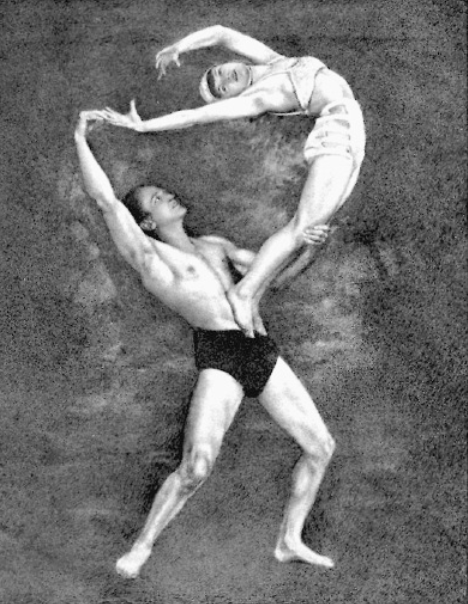
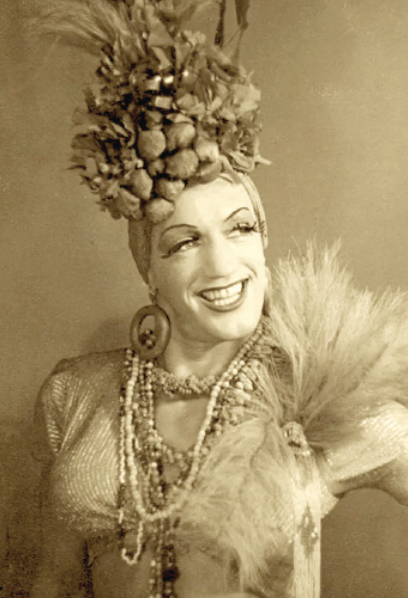
The couple returned to New Zealand in 1953. Robinson opened The Bridal Boutique on fashionable Queen Street in Auckland and became a noted dancing teacher. Living apart for many years, they finally divorced in 1973, but remained close friends. When she died in 1999, he had her ashes interred with Thelma’s remains, where a marker, placed long before, was inscribed, “Waiting Till We Meet Again … Freda.” Always openly gay, he died in 2012, a beloved and respected member of New Zealand’s LGBT community.
Bill Lipsky, Ph.D., author of “LGBTQ+ Trailblazers of San Francisco” (2023) and “Gay and Lesbian San Francisco” (2006), is a member of the Rainbow Honor Walk board of directors.
Faces from Our LGBTQ Past
Published on April 9, 2026








Recent Comments