




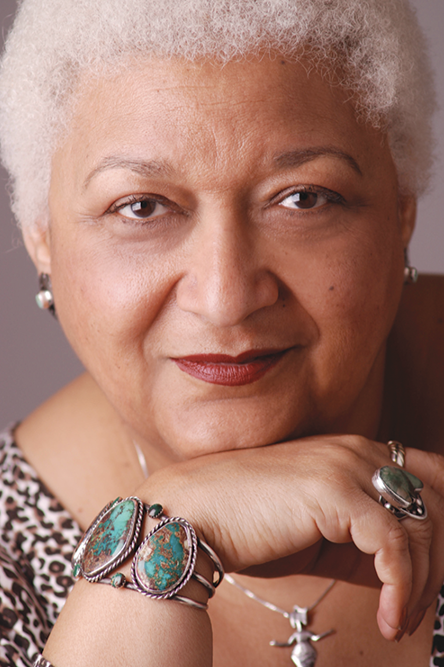
By Jewelle Gomez—
Scientists and mothers have proven that males mature more slowly than females, so I guess I’ll assume that the male U.S. Olympic ice hockey team (average age of 28.4 years) can plead immaturity for its lack of spine or sensitivity or sportsmanship when #47 mocked the female U.S. Olympic ice hockey team (average age 25.8).
The male team’s adolescent behaviour, along with that of the director of the FBI, is particularly embarrassing in view of how hockey has become such a pervasive social topic because of the hit television series Heated Rivalry. The main characters, Shane and Ilia, are seventeen when they meet and exhibit more maturity than most of the U.S. team members managed. The show’s success is grounded in several things. The approximation of action-packed hockey games is compelling, even though I, despite growing up in Boston, never had any interest in the sport. Hockey fans seem to love seeing players get their teeth knocked out as much as teams making goals. But the speed, power, and versatility of the players while on skates is undeniably mesmerising.
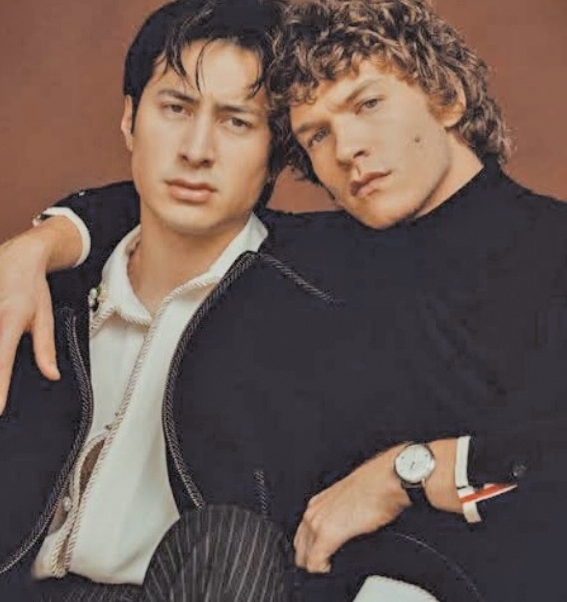
However, it’s the tentative passion that grows between Shane and Ilia that captures the audience. In a sport (like football) known for its pure testosteronic aggression, the experience of growing tenderness between the two boys gives one hope for the male of the species. The young men seem to be working their way to an emotional breakthrough similar to characters in another show about men falling in love: Looking, starring Jonathan Groff and Russell Tovey. That series takes place in a much less intimidating locale than a hockey rink, San Francisco. And the characters are older with actual experiences, which both help and hinder in their search for love.
I look forward to a television show that is as successful at portraying lesbian characters. Maybe a producer might create a lez romcom about professional hockey players Anna Kjellbin (Sweden) and her rival and fiancé Ronja Savolainen (Finland). Could it go from meet cute while buying new ice skates to exchanging? I don’t know … hockey pucks along with their wedding vows?
In light of the tragic state of affairs we’ve caused in the world, #47’s dismissive words might seem inconsequential, but his comment is indicative of his presidency and his personality disorder, which have led the U.S. into such ill-considered aggression. But since that locker room incident, some of the members of the male team have reflected and backed away from their complicit laughter at the immature joke. Some of the guys probably remembered their sisters and daughters were watching them and two of them were taught to skate by their mother, Ellen Weinberg-Hughes, who medaled in the U.S. national women’s ice hockey team during the 1992 world championship.
The women’s Olympic team has won just as many gold medals as the male team, but in a shorter amount of time since women’s hockey wasn’t permitted in the Olympics until 1992. This year, the women took home their gold medals and their dignity, unlike the male team whose unsportsmanlike betrayal of their sister players will eternally be the story about them.
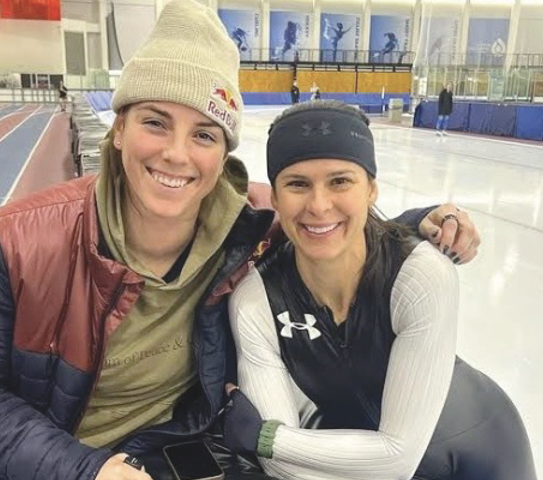
Television is one way in which queer people become visible to ourselves and to others and more than a hateful punchline. I’m especially fond of Deadloch, a murder mystery/comedy TV series about a town in Tasmania that mysteriously attracts lesbians, including the sheriff and her demanding wife. (Season 2 starts March 20.) There’s no steamy sex yet, but one can hope. Maybe U.S. team captain Hilary Knight and her fiancé, medal-winning speed skater Brittany Bowe, could take their honeymoon in Tasmania. I’d watch that.
Jewelle Gomez is a lesbian/feminist activist, novelist, poet, and playwright. She’s written for “The Advocate,” “Ms. Magazine,” “Black Scholar,” “The San Francisco Chronicle,” “The New York Times,” and “The Village Voice.” Follow her on Instagram and X @VampyreVamp
Leave Signs
Published on March 13, 2026











Recent Comments