








By Bill Lipsky—
(Editor’s Note: The following is part three of Bill Lipsky’s timeline of LGBTQ+ history starting with the 19th century. The first part ran in the June 11, 2026, issue of the San Francisco Bay Times.)
By the early 1970s, San Francisco’s reputation as “the homosexual capital of the world” was secure. Alfred Kinsey’s famed Institute for Sex Research agreed. “San Francisco is generally considered the best city in the United States for homosexuals,” it reported in its study, Homosexualities(1978). Partly that was due to its “tradition of tolerance,” but also to its size and geography, which made it “more conducive to a tightly knit homosexual community.”
The decade brought unimaginable, but long overdue, change. Not only would San Franciscans be instrumental in repealing the sections of the California Penal Code, some dating to 1850, which had made same-sex intimacy between two consenting adults a felony, but they would also elect the country’s first openly gay candidate for public office. Living openly and proudly, the women and men of the city’s LGBT communities would create LGBT bands, businesses, sports leagues, and other social, cultural, and educational institutions.
1973
San Francisco’s gay softball league, the first in the country, began when eight local bars each agreed to sponsor a team.
Harvey Milk and Scott Smith, his lover, opened Castro Camera at 575 Castro Street, which became an unofficial city hall for gays in the neighborhood and the headquarters for Milk’s three campaigns for public office.
The American Psychiatric Association removed homosexuality from its list of mental disorders, describing it instead as a “sexual orientation disturbance.”
Despite its liberal reputation, San Francisco had the highest arrest rate for homosexual acts of any city in the country.
Responding to increasing violence against LGBTs, Pentecostal Evangelist Reverend Ray Broshears founded the Lavender Panthers, described by Time magazine as “a “stiff-wristed team of gay vigilantes” who frequently carried sawed-off pool cues, shotguns, chains, and bats when patrolling the streets of the Castro and the Tenderloin in a worn-out VW bus, prepared to interfere with anyone seen hassling or harming gay women and men.
1974
Harvey Milk organized the first Castro Street Fair.
Lavender U, described as “the first gay university in the world,” began offering courses in jogging, massage, counseling, dance, photography, and sign language, among many others.
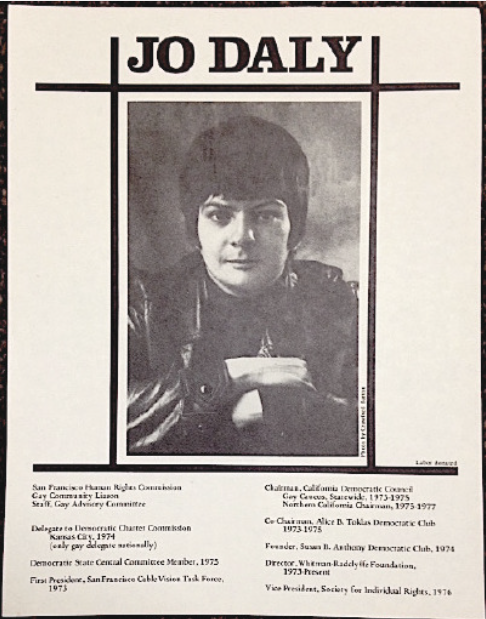
Jo Daly became the city’s—and possibly the nation’s— first full-time paid liaison to its lesbian and gay communities.
Cynthia Slater and Larry Olsen founded the Society of Janus, the oldest BDSM education and support group in San Francisco and the second oldest in the United States.
1975
Doris Fish became the first drag queen to ride in the Gay Freedom Day Parade on an elephant (“Tagu,” rented from Marine World).
For the first time, Time magazine featured an openly gay man, Leonard Matlovich, on its cover with the headline, “I am a homosexual: The gay drive for acceptance.”
Because dance clubs had changed the face of the lesbian and gay popular culture, The Advocate named 1975 the “Year of the Disco.”
1976
The Dykes on Bikes® rode in the San Francisco Gay Freedom Day March for the first time.
Following repeal of California’s anti-sodomy laws, San Francisco’s LGBTQ+ individuals entered a Golden Age, showing what a people could do when left alone to build vibrant, successful communities.
Handing out safety whistles to all who would accept them, the Butterfly Brigade began paroling the Castro to protect members of the community threatened with harassment and violence.
Maggi Rubenstein, often described as the “godmother of sex education,” and Harriet Leve founded the San Francisco Bisexual Center.
1977
Harvey Milk became the city’s first openly gay candidate elected to public office.
Shouting epithets of “Faggot, Faggot,” four gay bashers assaulted, beat, and fatally stabbed Robert Hillsborough, a 33-year-old city gardener who cared for the greenery at a playground near City Hall.
Vandals taped clusters of cherry bombs to the windows of Castro Camera, Mainline Books, Without Reservation, Everett’s of San Francisco, and the Midnight Sun, blowing out plate glass and causing other damage.
The world’s first LGBT film festival, the Gay Film Festival of Super-8 Films, projected films onto a bedsheet pinned to a board at San Francisco’s Gay Community Center on Grove Street.
Hal Fischer’s Gay Semiotics classified the denizens of the Castro and the Haight-Ashbury by their clothes into groups that included “street fashion basic gay,” also known as Castro Clone, “jock,” “hippie,” and “leather,” among others.
Founded by Lanny Baugniet and Allan Estes, who died because of AIDS at age 29, Theatre Rhinoceros, the world’s first LGBT theater company, presented Lanford Wilson’s The Madness of Lady Bright as its opening production.
Word Is Out, “the first feature length documentary about lesbian and gay identity” made by LGBT filmmakers, premiered at The Castro Theatre.
Considered to be the world’s first gay circuit party, Night Flight ‘77 took over all three floors of the Gay Community Center for its New Year’s Eve disco celebration.
1978
Four years after infamously streaking at The Academy Awards, Robert Opel opened his groundbreaking South Of Market Fey-Way Studios, where he exhibited erotic works by LGBT artists, including Tom of Finland, Chuck Arnett, and Camille O’Grady, the “Leather Queen of Folsom.”
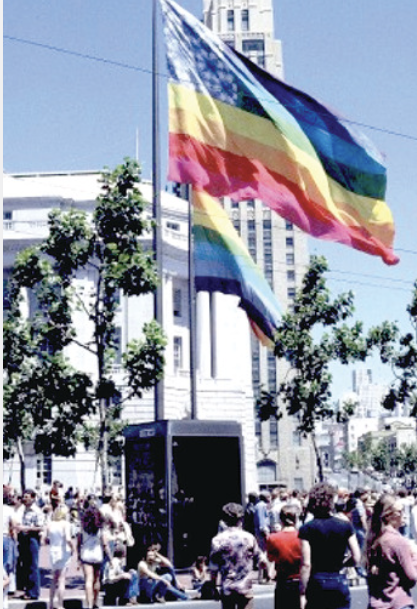
Designed by Gilbert Baker, the rainbow flag debuted at the Gay Freedom Day Parade.
Jon Reed Sims founded both the San Francisco Gay Freedom Day Marching Band and Twirling Corps and the San Francisco Gay Men’s Chorus.
The San Francisco Bay Times was launched as the first LGBTQ+ paper founded jointly by gay men and women.
Sylvester released his second solo album, which included his first two disco classics, “You Make Me Feel (Mighty Real)” and “Dance (Disco Heat).”
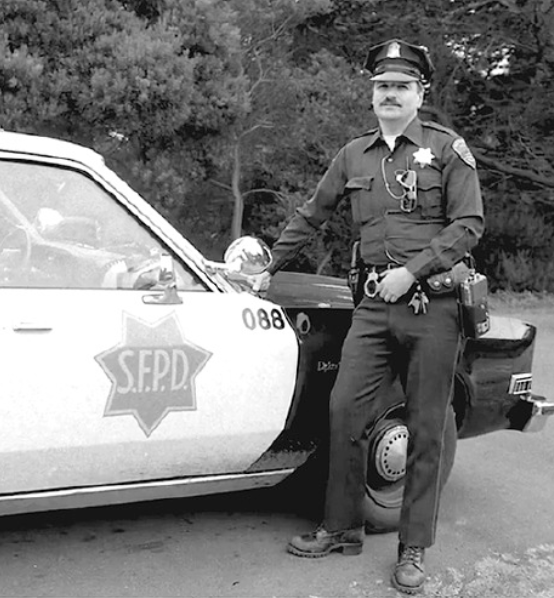
San Francisco became the first city in the United States to actively recruit gay police officers.
The first installment of Armistead Maupin’s Tales of the City appeared in the San Francisco Chronicle.
Alan Selby, the future “Mayor of Folsom Street,” opened Mr. S Leather.
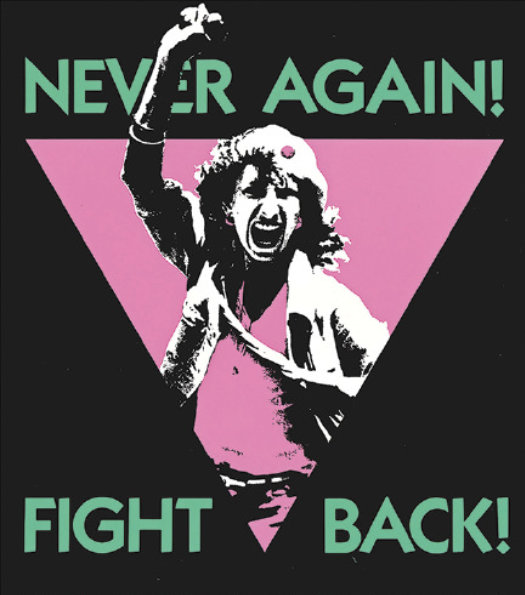
Featuring an image of local actor and drag persona Silvano Nova, the “Never Again! Fight Back!” poster became a vivid statement of the No on 6 campaign to defeat a California ballot measure to ban lesbians, gays, and supporters of LGBT rights from teaching in the state’s public schools.
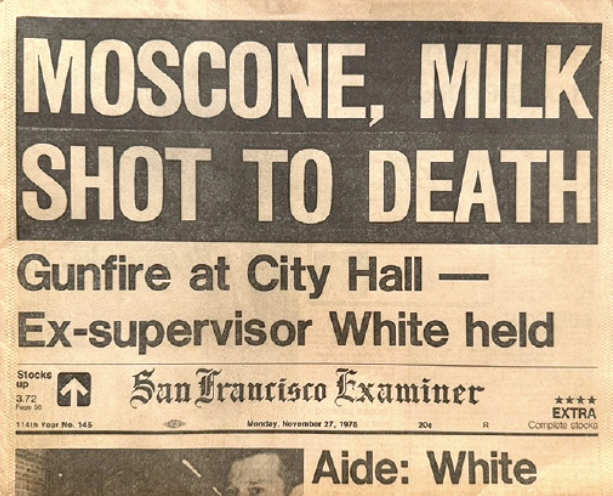
Former San Francisco City Supervisor Dan White assassinated Supervisor Harvey Milk and Mayor George Moscone.
1979
After Dan White’s conviction for manslaughter, thousands of protesters who, like most people, believed he was guilty of premeditated murder, rioted at City Hall, shattering the building’s front doors and lighting fire to nearby patrol cars. Police retaliated by smashing up the Elephant Walk at 18th and Castro streets.
The Lyon-Martin Community Health Services began providing healthcare to lesbians.
The Four Founders of the Sisters of Perpetual Indulgence—Reverend Mother, Grand Mother Vish-Knew, and Sisters Missionary Position and Hysterectoria, who designed the order’s first habits—convened their friends, chose their name, and composed their mission statement: to promulgate universal joy and expiate stigmatic guilt.
Bill Lipsky, Ph.D., author of “LGBTQ+ Trailblazers of San Francisco” (2023) and “Gay and Lesbian San Francisco” (2006), is a member of the Rainbow Honor Walk board of directors.
Faces from Our LGBTQ Past
Published on July 30, 2026




Recent Comments