






By Dr. Bill Lipsky—
(Editor’s Note: The following is part four of Bill Lipsky’s timeline of LGBTQ+ history starting with the 19th century. The first part ran in the June 11, 2026, issue of the San Francisco Bay Times.)
When the Village People—whose hit recordings already included “San Francisco (You’ve Got Me),” “Macho Man,” and “Y.M.C.A”—released Live and Sleazy in October 1979, they made “I’m Ready for the 80s” its lead single because, “There’s hope in ev’ry heart and love on ev’ry face/The 80s promise ev’rything is just gonna be great.” Continued social and political progress for lesbians and gays seemed inevitable.
Then the impossible, the unthinkable happened. The LGBT community became victim to one of the most devastating plagues since the Middle Ages. No one knows when the virus that became infamous as HIV first infected San Franciscans, which years later was discovered to be present in blood samples taken for hepatitis studies during the 1970s, but, by early 1981, rumors of a “gay cancer” were circulating in the community.
Responding to the oncoming devastation, LGBT San Franciscans from all backgrounds began to create the services that HIV/AIDS sufferers needed when no private organizations or public agencies were willing to help. Amazingly, at a time when “Life, Liberty, and the pursuit of Happiness” took on new, imperative challenges, they also persisted in their fight to gain those “certain unalienable Rights to which all people are endowed by their Creator.”
1980
The Women’s Building hosted Becoming Visible, credited as the first-ever conference for Black lesbian women.
The Old Crow on Market Street, which claimed to be the city’s oldest gay bar at the time, closed after 45 years in business.
San Francisco’s KQED TV 9 produced and aired a documentary about BDSM.
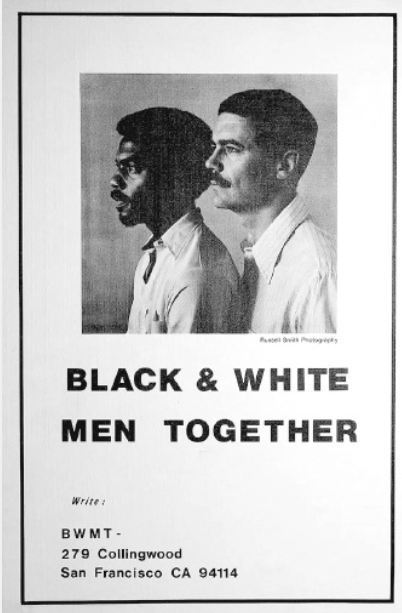
Michael Smith founded Black and White Men Together both “to provide a social, consciousness-raising, and support group for gay men interested in interracial relationships” and “to combat racism, homophobia, and discrimination.”
Gay Run ‘80, the first gay-organized footrace sanctioned by the Amateur Athletic Union, attracted participants from 10 states, ages 15 to 63.
1981
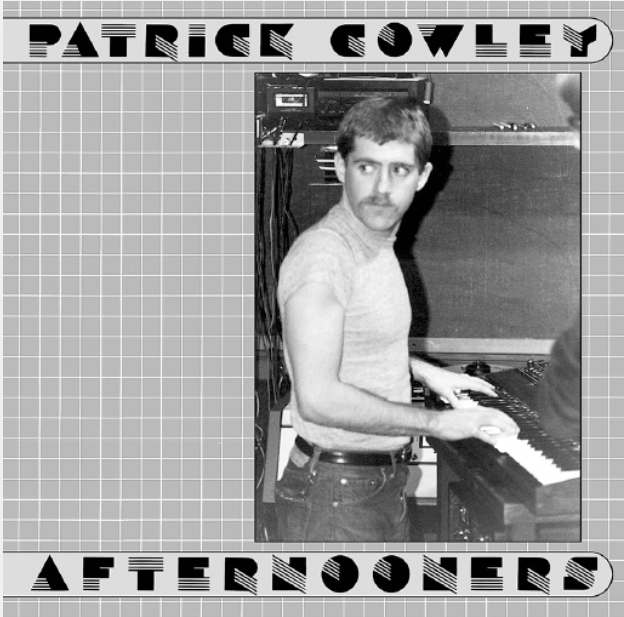
Patrick Cowley, pioneer of early electronic music and creator of hi-NRG, an uptempo style of disco, had the number 1 hit, “Menergy,” an open, undisguised celebration of gay clubs and their backrooms, on the Billboard Hot Dance Music/Club Playchart.
Woody Tennant became San Francisco’s first openly gay police officer. (Learn more about Tennant by watching this SFGATE video: https://bit.ly/4fP1oml)
Atlas Savings and Loan Association, the world’s first financial services institution created specifically for lesbian and gay clients, opened its doors for business at the corner of Market and Duboce streets.
The San Francisco Chronicle hired Randy Shilts as a national correspondent, “the first openly gay reporter with a gay ‘beat’ in the American mainstream press.”
After several nights of protesting at the N’Touch on Polk Street, which had suddenly started requiring Asian and Pacific Islanders to show three forms of ID to be admitted, activists established the Association of Lesbian and Gay Asians, which eventually forced the club to change its discriminatory policy.
Appointed to the San Francisco Municipal Court by California Governor Jerry Brown, Mary C. Morgan became the first openly lesbian judge in American history.
With a brief article of just nine paragraphs on an inside page, the San Francisco Chronicle informed its readers for the first time about “a mysterious outbreak of a sometimes fatal pneumonia among gay men” in “San Francisco and several other major cities.”
Ray Perea won the first International Mr. Drummer contest.
Bobbi Campbell (aka Sister Florence Nightmare), the sixteenth resident of San Francisco to be diagnosed with Kaposi’s sarcoma and the first person in the United States, if not the world, to come out publicly as living with what later would be known as AIDS, posted a placard in the window of Star Pharmacy at 18th and Castro streets to warn the community of the danger it faced.
1982
Initially called Gay-Related Immune Deficiency (GRID), the tragedy of AIDS united San Francisco’s LGBT communities and their friends to provide the services people living with HIV needed when existing agencies did not help, including the Kaposi’s Sarcoma Foundation (now the San Francisco AIDS Foundation) at 520 Castro Street, only the second organization in the United States created specifically to respond to the growing pandemic.
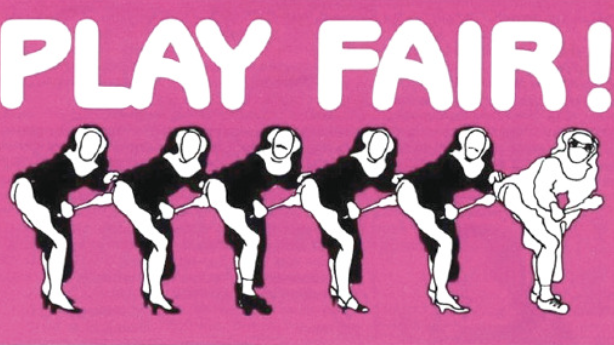
Guided by Sisters Florence Nightmare, RN, and Roz Erection (née Baruch Golden), both public health nurses, the Sisters of Perpetual Indulgence created Play Fair!, believed to be “the world’s first safer sex pamphlet;” raised the funds for it to be printed, and then distributed 16,000 copies at San Francisco’s Gay Freedom Day celebration, where Canyon Sam was the first person of Asian heritage to emcee the event.
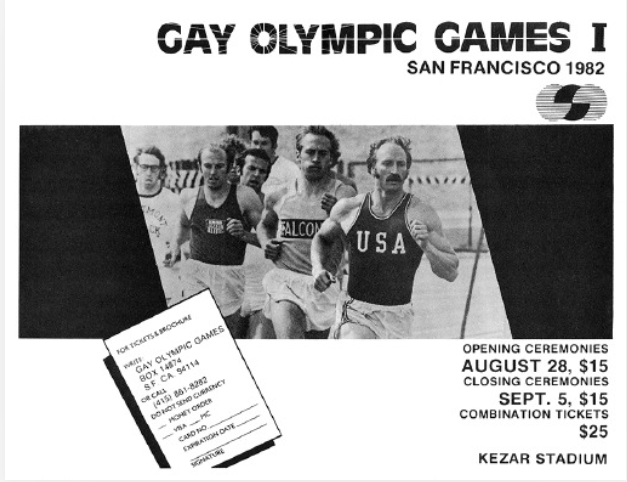
Dr. Tom Waddell, a former Olympian, founded the Gay Games, first held in San Francisco, where Tina Turner performed at the opening ceremonies, and which is now the world’s largest sporting event organized by and for LGBT athletes.
The Sisters of Perpetual Indulgence hosted the 2nd Annual Castro Dog Show and Parade, one of the world’s earliest events to raise funds to battle the gay community’s emerging health crisis, where Shirley MacLaine judged categories that included Best Buns, Best Trick, Best Smile, and Best of Show.
Bobbi Campbell and Dan Turner organized People With AIDS San Francisco, the first organization of, for, and by people with AIDS and AIDS-related complex (ARC).
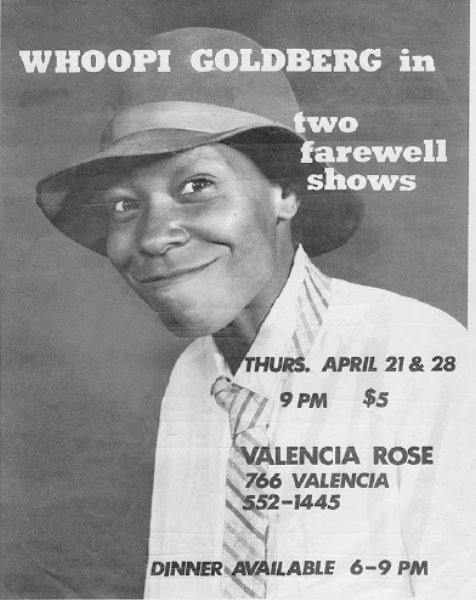
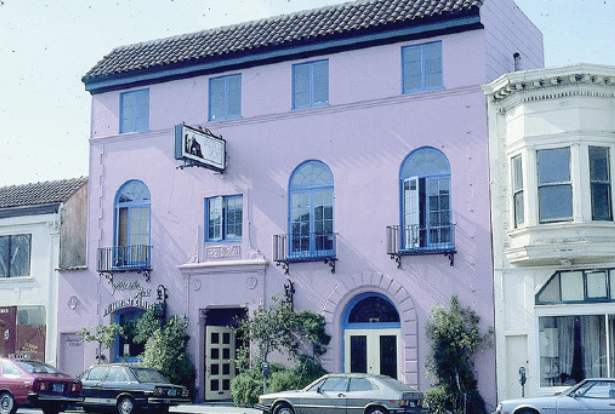
Hank Wilson and Ron Lanza opened the Valencia Rose, believed to be the first gay-owned and gay-operated comedy club in the nation, in what was formerly the site of a mortuary.
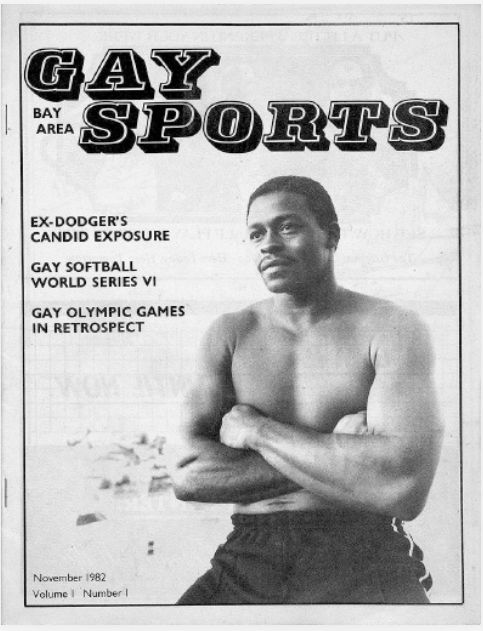
Published in San Francisco, Gay Sports featured outfielder Glenn Burke, co-creator of the high five and the first major league baseball player to come out as gay, on the cover of its premier issue.
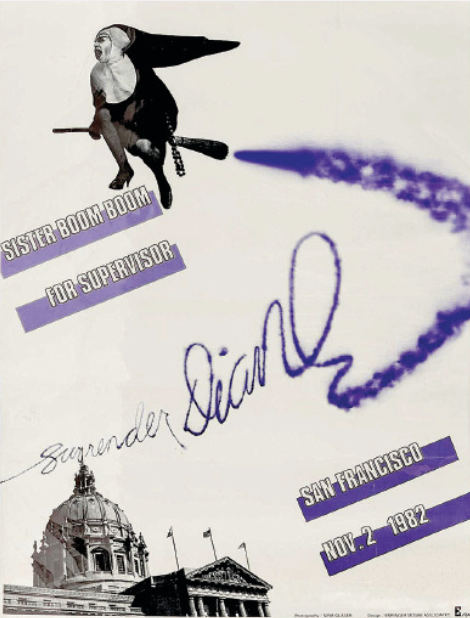
With a poster showing her on a broom soaring over City Hall skywriting “Surrender Diane,” Sister Boom Boom (née Jack Fertig) ran for the Board of Supervisors. (“Diane” referred to then San Francisco Mayor Dianne Feinstein.)
Founded by Rick Booth and Alan Selby, later known as “the Mayor of Folsom Street,” the AIDS Emergency Fund placed penny jars on the counters of local businesses to raise money for direct emergency cash assistance to people with HIV/AIDS who could no longer pay for food, housing, medical care, and other basic living costs.
1983
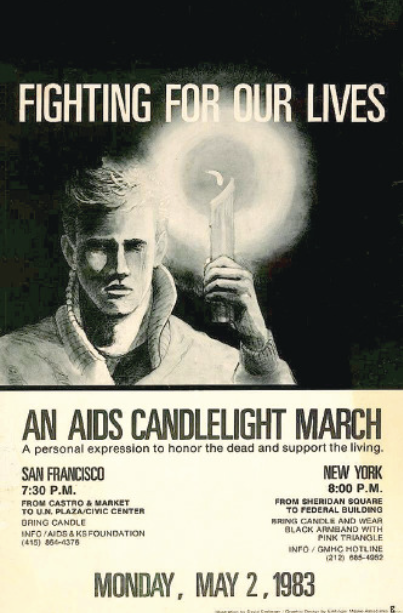
The AIDS Candlelight Memorial March filled Market Street from the Castro to City Hall, the first time people with HIV/AIDS held a public demonstration in San Francisco.
The community-led, multidisciplinary San Francisco Model, first implemented in Wards 86 and 5B of the city’s General Hospital, revolutionized care for people with AIDS by viewing them as individuals, not helpless victims, and focusing on their social and emotional well-being, as well as their physical ailments.
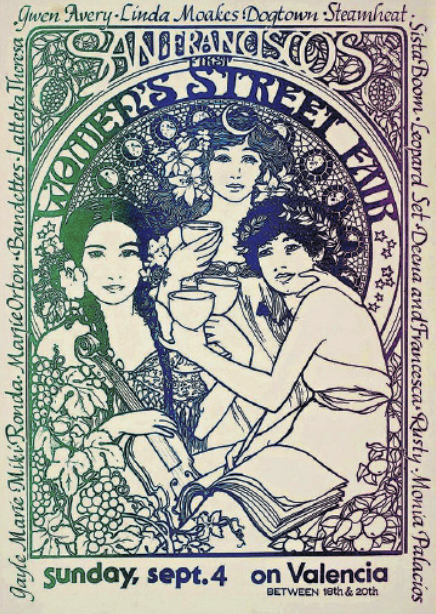
The Valencia Street Fair brought attention to the emerging women’s community in the Mission District.
Adult film icon Al Parker and International Mr. Leather 1983 Coulter “Colt” Thomas served as judges at the first San Francisco Leather Daddy’s Boy Contest, won by Jeff Banks, which raised $6,100 forthe AIDS Emergency Fund.
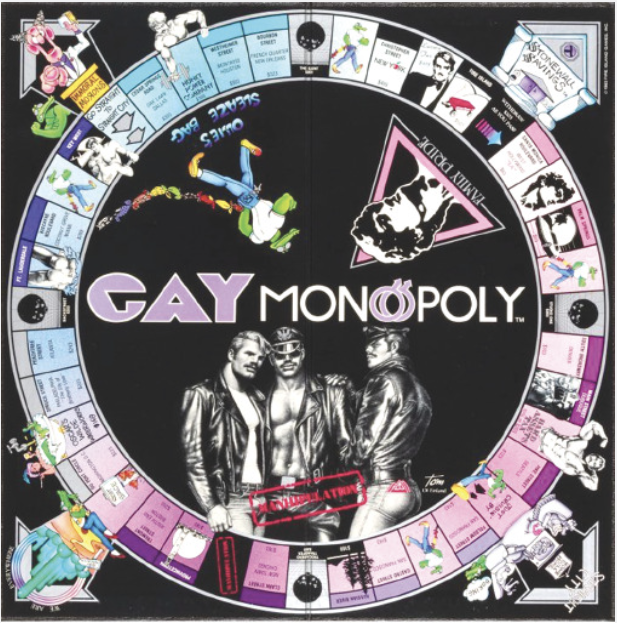
The Parker Sisters introduced Gay Monopoly, “a fabulous celebration of gay life,” where game pieces included jeeps, teddy bears, blow driers, leather caps, handcuffs, and stiletto heels. Properties included Castro Street, DuPont Circle, Biscayne Boulevard, and Folsom Street. Players put up bars and bathhouses, not houses and hotels, and money included $3 bills to spend in a fantasy world that reality was rapidly overwhelming.
Bill Lipsky, Ph.D., author of “LGBTQ+ Trailblazers of San Francisco” (2023) and “Gay and Lesbian San Francisco” (2006), is a member of the Rainbow Honor Walk board of directors.
San Francisco LGBTQ+ Timeline – Part Four
Faces from Our LGBT Past
Published on August 13, 2026




Recent Comments