







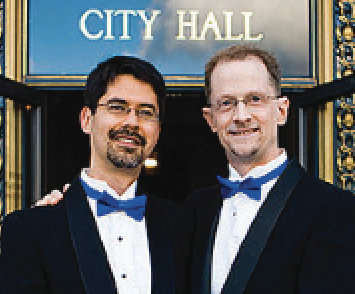
By Stuart Gaffney and John Lewis—
Mexico City is one of the art capitals of the world, with numerous museums housing the works of masters, such as the world-famous muralist Diego Rivera. And those artistic giants include many queer artists, none more beloved than the inimitable Frida Kahlo. Kahlo was married to Diego Rivera for much of her life, but her lovers included such luminaries as the Russian revolutionary Leon Trotsky, who lived in exile near Kahlo in Coyoacan, Mexico City; the renowned Japanese American artist Isamu Noguchi; actress Tina Mondotti; and folk singer Chavela Vargas.
One of Kahlo’s masterpieces, The Two Fridas, is part of the collection of the Museum of Modern Art in Mexico City and is a double self-portrait displaying two versions of herself. One Frida appears in traditional Mexican attire and the other in European attire, reflecting her mixed heritage. The two images are linked together through medical tubing carrying blood between the two hearts (a reference to the many operations she endured throughout her life because of a serious bus crash). The tubing is cut and dripping blood on her white dress in one of the self-images, symbolizing among other things the pain she felt when she and Rivera were divorced for a short time before remarrying.
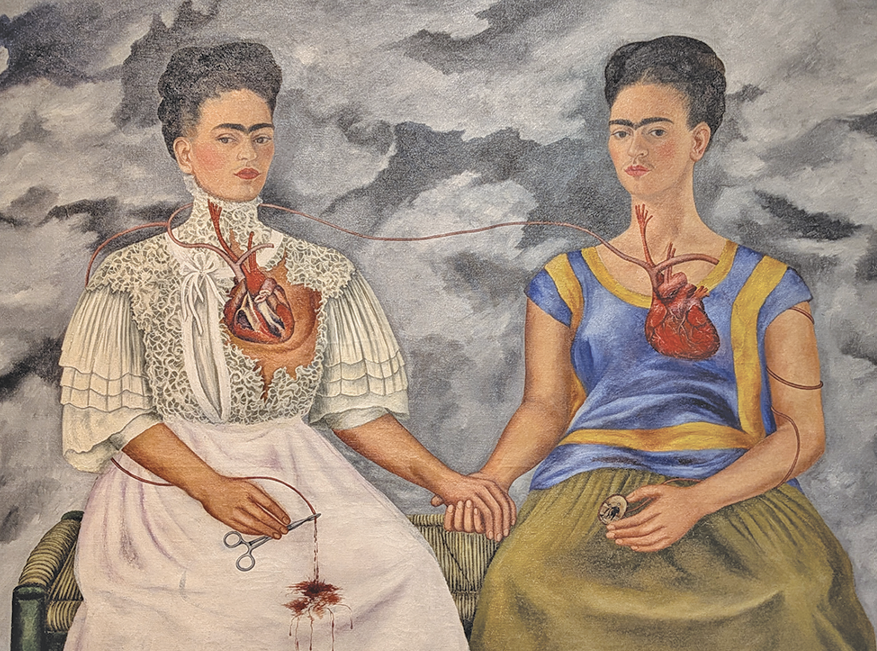
The two images hold hands with each other in an act of self-comforting, and perhaps most importantly, both reveal Frida’s open heart (both literally and figuratively). Both also depict Frida’s mustache and her bold unibrow, which she did not hide.
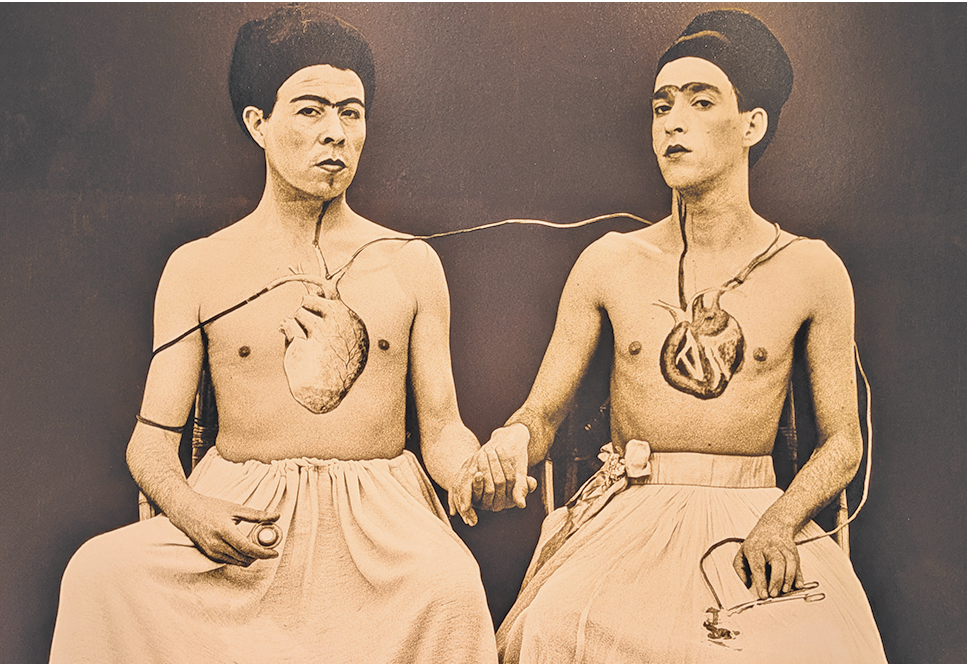
Kahlo’s dedication to freedom of expression, overcoming adversity, and living life with an open, loving heart have inspired other queer artists who came after her. Gay Chilean writers and artists Pedro Lemebel and Francisco Casas created their own version of The Two Fridas in 1989, when HIV/AIDS was ravaging the community. As the museum notes explain:
“Holding hands and wearing only skirts reminiscent of the [native] dress and the Victorian gown, both artists posed with bare torsos and illustrations of their exposed hearts connected by a plastic tube. At the height of the HIV pandemic, this defiant image presents two sexually ambiguous bodies, joined by a blood transfusion, one of them wearing a condom. The act of bleeding themselves not only condemns the homophobia and stigmatization that associated HIV with the sex-dissident community, but also the violence, forced disappearances, and murders carried out by the [Chilean] military dictatorship.”
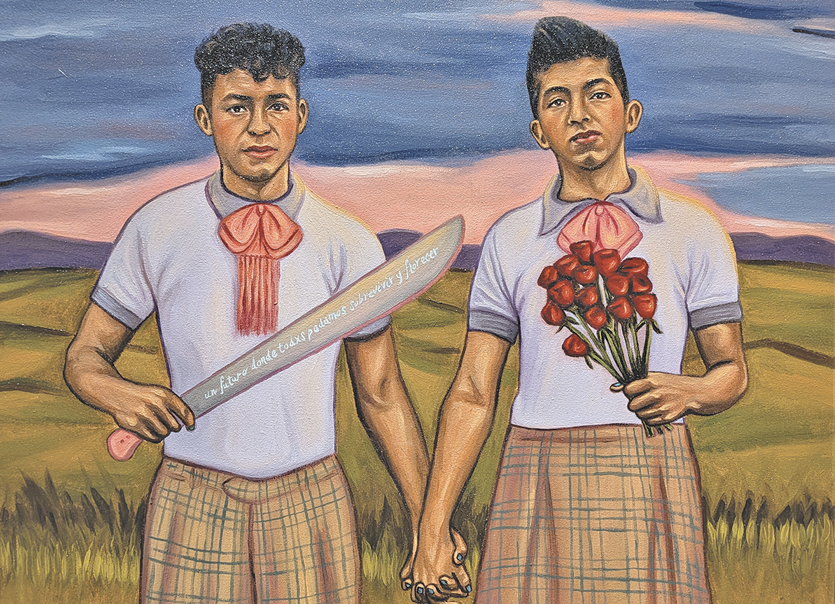
Mar Coyol’s 2023 painting Uniforms adapts Kahlo’s The Two Fridas, to depict queer love and more generally the aspirations of the LGBTIQ+ community. It depicts two male lovers holding hands, just as the figures in Kahlo’s original work and Lemebel and Casas’ 1989 version. One lover also holds a large knife, written on it: “A place where we can all survive and flourish.”
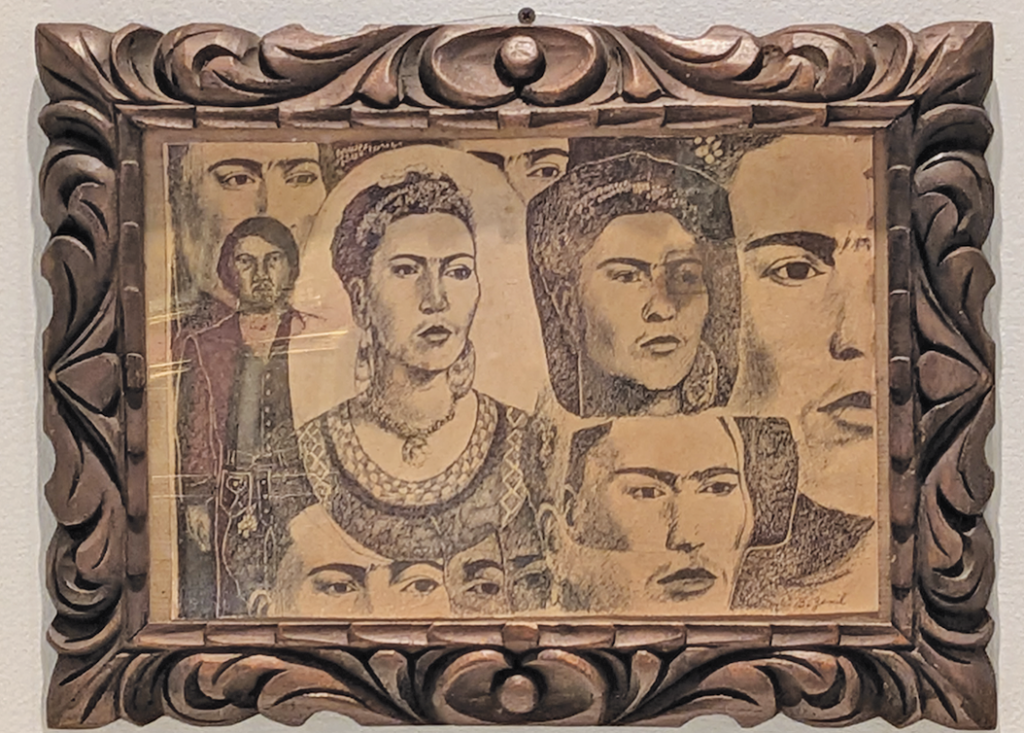
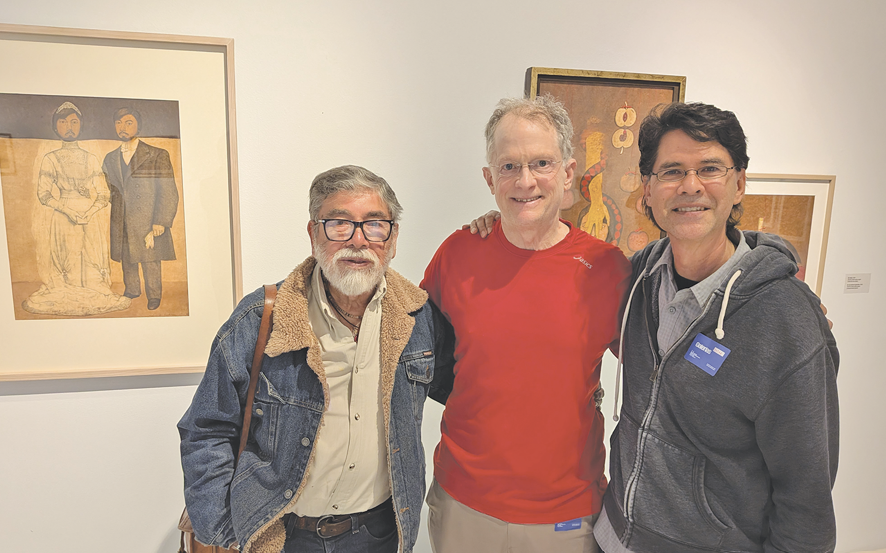
The work of one of the most important current Mexican gay artists Nahum Zenil is also in dialogue with Kahlo. Both Zenil and Kahlo employ their own images very frequently in their work to investigate the interplay between their inner and outer selves. When an art critic observed this similarity years ago, Zenil, with humility, overtly began including visual references to Kahlo in his works. We had the opportunity to meet Zenil, now 79, at a retrospective of his work at Chopo University Museum. Like the work of Kahlo and the other artists mentioned here, an open heart, which bears the burdens of human suffering but remains open, is central to Zenil’s work.
Among many other queer artists, Mexico City also features the exquisite work of Roberto Montenegro. Montenegro’s 1920s mural The Tree of Life or the Tree of Science is widely recognized as the first modern Mexican mural, which began a movement of monumental public art that still flourishes today. However, Montenegro’s original mural, which featured Saint Sebastian in the key position in the mural from which the tree emerges, was censored because of its homoerotic imagery, and the artist was forced to replace it with the image of a man in armor. Beautiful homoerotic imagery, though, remains part of other elegant works by Montenegro.
Through these and many other artists’ works, Mexico City shines with gems of queer art.
John Lewis and Stuart Gaffney, together for over three decades, were plaintiffs in the California case for equal marriage rights decided by the California Supreme Court in 2008. Their leadership in the grassroots organization Marriage Equality USA contributed to making same-sex marriage legal nationwide in 2015. Today, they continue to educate and advocate for marriage equality and LGBTIQ+ rights worldwide.
Photos courtesy of John Lewis and Stuart Gaffney
6/26 and Beyond
Published on September 10, 2026













Recent Comments