








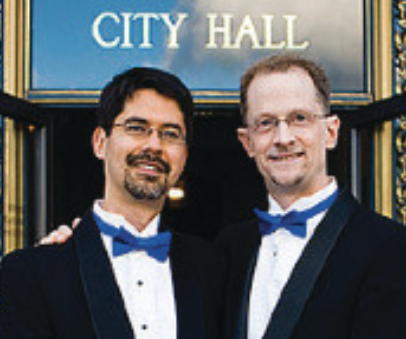
By Stuart Gaffney and John Lewis—
Our mouths gaped as soon as we entered the room to the left of the grand staircase at Chapultepec Castle in the heart of Mexico City. Before our eyes was David Siqueiros’ monumental expressionist mural From the Díaz Dictatorship to the Revolution, depicting the populist political and military movement to oust Mexican dictator Porfirio Díaz, who ruled Mexico for over thirty years until he was forced to resign in 1911. We immediately realized that Siqueiros’ stunning mural, portraying a century-old social and political struggle in Mexico, had direct symbolic meaning today as the United States faces unprecedented potential threats to our democracy in this fall’s midterm elections.
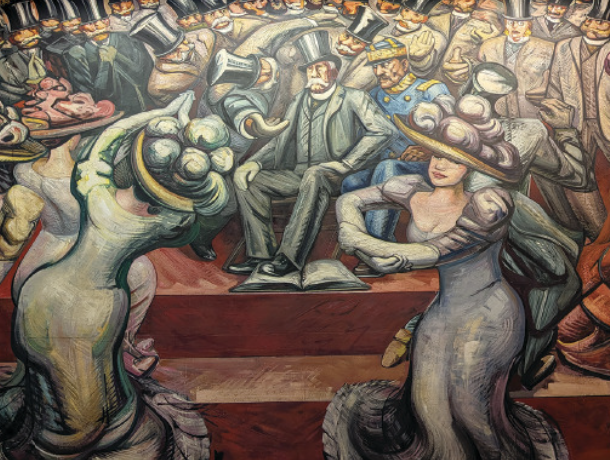
The mural’s main right panel features an image of dictator Diaz, surrounded by his cabinet, with his foot treading on the Mexican Constitution of 1857, while can-can dancers entertain aristocrats indulging their wealth and privilege. It could just as well have been Donald Trump, surrounded by JD Vance, Pete Hegseth, and Todd Blanche, Trump’s foot trampling the U.S. Constitution, while Trump’s family, cronies, and tech billionaires revel in their opulent lifestyles, enriched by Trump’s presidency.
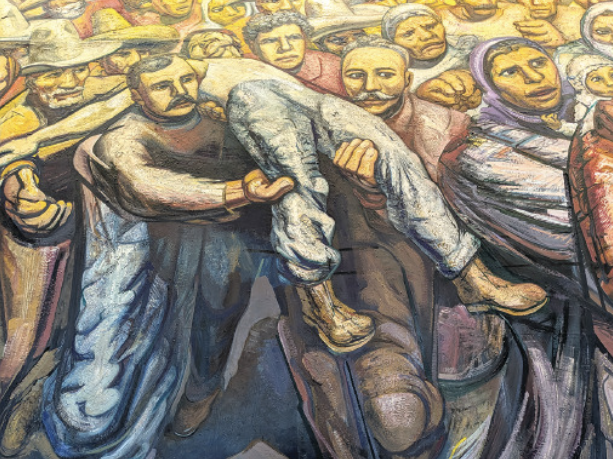
To the left, the mural depicts something very different: struggling Mexican workers and poor people. In the forefront are those involved in the 1906 Cananea copper mine strike, some of whom are engaged in a physical confrontation with government forces. The Mexican government’s deadly suppression of the labor action sparked widespread public anger and resentment that helped spark the revolutionary movement to overthrow Díaz. The mural shows a fatal casualty of the strike being held high in the arms of other strikers.
Today’s American version would feature countless systemically disadvantaged and unhoused citizens as well as those simply trying to make ends meet under soaring inflation and gas prices, caused by Trump’s tariffs and his war in Iran. Also included would be all those who have suffered at the hands of ICE brutality. The tragic casualty of U.S. government violence could be Lorenzo Salgado Araujo, a law-abiding, hard-working 35-year resident of the U.S. from Mexico, who was fatally shot by ICE agents as he drove to work on the morning of July 7, or Renée Good and Alex Pretti, killed by ICE in January, as they and thousands of others protested and resisted ICE’s violent enforcement operations against immigrants in Minneapolis.
Further to the left of the strike are numerous Mexican peasants and soldiers who seek their freedom. Mixed within the crowd are images of leading Mexican revolutionaries, including Francisco “Pancho” Villa and Emiliano Zapata, as well as figures such as Karl Marx, and other European and Mexican communist thinkers.
Today’s U.S. counterpart would be the powerful, progressive, populist wave gaining strength among Democratic constituencies and independent voters not just to defeat Trump and his political allies, but to usher in a brighter future for the millions of Americans left out and suffering under the rule of Trump and the Republicans. Leaders would include New York City Mayor Zohran Mamdani, who—we realized from conversations with locals and other foreigners in Mexico City—is inspiring people around the world.
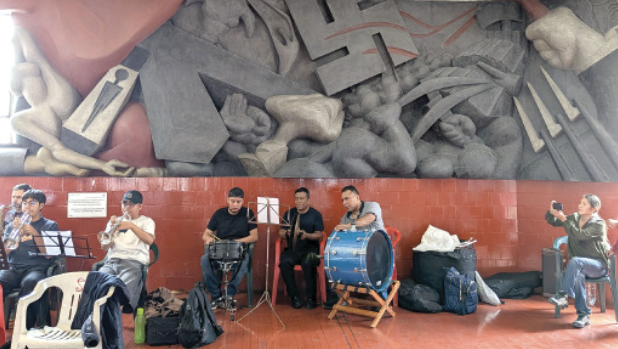
Although not depicted in Siqueiros’ mural, prominent 1930s Mexican murals also alerted viewers to another threat: Nazism and other fascist movements. One of the most striking examples is History as Seen From Mexico in 1936 by Japanese American artist Isamu Noguchi at the Abelardo L. Rodriguez Market in Mexico City. Noguchi’s sculptural mural depicts a heroic struggle against fascism, represented by a giant foreboding Nazi swastika, alongside a large fallen Christian cross crushing humanity.
The Rodriguez market was built in the 1930s to offer an innovative hybrid market and public space to help bring some of the benefits of the Mexican revolution to the poor. Part of the design was to grace many of the market’s walls and arched ceilings with murals, curated by Diego Rivera. Today, the market continues to serve a working-class clientele, while containing a treasure trove of art, deteriorating to varying degrees over time. Making our way to the untouristed market meant that we could still experience the art somewhat as it was intended—with “the people”—and not confined to a pristine and expensive museum. Indeed, an amateur brass band practiced and ate lunch together right in front of Noguchi’s masterpiece when we visited on a Sunday afternoon.
The mural’s warning could not be more prescient today, not only with Trump’s presidency and the potential for him and his allies to attempt to thwart the November elections results if they go against them, but also with the ongoing threat from right-wing political movements elsewhere in the world. Meanwhile, JD Vance and Pete Hegseth, among others, openly promote Christian nationalism (with Hegseth employing it to justify the Iran war), and the Republican supermajority of U.S. Supreme Court consistently rules in favor of conservative Christian causes at the expense of all others, including LGBTIQ+ people.
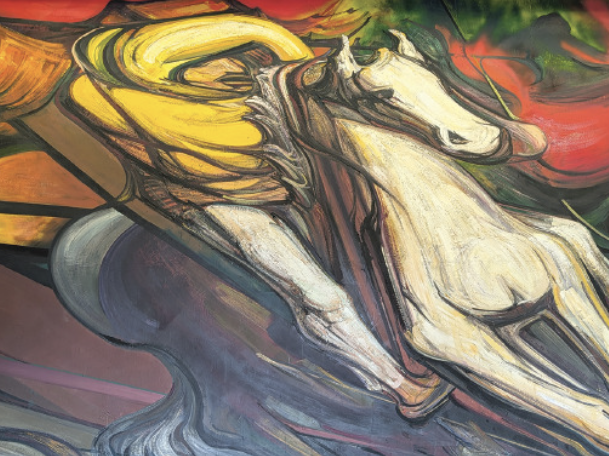
A final stirring image from Siqueiros’ mural is that of a revolutionary soldier atop a galloping horse, as he reins it in to a stop as they face headwinds. The image is so dynamic that it feels as if the horse could surge right out of the monumental-sized painting into the room. The horse seems to represent the raw energy and power of the revolutionary movement, while its being reined in possibly points to constraints on the revolution and the complications in attempting to fulfill its lofty aims.
So too today, the horse and its rider represent to us the question of what lies ahead in the U.S. and what we can do to help truly shape the future for the better. How do we wisely harness the energy building today to make lasting change? Every living being in Sequeiros’ mural, including the powerful horse, is actively engaged in what’s going on; no one is an idle bystander. One thing we know for sure today is that being active and involved with energy and integrity is key to the way forward.
John Lewis and Stuart Gaffney, together for over three decades, were plaintiffs in the California case for equal marriage rights decided by the California Supreme Court in 2008. Their leadership in the grassroots organization Marriage Equality USA contributed to making same-sex marriage legal nationwide in 2015. Today, they continue to educate and advocate for marriage equality and LGBTIQ+ rights worldwide.
6/26 and Beyond
Published on September 24, 2026











Recent Comments