










By Derek Barnes—
Jazzie Collins spent her life making sure San Francisco did not look away from the people it found easiest to forget. A Black trans woman who organized with Senior and Disability Action, served as vice chair of the city’s LGBT Aging Policy Task Force, and sat on the Trans March board, she fought for seniors, for disabled people, and for tenants with nowhere else to go.
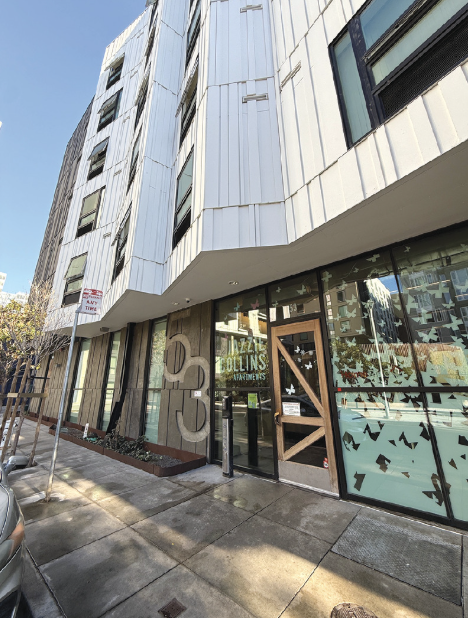
She died in 2013. Two years later, the city opened Jazzie’s Place, the first homeless shelter for LGBTQ adults in the country. In 2022, a 96-unit supportive housing building on Colton Street was named after her.
Jazzie understood something San Francisco still struggles to practice: housing, care, and dignity cannot be separated. The building bearing her name now stands at the center of a reckoning over all three.
On October 1, 2026, HomeRise, which operates Jazzie Collins Apartments and other supportive housing properties in San Francisco, announced it would wind down after serving residents for over 35 years. Nearly 1,500 people will transition to new operators over the next two years. Last fall, a man died in his room at that building and lay there for days before anyone found him. The tragedy intensified scrutiny of an organization already struggling with financial, operational, and leadership failures.
I have served on HomeRise’s board for three years. We have an obligation to confront what went wrong, including the decisions made and the warning signs missed over decades. We must acknowledge what HomeRise’s audited 2024 financial statements also show: revenue fell while insurance costs increased dramatically.
But San Francisco cannot afford to overlook another question that almost nobody in the media is asking, as it determines the future of 1,500 people. What replaces HomeRise’s Permanent Supportive Housing model?
For San Francisco’s LGBTQ+ and Black communities, the stakes are especially personal because these are my communities too. The people who helped build the city’s culture, activism, and networks of care are among those most vulnerable to housing instability.
Permanent supportive housing in San Francisco disproportionately houses LGBTQ elders, long-term HIV survivors, trans people who spent decades cycling through SROs, and Black and brown residents pushed out of every other housing option. These are the people Jazzie fought hard to protect. They are the people being handed to new operators over the next 24 months, in a transition none of them chose.
This past summer, when HomeRise was still weighing its options, a seasoned policy advisor asked me: Isn’t HomeRise just too big to fail? I said no. They were stunned. Weeks after the wind-down was announced, the San Francisco Controller placed the Mission Economic Development Agency (MEDA), with more than 1,000 affordable homes, on the same Tier 3 designation as HomeRise, citing audit findings and alleged employee self-dealing. MEDA says it was a victim of crime and that no public funds were lost. Both organizations serve communities the private market abandoned. Neither was funded for the governance infrastructure the City now demands.
As many nonprofits and public housing providers have been reeling from recent funding cuts, look at what voters just did. Proposition 1 passed, authorizing $11.25 billion in bonds for housing programs. Proposition 37 also passed, authorizing up to $25 billion in revenue bonds for loans to middle-income homebuyers.
These are substantial commitments. Neither funds the support services for drug addiction, a case manager who notices a resident hasn’t come downstairs in three days, or the meals people need daily. The clinical care these residents need is not truly captured on a housing provider ledger—it comes via Medi-Cal, which the state is now constraining.
Meanwhile, SNAP food benefits have been cut, federal Medicaid work requirements start January 1, and two years of targeted HUD attacks on Housing First models make the intention clear: a shift toward treatment and work requirements first. The Feds and California will finance the buildings but defund the services people need inside them. In September, the Governor signed Democrat-backed AB 1556, opening homelessness funding to abstinence-based housing. There will be more claimants, but the same shrinking pot of money. Surprisingly, many of our local legislators and policymakers have been largely silent about the impending catastrophe.
There are four things San Francisco should do now.
Direct Prop 1 preservation dollars to this transition. The bond includes $2.1 billion to purchase, rehabilitate, and maintain existing affordable housing. Older buildings, like HomeRise’s, need exactly that, and few operators will want to take non-performing properties without it. It is the most promising opportunity this election created to support the transition, and the City should claim a share immediately.
Fund a staffing standard, and publish it. The City is moving to outcomes-based contracting, and accountability is overdue. HomeRise’s 2024 audited statements show what happened in a single year: payroll fell by $1.8 million while insurance rose by $1.77 million. Every dollar cut from staffing was offset by the cost of insuring aging buildings. Government contracts also cap payments for billing and compliance.
San Francisco should establish minimum staffing and service-level standards for supportive housing, calibrated to residents’ needs and the operating complexity of each building. City contracts must cover the full cost of meeting those standards, including case management, crisis response, property operations, and administrative oversight, so deficiencies are caught before they become tragedies. Performance mandates without adequate funding produce the failures they are meant to prevent.
Separate ownership, property management, and resident services. HomeRise owns many of its properties through layered and complex funding structures, which can turn service failures, maintenance/repair backlogs, or rent nonpayment problems into a real estate crisis. The city cannot simply replace a provider; it has to untangle ownership. San Francisco needs a model that protects the housing asset while letting specialized operators manage buildings and deliver optimal care to residents. Changing a service provider should not require destabilizing a resident’s home.
Report building by building. HomeRise’s financial and operational challenges did not emerge overnight. The City’s 2024 audit flagged problems that required corrective action, but specifics to clear Tier 3 designation were elusive. The next system must publish meaningful measures of occupancy, resident retention, maintenance, staff, safety, and service delivery so a housing provider and the public know exactly what is needed to improve while there is still time to act.
Our community learned long ago that housing without services is just a room, and services without housing are just long waiting lists. Jazzie Collins understood that better than most people who now invoke her name.
The building named after her should become the argument and symbol for getting this right. It should not be the evidence that we got it all wrong.
What comes next cannot be decided in rooms where our communities are not invited. We must demand a place in these rooms to preserve Jazzie Collins’ legacy.
Derek Barnes is CEO of the East Bay Rental Housing Association and serves on the Homebridge Strategic Advancement Committee and HomeRise Board of Directors. Follow on Instagram @derekbarnes.sf
Published on November 19, 2026















Recent Comments