





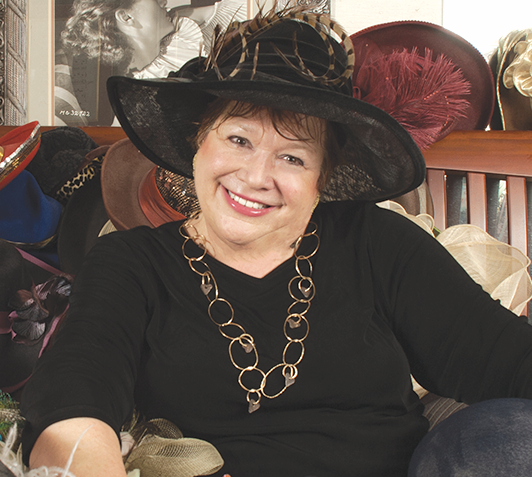
By Jan Wahl—
At last, all of your questions about what the credits at the end of a movie refer to are answered. The answers are in a great book: The Film Crew of Hollywood: Profiles of Grips, Cinematographers, Designers, Gaffers, Stuntmen, and Makeup Artists (McFarland, 2013). Author James C. Udel—who is also a grip (more about that later), archivist, and union call steward—gives us an in-depth look at ten individual career paths that make the art of film possible. Each professional’s entire career is catalogued and turned into a timeline so we all understand exactly what they do.
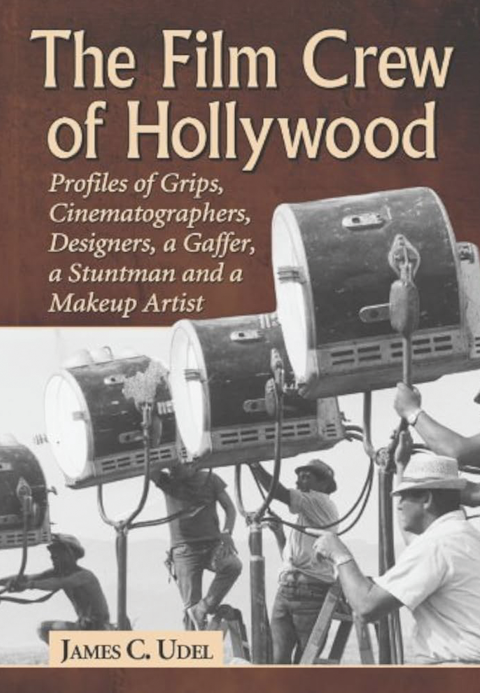
The Odyssey can be a window into this world, because the most important aspect of it for me is how the movie has excited a new generation of people about the art of filmmaking. I have heard that most audiences wait to read the credits after the film. So, if you are wondering what the lighting, the camera, the makeup, and other behind-the-scenes positions specifically refer to, The Film Crew of Hollywood is a book for you.
I get asked at least once a week what the word “gaffer” means. When we talk about the collaborative effort of making movies, one irreplaceable craft is that of lighting. The largely unsung individual who uses lights as a painter uses brushes is the gaffer. From pulling cables to directing stars where to hit their lighting mark, gaffers go everywhere from wide shots to film noir. The gaffer they interview in this book, Earl Gilbert, worked on big movies such as Gentlemen Prefer Blondes and The King and I. Because of the hot lights on the set, Gilbert had to make sure sprinklers didn’t trigger and fires didn’t start.
Gilbert loved working with Jane Russell and Marilyn Monroe because they were friendly to the crew. But when working with Alan Ladd on Boy on a Dolphin, he had to make sure that no background extras were taller than Ladd, who was 5 feet 6 inches tall. He had to make sure that the ramps all worked to make Ladd look taller.
Among the myriad of crafts that converge to bring a movie to life, few are more demanding than the profession of makeup. A face-fixer requires a mix of colorist, painter, sculptor, and psychologist, all in the same day! Makeup artist Dan Striepeke toiled on big movies like Around the World in 80 Days, The Ten Commandments, and Giant. He made up extras, stuntpeople, and stars. Running Universal Pictures’ makeup department, he was responsible for the bloodletting process and formulas, prosthetics, bald caps, and hair. On Spartacus, Striepeke was chosen to accentuate all the gladiators’ perfect muscle tone.
Much of the amazing cinematography in the movie The Odyssey was done with cranes and dolly shots. The person who puts this specialized equipment together, working as what they call “The Extra Hammer,” is the key grip. They are also known for rigging drag lines behind horses, such as those for Clark Gable, who insisted on doing his own stunts in The Misfits.
From rough-and-tumble stuntmen and stuntwomen to cinematographers who lensed close-ups and long shots, from automotive designers to production designers, this is a book with more information than you will ever need about behind-the-scenes Hollywood. The personal stories about working on the films from the point of view of these specific professionals make it a fun and informative read. Learn more at the publisher’s site: https://bit.ly/4qDj6x1
While not as fun to read, the International Federation of Film Archives has created an extensive, detailed “Glossary of Filmographic Terms” at https://bit.ly/4xkihLO
Jan Wahl is a Hollywood historian and film critic on various broadcast outlets. She has two Emmys and many awards for her longtime work on behalf of film buffs and the LGBTQ community.
Off the Wahl
Published on August 27, 2026









Recent Comments