




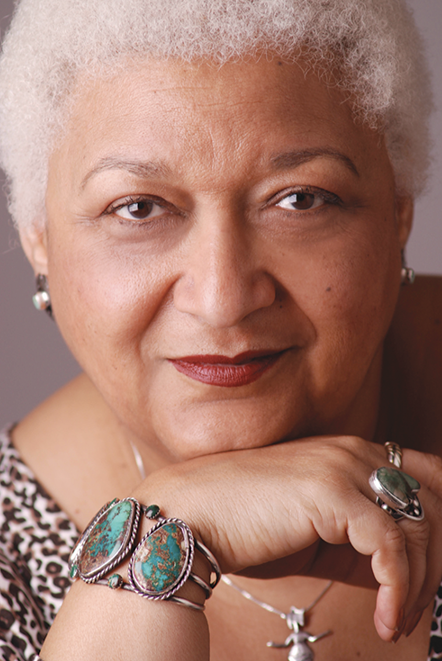
By Jewelle Gomez—
It’s been fifty years, give or take, since I went to my first Pride March—in New York City it was always called a “march.” Despite the half century, I remember the moment clearly, especially the physical fear that coursed through my body.
I’d watched or listened to the march passing by my Greenwich Village flat for a couple years before I decided I could risk participating. Identifying that fear is not simple. Like the school teachers who walked with paper bags over their heads, I too might have feared losing my job. But I worked in theatre, so that type of retribution seemed unlikely. But what if a neighbor saw me? Or a friend?
Even more, I think I feared a step that felt much bigger than stepping off the curb into the jubilant crowd. Honestly, I didn’t fear being recognized by someone as much as being recognized by myself. It was like aligning myself publicly with the civil rights activists when I was in high school and the Black Arts Movement when in undergraduate school. It was something still not quite “approved of” by many, even in communities of color, especially those in Boston’s middle class.
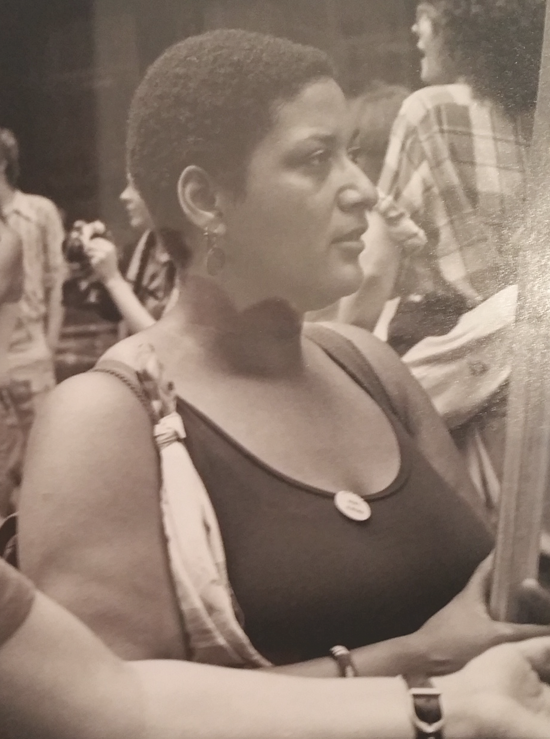
For me, decidedly not in the middle class, it was clear early on that any human rights advances had an economic aspect that couldn’t be ignored. Of course, that complex realization didn’t coalesce for me until much later. Back then I just knew I was being drawn toward “movement” and that’s something I’d always understood. Movement is the way we affect change; we can move from one location to another and give ourselves a new perspective that better suits who we are and what we need. Movements do that.
At the time, though, I only knew it was lonely standing on the curb even with those who were cheering. My people were moving like the tide I’d so enjoyed when I went to Revere Beach as a kid. The tide’s movement had such power it could wash away the sand castles and carry up the beautiful shells and sea glass. Even though we knew that white people didn’t want us on the beach, we went anyway as if we had an obligation to the millions of Africans who’d drowned in the Atlantic when they’d been bound for slavery. The movement of the tides brought them back to us in some way.
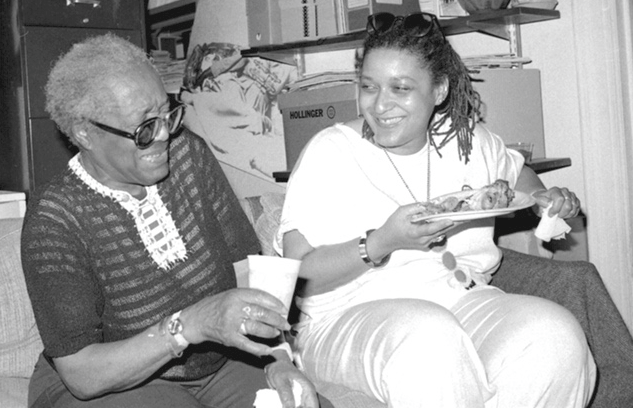
So, I stepped into the movement marveling at how many different types of women were streaming along before me. I was breathless with the beauty of women in the sunlight and men wearing sparkles. I didn’t think all my problems would be solved, but I was sure that, as a lesbian feminist, I’d never be alone again—because, with movements, comes community. A volunteer with the Lesbian Herstory Archives carried a sign that said: ‘We’ve got your past. Who’s got your future?’ I saw that this tide of movement would bring back the queer women who’d been hidden from us. I slid into the Lesbian Herstory Archives group because I couldn’t resist walking beside Mabel Hampton, the oldest lesbian I’d ever met. And the blown-up photos of women like Eleanor Roosevelt and Radclyffe Hall revealed we had ancestors who’d help us build our own futures.
I’m now older than I was when I met Mabel; older than when I acted as one of her pall bearers in 1989. In San Francisco, I’ve had the honor of being a marshal at the Pride Parade; but, at this age, I enjoy it just as much from the grandstand. This year I’ll pop on my Golden State Valkyries cap to keep from getting sunburned since my Afro is not only white now but also a bit thin. But it’s not at all like standing on the curb. A half century later, I can still feel the movement.
Jewelle Gomez is a lesbian/feminist activist, novelist, poet, and playwright. She’s written for “The Advocate,” “Ms. Magazine,” “Black Scholar,” “The San Francisco Chronicle,” “The New York Times,” and “The Village Voice.” Follow her on Instagram and Twitter @VampyreVamp
Leave Signs
Published on June 11, 2026







Recent Comments