





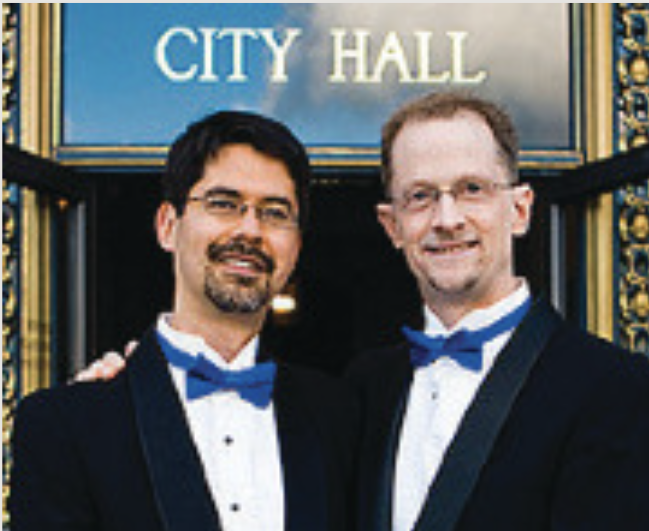
By Stuart Gaffney and John Lewis—
As queer Americans continue to face the formidable challenges of the Trump administration and the Republican-controlled U.S. Supreme Court, we find inspiration this Pride Month from a perhaps unlikely quarter: Poland, the country that ILGA ranked as the worst country in the European Union for LGBTIQ rights for five years running from 2020 to 2024.
During those years, Poland was considered particularly inhospitable to queer people because it was governed by the virulently homophobic, far right Law & Justice Party, led by President Andrzej Duda. Duda’s authoritarian, nationalist government attempted to impose its extreme conservative values, grounded in Catholicism and traditional Polish norms, upon everyone. Not only did Law & Justice control both the executive and legislative branches, but also it essentially controlled the state media and sought to eliminate an independent judiciary. Sound familiar? Duda, along with Hungary’s Viktor Orbán, provided a roadmap for Donald Trump and his minions.
The cruel attacks that Trump’s 2024 presidential campaign employed against trans people also mirrored Duda’s 2020 re-election campaign, in which he demonized LGBTIQ people for raw political gain. Duda invoked the words of the so-called “Polish Pope” John Paul II that being gay was an “intrinsic moral evil” and “objective disorder.” Duda vilified the LGBTIQ community as being more dangerous than communism and dehumanized queer people as “not people, but ideology.” Things got so bad in Poland that, by 2020, approximately 100 regions of Poland, constituting about one-third of the country, had declared themselves “LGBT-free” or “LGBT Ideology-free” zones. These proclamations were intended to make queer people feel unwelcome in their own communities and to justify prohibiting LGBTIQ rights marches and other events.
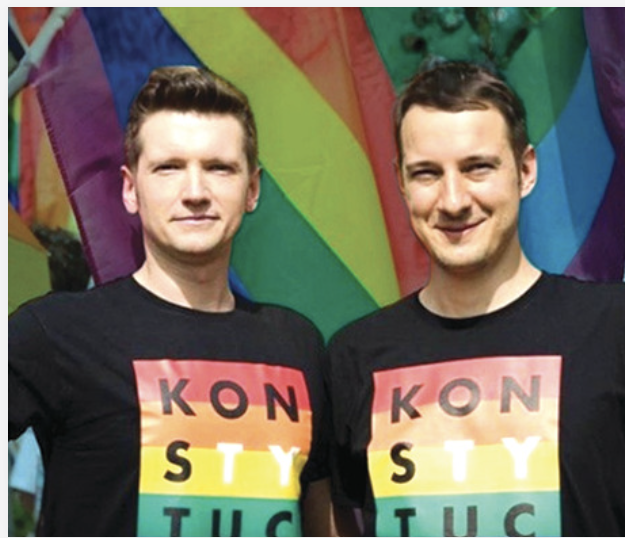
How then is it possible that Mateusz Trojan and Jakub Cupriak-Trojan last month became the first gay couple in history to have their marriage legally registered in Poland, just in time for Pride?
The answer is that, even under these dire circumstances, queer Poles and their allies kept hope for the future. Despite violent attacks on LGBTIQ equality marches six years ago, they stood up in the summer of 2020 in what some term “Poland’s Stonewall.” As threats to democracy itself grew, hundreds of thousands of Polish people took to the streets to protest and began to organize politically as well. In 2023, their collective efforts paid off. Opposition parties won the parliamentary election, and a former prime minister, Donald Tusk, who campaigned to restore and protect democracy and to support and expand LGBTIQ rights, became prime minister again.
Meanwhile, gay people asserted their rights in litigation both in Polish and European Union courts. Two such activists were the Cupriak-Trojans, a Polish couple who married in Berlin in 2018. They brought suit to have their marriage recognized back home in Poland. It took over seven years of tireless work by many, but, in November 2025, the couple won a landmark victory at the European Court of Justice (ECJ). The court held that the EU treaty guaranteed that all EU citizens, including queer people, had the “right to move and reside freely” within the union, free from discrimination based on their sexual orientation and with respect for their personal family relationships. Thus, all EU member states—including those who do not permit LGBTIQ couples to marry within their own state—must recognize same-sex marriages conducted in other member states. The decision could have wide-reaching implications beyond Poland for other EU member states without marriage equality, such as Hungary, Romania, and Slovakia.
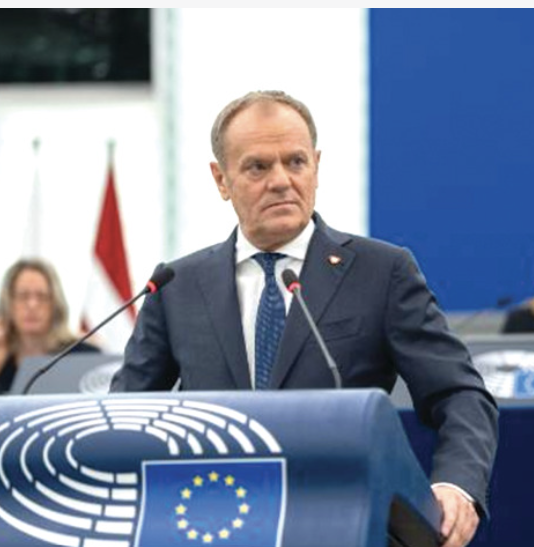
As Poland recognized its first same-sex marriage last month, Prime Minister Tusk declared that doing so was “a matter of human dignity: the right to happiness, the right to equal treatment by the state.” He then took the extraordinary step of apologizing to the Polish queer community, “to all those who, for many, many years, felt rejected and humiliated.” He recognized what had been abundantly clear: “For many years, the [Polish] state has failed the test.” And Tusk appealed to lawmakers and government officials to do something very simple that far too few of them had been capable of doing before: “to respect the dignity of every human being and to remember that these people live around us, beside us, among us, and deserve the same feelings of respect, dignity, and love as any other person.”
Warsaw mayor Rafał Trzaskowski, a strong LGBTIQ supporter, concurred, declaring that “Warsaw is for everyone” and that any same-sex couple with a valid EU marriage could register it in the city. The city of Wrocław soon followed suit. Alina Szeptycka, an official government representative, was exuberant, saying “after many years, and recently also months of intense struggle, same-sex marriages concluded abroad are also marriages under Polish law … . This long-awaited change has become a fact.” And we are thrilled to report that no “LGBT-free” zones remain in Poland today.
Still, much remains to be done to ensure that Poland is a safe and welcoming place where LGBTIQ people have full equality. Unfortunately, the current Polish president Karol Nawrocki is staunchly conservative, the Catholic church continues to have much influence in the country, and the country is very closely divided politically. The reasoning of the European Court of Justice opinion implies that married Polish same-sex couples should not just be able to register their marriage in Poland, but they should have equal substantive rights as a married couple as their heterosexual counterparts. However, making that a reality will require additional work.
Nevertheless, this historic marriage equality victory in Poland is a cause for celebration this Pride season and yet another example of how queer people’s grit, determination, and tenacity can produce tangible results that make the world a better place. This June, Poland stands as a beacon of queer hope for LGBTIQ Americans and a timely reminder that, even when things may appear bleak, we must maintain hope and vision for the future. Our dreams may come true sooner than we think.
John Lewis and Stuart Gaffney, together for over three decades, were plaintiffs in the California case for equal marriage rights decided by the California Supreme Court in 2008. Their leadership in the grassroots organization Marriage Equality USA contributed to making same-sex marriage legal nationwide in 2015. Today, they continue to educate and advocate for marriage equality and LGBTIQ+ rights worldwide.
6/26 and Beyond
Published on June 11, 2026









Recent Comments