




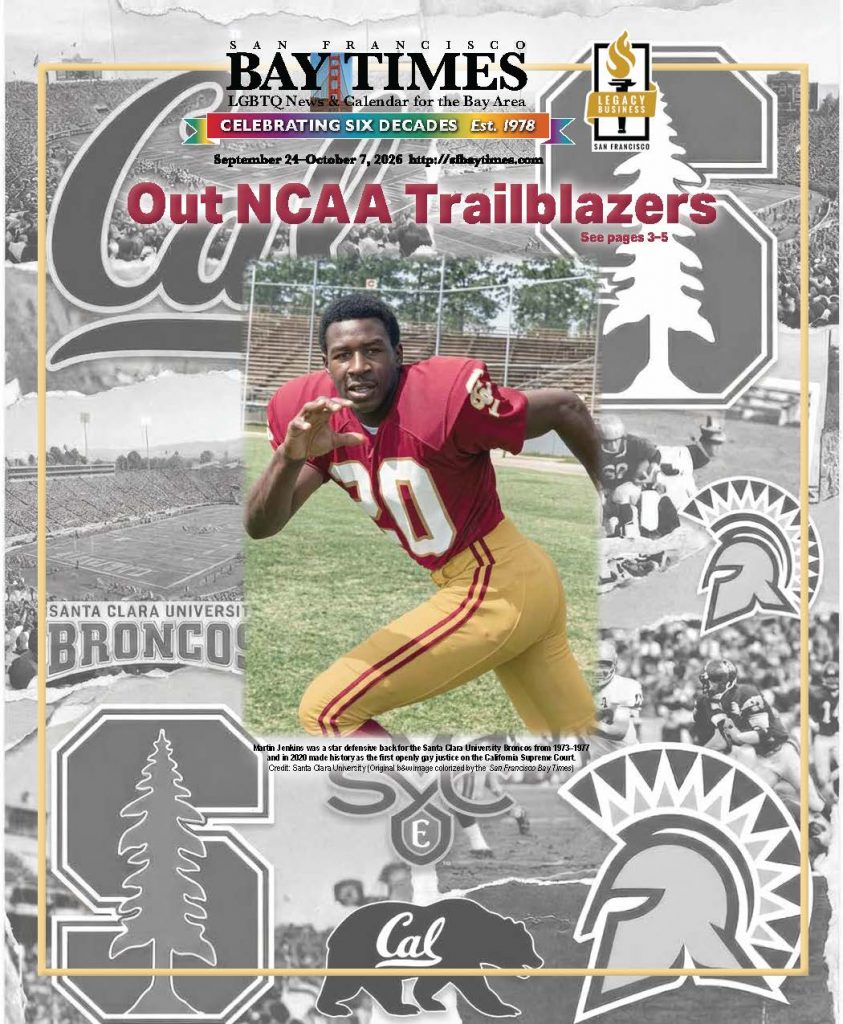
The 2026 college football season has kicked into high gear this fall with at least three NCAA Division I teams in the Bay Area: UC Berkeley’s California Golden Bears, the Stanford Cardinals, and the San Jose State Spartans. (The Santa Clara Broncos, Saint Mary’s Gaels, USF’s San Francisco Dons, and San Francisco State Gators previously fielded NCAA football programs.) It is striking that no NCAA team—either in the Bay Area or nationwide—now has an openly gay player.
The current absence of openly gay athletes on active NCAA football rosters highlights deep-seated cultural and structural challenges surrounding inclusion in modern college sports. Despite societal progress and increasing institutional support, football environments have historically operated around intense hyper-masculinity, where traditional locker room norms can make disclosing one’s sexual orientation feel like a professional risk.
Active players often fear that coming out might compromise team cohesion, lead to unfair scrutiny, or negatively influence their standing with coaches and scouts—factors that could jeopardize playing time, scholarship security, or prospective professional careers. Additionally, the heightened media exposure and harsh public reactions on social media can place an overwhelming psychological burden on young athletes, leading many to compartmentalize their personal identities until their athletic eligibility ends.
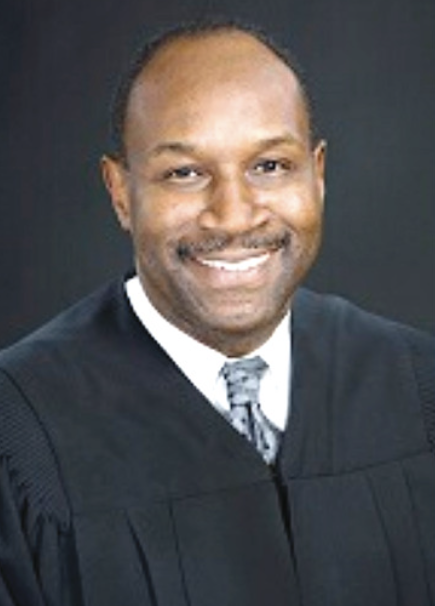
As this issue of the San Francisco Bay Times reveals, however, strides are being made toward LGBTQ+ inclusion in the world of college football. Accomplished leaders such as former NCAA football star and former California Supreme Court Associate Justice Martin Jenkins demonstrate that coming out, at any stage of life, can open new life chapters while inspiring others.
Behind the scenes, LGBTQ+ student-athlete groups and resources are making a positive impact. UC Berkeley, for example, has a Cal Student-Athlete Advisory Committee (SAAC)/Cal Athletics Diversity, Equity, Inclusion & Belonging (DEIB) that offers programming, support networks, and community spaces specifically tailored for LGBTQ+ student-athletes and allies at the university. The Stanford Student-Athlete Advisory Committee (SAAC) & Queer Student Resources (QSR) provides joint advocacy, community events, and support networks for student-athletes navigating identity within collegiate sports. Santa Clara University’s Rainbow Resource Center & Athletics connects LGBTQ+ student-athletes with peer mentorship, inclusive recreational opportunities, and campus support.
Efforts outside of the NCAA and universities are having a positive impact too. The San Francisco Gay Flag Football League (SFGFFL) (https://www.sfgffl.org/), which is a local recreational league open
to athletes of all skill levels—including college students—provides a supportive flag football community. Team San Francisco (https://teamsanfrancisco.org/) is a Bay Area nonprofit that unites local LGBTQ+ sports leagues and provides athletic scholarships and networking resources. OutLoud Sports, with locations in both Oakland and San Francisco (https://outloudsports.com/) hosts inclusive LGBTQ+ recreational sports leagues, including flag football, and is open to local university students and adults.
OutLoud is also at the national level, as is Athlete Ally (https://www.athleteally.org/ ), a nonprofit dedicated to fostering LGBTQ+ inclusion and equality within athletic communities. It offers resources specifically for high school and college athletes.
The National Center for LGBTQ Rights has an NCLR Sports Project (https://bit.ly/4iE7ZSv) that offers legal advocacy and educational policy resources to combat discrimination in sports.
Much work still needs to be done to build welcoming and equitable sports environments for LGBTQ+ athletes, particularly in the NCAA. But, like remaining loyal to a team no matter what, it is important to focus on the wins and not the losses, to recognize those who have bravely paved the path forward, and never to let go of goals that remain in sight.
Out NCAA Trailblazers
Published on September 24, 2026









Recent Comments