




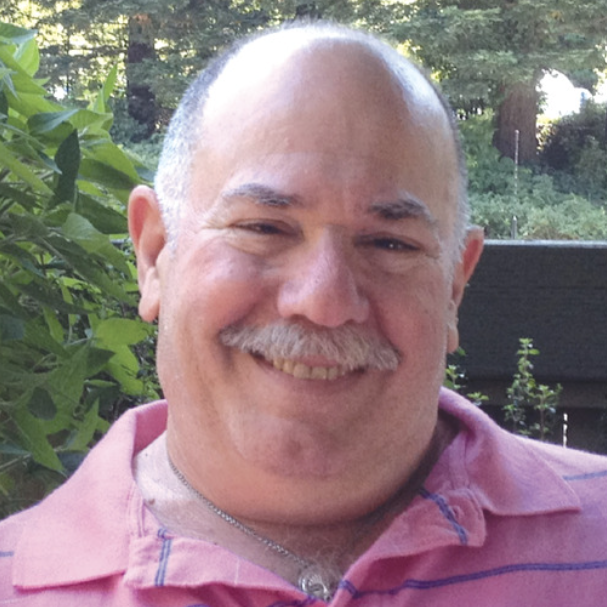
By Bill Lipsky—
We have always been here, even before there was any here here. Many of the earliest Californians, including the Yelamu who called the land they lived on Ahwaste (Place at the Bay), believed that, because nature is perfect, the diversity of sexual and gender expression in their communities was natural and normal. The early European visitors, however, insisted that same-sex intimacy and gender plurality, as Father Pedro Font described them in his Complete Diary of the Second Anza Expedition (1775–1776), were “nefarious practices.”
Font believed, “There will be much to do when the Holy Faith and the Christian religion are established among them.” Pedro Fages, first lieutenant governor of the “Province of the Californias” under Gaspar de Portolá, agreed. In A Historical, Political, and Natural Description of California (1775), he wrote that the area’s original residents “are addicted to the unspeakable vice of sinning against nature,” which must be repressed. The efforts to enforce such views led to dire results for almost two centuries, supported by public opinion and often reported by the local newspapers.
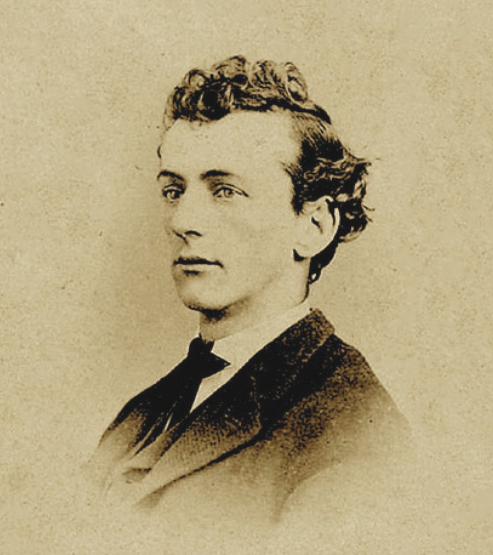
The settlement that grew into the City of San Francisco did not begin until 1835, when Captain W. A. Richardson put up “a rough board shanty” close to the shoreline of Yerba Buena Cove, to trade with passing whalers and merchant ships. On January 30, 1847, the tiny village of Yerba Buena, now with perhaps 800 residents, renamed itself San Francisco. The discovery of gold in California barely twelve months later transformed it into a multicultural metropolis of some 35,000 people in five years.
Women and men who desired same-sex intimacy could not be open about themselves, but they still found each other through social networks, mutual friends, overlapping circles of community, and even chance encounters. They faced social censure or even prison if their behaviors became known publicly, so most lived quiet, anonymous lives and left few written accounts. They did leave evidence that they were here, however. Some of the people and events from those long-ago days, now considered to be part of our shared LGBTQ+ history, include the following.
1849
Songwriter, singer, and “confirmed bachelor” Stephen Massett gave the first public performance in San Francisco, which included “an imitation” of a world-famous prima donna absoluta and impressions “of an elderly lady and a German girl,” which were the first documented “drag” performances in the city’s history.
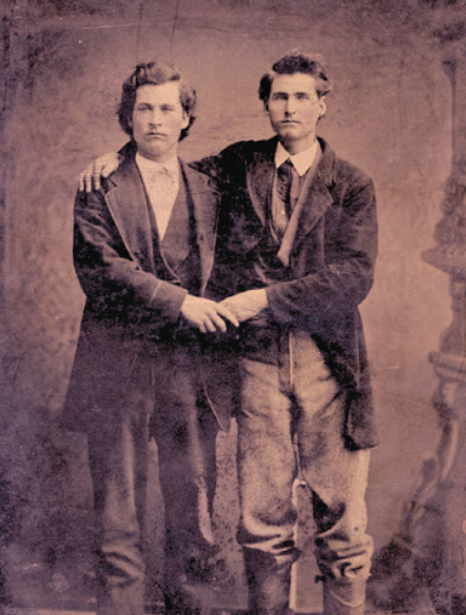
Carpenter Jason Chamberlain, 27, and James Chaffee, 25, a wheelwright, who remained a couple for more than 50 years, arrived in San Francisco, becoming the city’s first documented same-sex couple.
Bayard Taylor visited San Francisco to report on conditions in the gold fields. He dedicated his last novel, Joseph and His Friend (1873), to those “who believe in the truth and tenderness of man’s love for man, as of man’s love for women.”
1850
A new criminal code for the State of California set the penalty for sodomy at five years to life. Proclaimed before California was admitted to the Union, it probably was invalid, although no one challenged it.
Journalist Etienne Derbec wrote to his newspaper, Echo Du Pacifique in Paris, “San Francisco also has its dance halls; but what dance halls, good heavens! As at the theaters, you see only men there.”
1851
With a population of more than 90% men, the Daily Alta California noted that San Francisco was “by not a few looked upon as a Sodom of wickedness.”
1858
In the city’s first known case of its kind, Francis Burnham was arrested, convicted, and sentenced to eight years imprisonment in the State Penitentiary, San Quentin, for the “infamous crime against nature.”
1863
San Francisco’s Board of Supervisors prohibited anyone from wearing “dress not belonging to his or her sex.” The ban was repealed in 1974.
Remarking on prospecting for gold near La Paz, Arizona, site of a recent strike, the Daily Alta California wrote, “It is no place for counter-jumpers, hotel waiters, and Montgomery Street loungers,” coded language for “men who did with men.”
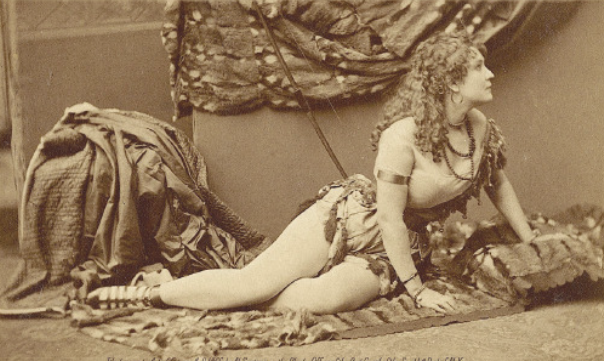
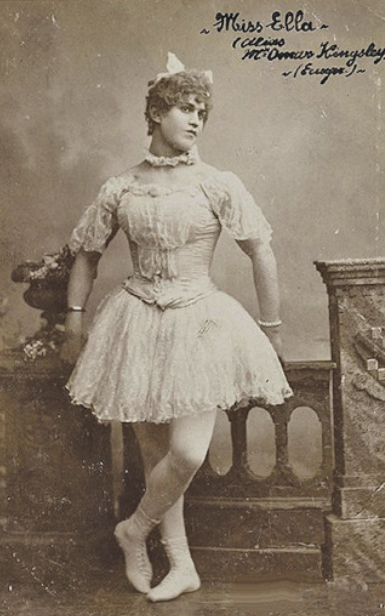
Beloved actress Adah Isaacs Menken, wearing flesh-colored tights, dazzled audiences in her gender-bending portrayal of a nude man strapped to a horse in Mazeppa. Other popular performers of the period included Felicita Vestvali, who played Romeo in Romeo and Juliet; male impersonators Annie Hindle and Ella Wesner, whose fan letters were mostly from women; and female impersonators Paul Vernon and Ella Zoyara, who set fashion trends before she was revealed to be Omar Kingsley.
1864
Edward Everett Hale, best known for his short story “The Man Without a Country,” published the year before, determined that California was named for Califia, a Black lesbian Amazon warrior queen, whose story was first recounted in Garci Rodríguez de Montalvo’s The Adventures of Esplandián (1510).
1869
The San Francisco Chronicle reported that, during his testimony to a committee investigating abuses at the city’s institute for delinquent and homeless youths (located on what is now the Ocean Campus of CCSF), Superintendent Joseph Morrell spoke at length about “the great evil of the Industrial School—a crime for which society has no name—and of its alarming prevalence” when he began his tenure there.
1871
The Overland Monthly printed “The Haunted Valley” by Ambrose Bierce, his short story about a transgender love triangle.
The Daily Alta California condemned the Barbary Coast as a notorious “haunt of the low and the vile of every kind,” whose denizens included “Sodomy Mike and Slung-shot O’Farley.”
1873
Charles Warren Stoddard published South-Sea Idyls, including stories of his homoerotic adventures in Hawaii and Tahiti. As he wrote to Walt Whitman about his experiences there, “For the first time, I act as my nature prompts me.”
1876
A jealous rival murdered Jeanne Bonnet, known as “the Frog Catcher” and who was previously arrested numerous times for wearing men’s clothing, when he found her in bed with his alleged fiancée at McNamara’s Hotel in San Miguel (now the intersection of Plymouth and Sagamore avenues).
1882
After Oscar Wilde visited San Francisco to give a series of lectures, where he became a role model for men who loved men, the San Francisco News Letter described a typical aficionado as “the bangs-his-hair young man” who “is in the pink of perfection,” receives $80 per month “as an under-clerk in the wholesale grocery … and proudly swells with the impression that he is just too too utterly utter in his utterances.”
1885
The Daily Alta California warned its readers against effeminate men, who were “counter-jumpers and animated tailors’ blocks, and infest the public promenades and public places of general resort.”
1892
In an article published in the San Francisco Chronicle, Reverend A. C. Hirst stated that, not until judgment day, “will it be known how many young men [the city] has damned.” Here “are the gamblers, the prostitutes, the murderers, the suicides, the Sodomites (sic).”
1894
Female impersonator Bert Larose began his four years, two months sentence in San Quentin State Prison for deceiving and then robbing a tourist, who thought he was a woman, on the Barbary Coast.
1898
The Army moved quickly to stop soldiers leaving for the Spanish-American War from supplementing their pay through male prostitution. So many of the men participated that the gratuity dropped to almost nothing.
Bill Lipsky, Ph.D., author of “LGBTQ+ Trailblazers of San Francisco” (2023) and “Gay and Lesbian San Francisco” (2006), is a member of the Rainbow Honor Walk board of directors.
Faces from Our LGBTQ Past
Published on June 11, 2026








Recent Comments