







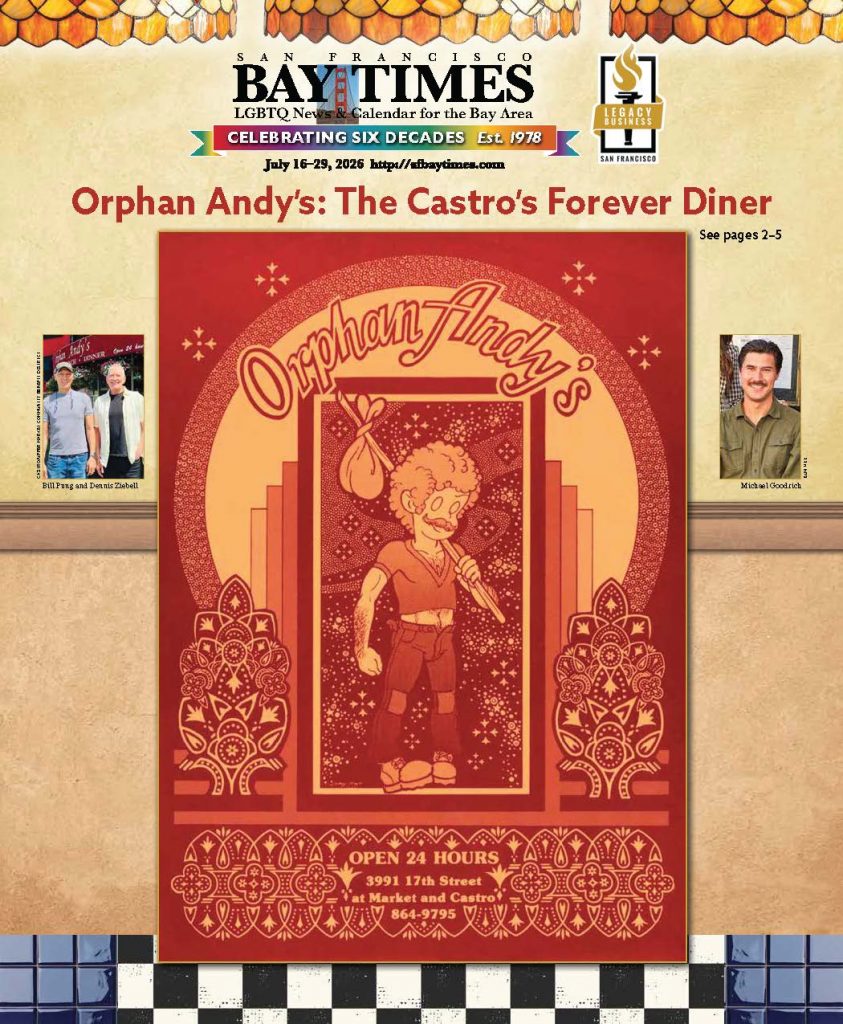
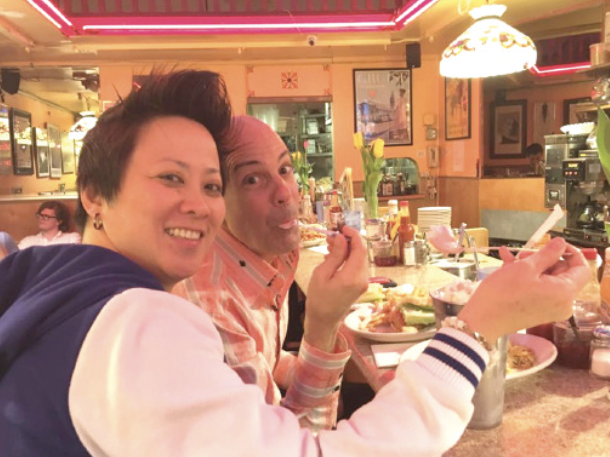
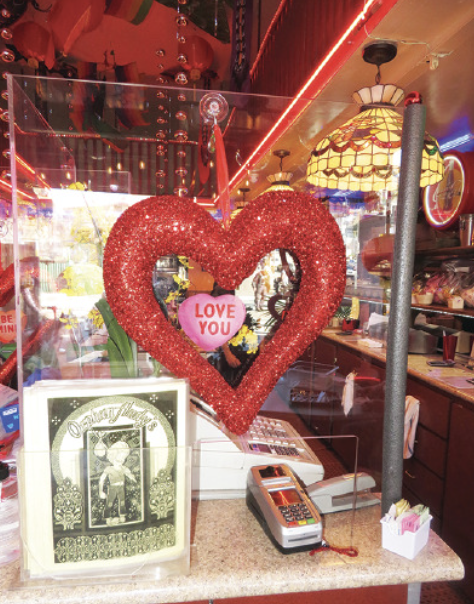
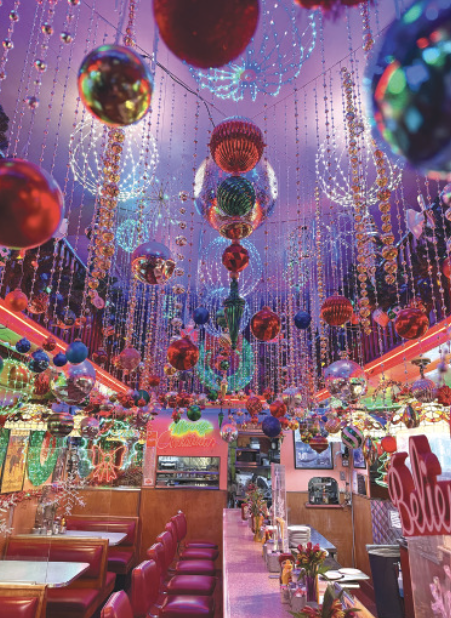
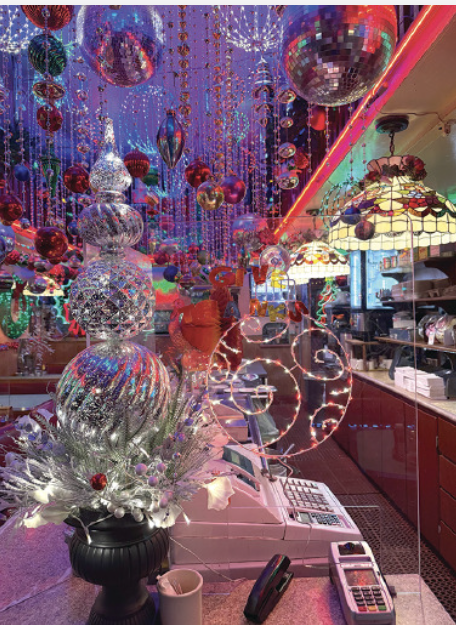
Eating at Orphan Andy’s at midnight is like stepping into a cozy, neon-lit sanctuary where the pulse of the Castro softens into pure comfort. Squeezing into one of the vintage red vinyl booths or grabbing a swivel stool at the counter, diners are immediately wrapped in the warmth of a classic 1950s diner, complete with kitschy queer decor, twinkling strings of lights, and the comforting sizzle of the flat-top grill. All around is a democratic cross-section of San Francisco night owls—club-goers winding down, drag performers post-shows, San Francisco Bay Times columnists procrastinating over pancakes, bartenders off shift, and other neighborhood regulars exchanging sassy banter with the staff over bottomless cups of coffee. When a plate of thick-cut French toast, a juicy cheeseburger, or a mountain of crispy French fries drops in front, the rest of the city fades away, leaving only the reassuring hum of late-night chatter and the timeless magic of a neighborhood institution that has always known exactly how to welcome visitors home.
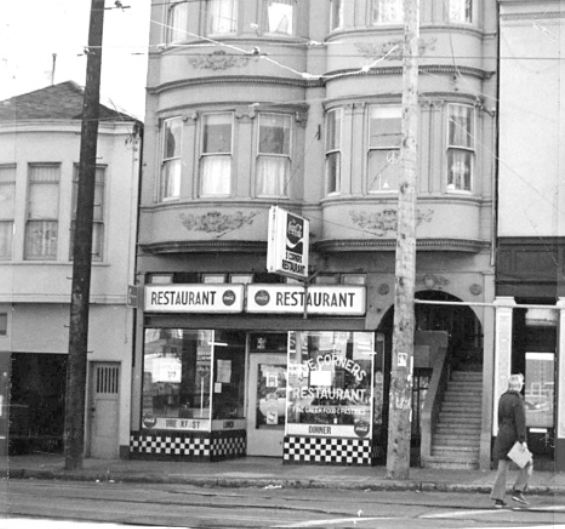
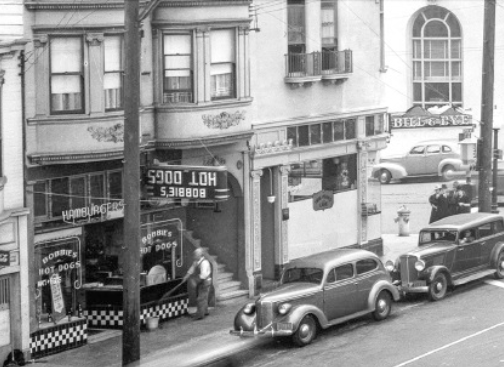
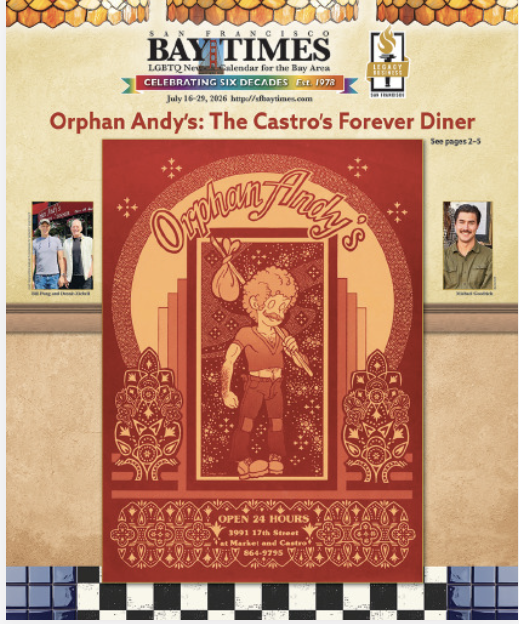
This home away from home for many in the Castro reflects the vision of Dennis Ziebell and Bill Pung, the couple who have owned and operated Orphan Andy’s for decades. Ziebell in 1977 purchased the business, which was originally known as the Five Corners Café and was a Greek-themed restaurant. Pung became a partner in the restaurant in 1978. On July 17, 2026, they will hand over the keys to Michael Goodrich, who is the General Manager of the Vietnamese fast-casual chain Bun Mee. Goodrich purchased Orphan Andy’s for $200,000 with the understanding that he would keep the existing staff and maintain as much of the food, decor, hours, and more as possible. Ziebell and Pung will stay on for a few weeks to help with the transition that marks an important turning point in their lives and in the lives of many who have frequented Orphan Andy’s over the years.
Nebraska Orphan Hitchhikes to San Francisco
The story of Orphan Andy’s begins in Nebraska, where Ziebell was orphaned at birth. Later adopted and resourceful, he did well at school and was accepted to the University of Nebraska. There he studied geology and was on track for a lucrative career in the oil industry (petroleum, not vegetable!).
In a moment of wanderlust and planning to study at UC Berkeley, Ziebell left the University of Nebraska in his senior year and hitchhiked to San Francisco in the fall of 1971. Deciding that a traditional career in corporate America was not his calling, he got a job as a busboy at Andy’s Donuts that same year.
There really was an Andy behind the name—Andy McDougall—who opened the then famous 24-hour shop at 460 Castro Street. It was frequented by Harvey Milk and many others who later went on to strengthen the neighborhood’s evolving queer identity.
Just a year after Ziebell began working at Andy’s Donuts, an opportunity arose for him to purchase the business. He did so at age 22, and, for three years, successfully ran Andy’s Donuts. He sold it in the spring of 1975 before purchasing Boot Camp Bar in the fall of that year. Boot Camp, for its time, was a prominent gay leather bar located at 1010 Bryant Street in SoMa. It was known for its motorcycle culture and notorious “wild back room.”
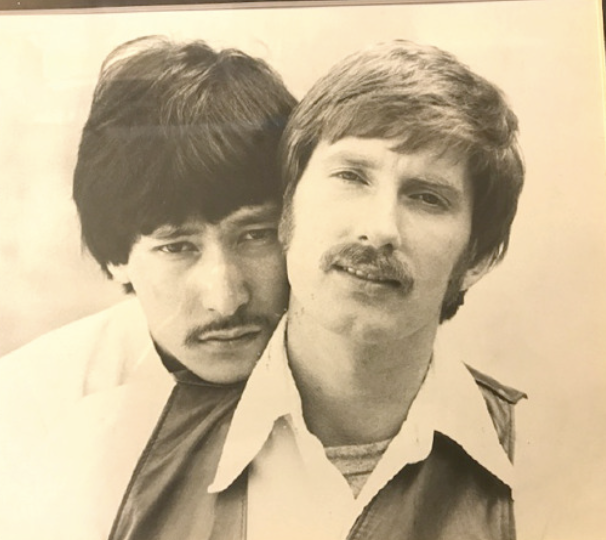
Love at First Sight
In the spring of 1976, Bill Pung—then employed at the shipping company Matson Lines—stopped by Boot Camp for a beer. Ziebell happened to be working that day and a bartender introduced the two men. In separate interviews with the San Francisco Bay Times, each recalled the moment as “love at first sight.”
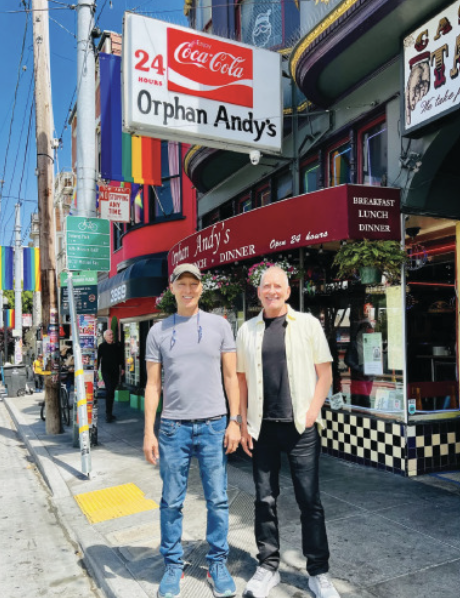
Self-described as “old-fashioned,” they dated for a while before Ziebell invited Pung to spend a weekend with him. To say that went well would be an understatement; they moved in together just a few months later. Partners in life and in business, they have been together ever since. They have also been equally wedded to their work, such that their longtime home is the apartment just above the restaurant, which Ziebell had named Orphan Andy’s after his former donut business and with him being an orphan. (He initially wanted to call it just “Andy’s,” but that fictitious business name had already been taken.)
Recipe for Success
Ziebell applied his 24-hour business model savvy from the donut shop to Orphan Andy’s. Pung to this day is a tireless baker, so baked desserts, such as their popular Hawaiian Wedding Cake With Pineapple and Coconut, became part of the menu. (Pung lived in Hawaii for several years, but the recipe for the cake actually came from Ziebell’s mother in Nebraska!) Both men are creative and artistic, so over-the-top decorations became part of the mix.
The enduring success of Orphan Andy’s, however, is anchored in its understanding of the Castro district’s unique social rhythm. By anchoring the neighborhood with 24-hour service on its busiest days, the diner transforms from a standard eatery into a vital community crossroads. In a city where late-night dining options can be sparse, its open doors provide an essential safe space and gathering point. Whether it is an early morning breakfast for shift workers, a midnight recovery meal for club-goers, or a comforting refuge for neighborhood regulars, the schedule ensures the diner is always there exactly when the community needs it most.
Complementing this reliable availability is a menu built entirely on the philosophy of unpretentious comfort. Orphan Andy’s doesn’t chase fleeting culinary trends; instead, it perfects the timeless appeal of the classic American diner. By serving hearty breakfast staples like omelets and biscuits alongside savory cheeseburgers, chicken-fried steak, and thick milkshakes all day and all night, the menu caters to cravings rather than the constraints of the clock. This predictability is precisely what makes it a triumph.
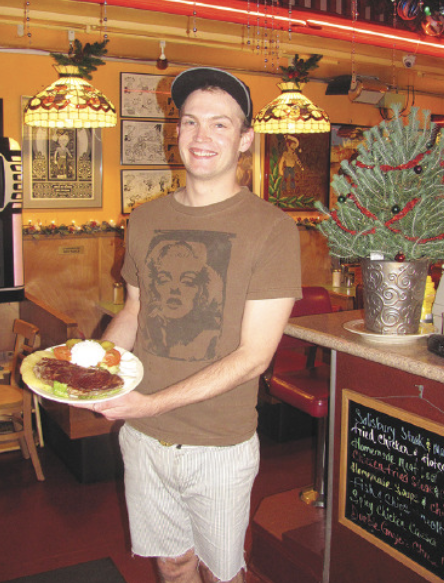
Ultimately, the combination of a late-night schedule and a nostalgic menu creates a powerful sense of equity. Inside the cozy space, the menu acts as a universal equalizer—a place where a drag queen, a tech worker, and a longtime resident can all sit at the same counter at 2 am, sharing the simple, unifying pleasure of a hot plate of eggs and a bottomless cup of coffee. By remaining steadfast in its offerings and availability, Orphan Andy’s has secured its legacy as an indispensable piece of San Francisco’s cultural fabric.
Loyal Staff
The egalitarian nature of the customers is also reflected in the 18 staff members. Some have been university graduate scholars while others started full-time jobs early in life. Long gone but not forgotten is Herbie “Mother” Richards, who was among the most flamboyant queer managers of the restaurant. Pung once let Richards borrow one of his mother’s muumuus from Hawaii. Richards wore it to work. When Pung’s mother—good-natured like her son—found out, she was amused.
The blog SF Reporting in 2013 included part of an interview with Alex Kleinberg, who, at the time, had worked at Orphan Andy’s for two years during the late shift. Kleinberg said, “I’ve had like 15 jobs since I was 13, but this is my first job here in San Francisco. When I walked in, I really liked the atmosphere here; it was busy, it felt comfortable.”
Gary Virginia, the former President of San Francisco Pride and the founder of Krewe de Kinque, immediately thought of Virginia “Ginny” Ramirez. She was a primary server at Orphan Andy’s who recently has been dealing with health challenges following two strokes. As Virginia shares, a GoFundMe has been set up to help her (https://bit.ly/4vmtrxU).
A Sanctuary in Turbulent Times
During the first two years that Orphan Andy’s was open, there were dramatic highs and lows in the Castro. For those of us who were in the neighborhood at the time, it is hard to explain how exciting and liberating it felt then. The LGBTQ+ community was expanding and strengthening at a fast pace, with Harvey Milk helping lead the way. The legendary lesbian bar Amelia’s opened in 1978 at 842 Valencia Street. Milk’s Castro Camera was flourishing for both photographers and budding filmmakers (later to be included in Frameline). The San Francisco Pride Band, San Francisco Gay Men’s Chorus, and the San Francisco Bay Times all started in 1978.
The mood and forward momentum dramatically changed, however, when Milk and then Mayor George Moscone were assassinated on November 27, 1978. At Orphan Andy’s, which had become a late-night town square for the vibrant, politically charged community, guests came for a quiet meal and to comfort each other.
Still more shifts happened as the 1980s and 1990s brought the devastating onslaught of the AIDS crisis. As the neighborhood grappled with unfathomable loss, Orphan Andy’s evolved into a quiet sanctuary. It was a place where people gathered, not just to eat, but to find comfort, share news, grieve, and look after one another when the outside world felt incredibly hostile.
At a time of fear and misinformation, when some businesses refused to serve HIV/AIDS patients, Ziebell and Pung welcomed them and others. Pung says, “We still have people come up to us to say ‘thank you’ for keeping the doors open during the worst years of the AIDS crisis.”
He and staff at Orphan Andy’s have similarly exhibited compassion for the district’s homeless individuals. Ziebell and Pung try to remember the first names of all visitors, such as DeShawn, who regularly came in for free cups of water. Jonathan Tufi, homeless in the Castro for many years, recently died on the street not far from the restaurant. The couple spent hours searching clues on the internet to determine Tufi’s full name and how to contact his relatives. When they finally reached one of his nieces in Georgia, she was extremely grateful and shared that Tufi’s mother was still alive at age 97.
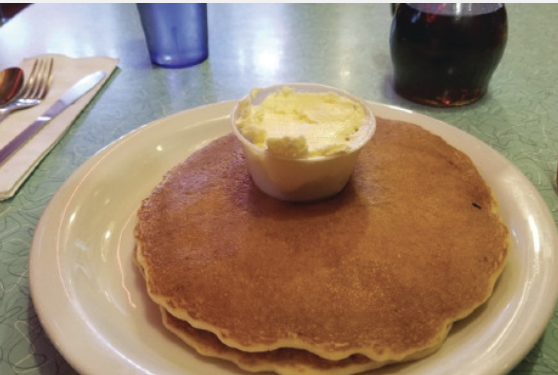
Thomas, another homeless man, used to yell all day outside the restaurant. After the owners and their team befriended him, Thomas would then scream, “Orphan Andy’s has the best pancakes!” Pung says, “He became our best PR guy.” He adds, “Others who lived on the streets but later got their act together have thanked us for not kicking them when they were down. We always try to put ourselves in their place and feel for what they are going through.”
Riding the Economic Waves
As San Francisco transitioned into the dot-com booms of the late 1990s and the tech-fueled transformation of the 2010s, the Castro changed rapidly. Rising housing costs and gentrification altered the demographic fabric of the neighborhood, pricing out many artists and long-term residents.
This economic shift directly impacted the city’s nightlife, causing a slow decline in San Francisco’s late-night culture. Tech workers with early morning schedules replaced some of the traditional night owls, and many of the Castro’s other 24-hour institutions closed their doors. Orphan Andy’s held the line, maintaining its round-the-clock weekend schedule as a stubborn reminder of the neighborhood’s gritty, nocturnal roots.
Famous Guests
While many business owners promote celebrity visits, Ziebell and Pung have largely kept such information under wraps over the years. Nevertheless, many well-known people have dined at Orphan Andy’s. They include singer Sam Smith during his recent Castro Theatre residency (Smith later vlogged about its nostalgic charm and classic American diner food), Buster Posey of the San Francisco Giants, Sean Penn, Cameron Diaz, and Emile Hirsch.
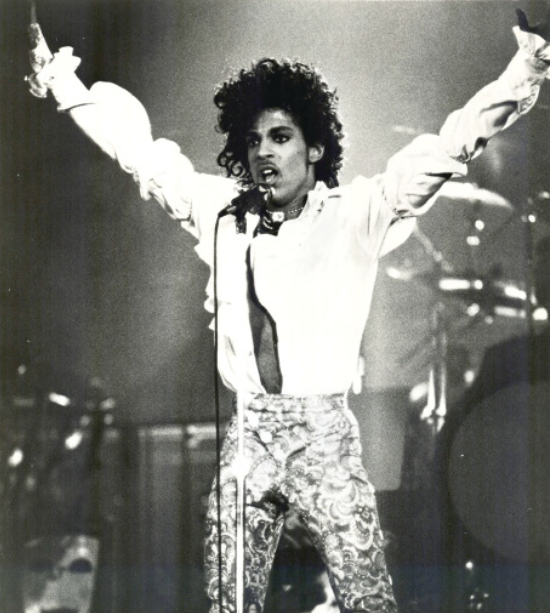
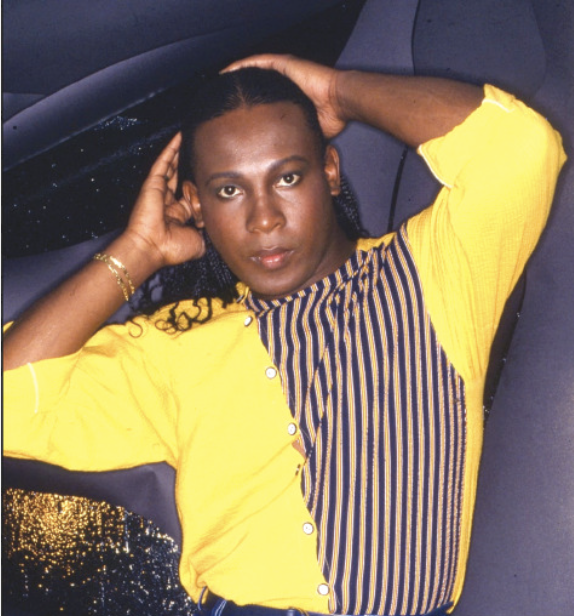
Music superstar Sylvester was a regular, and RuPaul stopped by at least once. Perhaps Orphan Andy’s greatest fan, however, was Prince. He already was a night owl and a pancake lover when he came to the diner. Putting the two together led to a lightbulb moment for the 7-time Grammy Award winner. He subsequently became famous for serving pancakes after late night impromptu basketball games. In 2013, he even released the single “Breakfast Can Wait,” which featured a cover of Dave Chappelle dressed as Prince serving pancakes. That same year, Prince began officially hosting “Breakfast Experience Pajama Dance Parties” at his Paisley Park headquarters in Minnesota, where he served pancakes to fans starting at about 2 am.
Resilience and New Beginnings
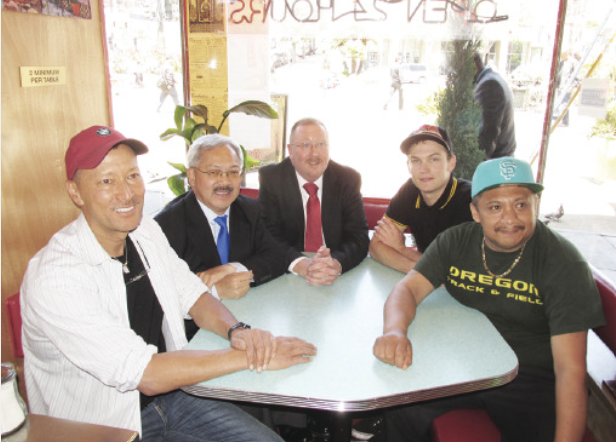
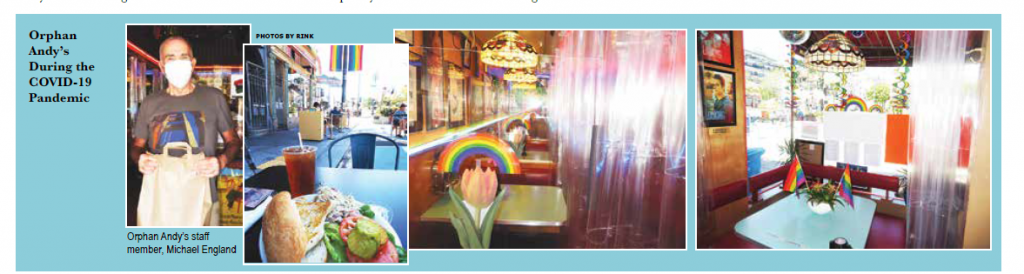
Representing another boom to bust moment, the COVID-19 pandemic starting in 2020 brought unprecedented quiet to the usually bustling intersection. The diner was forced to navigate long closures, shifts to outdoor dining, and a slow recovery alongside the rest of the city. Ziebell had planned to retire at around that time, but the business survived and was a lifeline for many during and after the pandemic, so he and Pung forged on.
Now the two men are in their 70s. Ziebell says, “We don’t have an option to continue, so we put the business up for sale.”
They did so in March 2025, and, in the months that followed, received multiple offers. Pung, though, remembers the day when Goodrich came to meet with them. “At first I thought he was my nephew. He looked like family. Dennis and I both liked him and could see that he has got the energy to do what is needed.”
Orphan Andy’s will celebrate its 50th Anniversary soon. Pung says, “Fifty years is a lifetime. Dennis and I are so grateful for the support of the community. We have all gone through a lot, and survived a lot. Now we are in our fourth quarter of life and look forward not to have to live and breathe the restaurant from the moment we wake up to when we go to bed. We don’t have any big plans at present except to ease into retirement.”
And to keep cooking! Even as they were planning to hand over the keys to Goodrich, Pung was busy planning to bake some of his popular desserts for a nephew who is moving to Australia. The couple also enjoy supporting other Castro businesses, such as The Sausage Factory and The Castro Theatre. With Cliff’s Variety, they were also the first supporters of the Castro Street Cam presented by the Bay Times. It is hard to imagine the neighborhood without this kind and resilient couple, so all of us at the Bay Times are glad that they are staying here and that the home they created together for all of us, Orphan Andy’s, will remain open.
Orphan Andy’s
3991 17th Street (Ste A), San Francisco
Open 24 hours Tuesday–Saturday,
noon–9:45 pm Sunday,
and 8 am–9:45 pm Monday
415-864-9795
Celebrating Orphan Andy’s
Published on July 16, 2026










Recent Comments