




By Tom LeNoble—
San Francisco has always been a city in motion. Ideas take shape here and often reshape what comes next.
But there is another rhythm here that moves more quietly. It does not announce itself or compete for attention. It shows up in everyday choices—a decision to stay a little longer, listen more closely, or offer something when it would be easier to keep moving. These moments do not make headlines, yet they shape lives in ways that are just as real.
If you pay attention, you begin to see them everywhere, a steady thread of care running through the city, carried by people who choose to respond rather than look away. That is a different kind of leadership, and it is everywhere here.
Most people think philanthropy is a check, a gala, or a name on a building. Sometimes it is, but, more often, it begins somewhere quieter, such as a moment when someone chooses to acknowledge another person instead of moving past them, or it is a smile, a hello, holding a door. These are small actions that communicate something simple and human: I see you.
That is where philanthropy begins. It is the moment someone notices a need and decides that indifference is not their role.
This column is about that moment.
Each month, I sit down leaders of Bay Area nonprofit organizations, not to highlight their organizations, but to understand something more personal. When did this work become real for them? What shifted from awareness to action?
Every leader carries a story. There is always a turning point, a person, or an experience that made standing on the sidelines no longer an option. When we begin to understand why people choose to show up, something changes. Philanthropy moves out of institutions and into everyday life. When you look at San Francisco through that lens, you begin to see just how many people are making that choice every day.
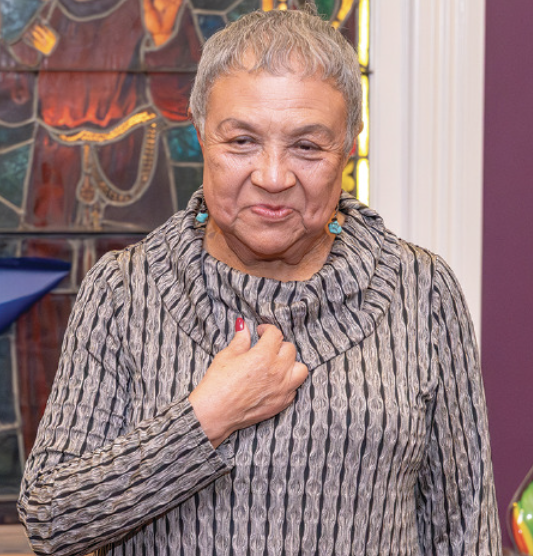
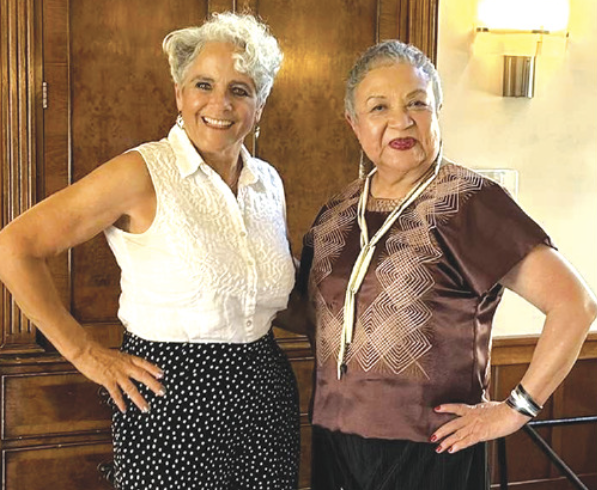
This month we are exploring the Philanthropic Mindset with Olga Talamante.
Olga Talamante is the Executive Director Emerita of the Chicana Latina Foundation (CLF), where she served from 2003 to 2018. She expanded scholarship support for Latina students and founded the Leadership Institute, graduating over 700 Latina social justice leaders. Before CLF, she spent more than 15 years with INROADS, rising to Regional Vice President and leading multiple regions, including opening offices in Seattle and Portland.
Born in Mexico and raised in Gilroy, California, her early experience as a farmworker shaped her lifelong commitment to social justice and the United Farm Workers movement. In the 1970s, she was imprisoned in Argentina for 16 months before an international campaign secured her release. She later led advocacy efforts that contributed to ending U.S. military aid to Argentina.
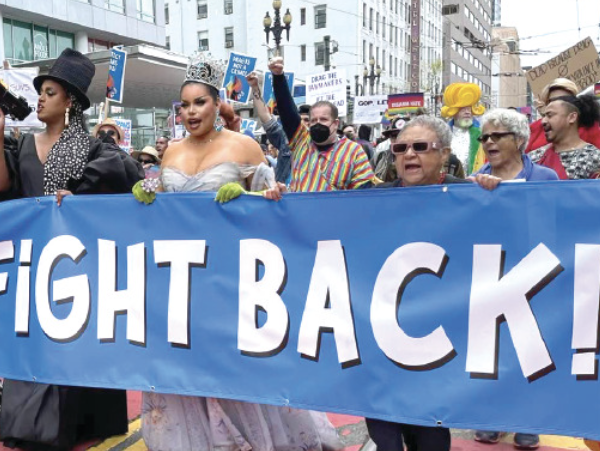
Olga continues to serve in leadership roles across social justice organizations and co-chairs Caravan for the Children. She has received honors including San Francisco Pride Community Grand Marshal, the Horizons Foundation Legacy Award, and the Commonwealth Club Distinguished Citizen Award. She holds a B.A. from UC Santa Cruz and an honorary doctorate from the University of San Francisco.
Tom LeNoble: What first opened your eyes to the work you now do?
Olga Talamante: It actually started when I was very young growing up as a farmworker. Those were the times I started to see inequity both in housing and the living conditions we had. [It was] me, my two brothers, and my parents in one room in a barn. I was 11 years old when I came here from Mexico. There was no inside plumbing or water. We had outhouses. It was there that I started learning about cross-class as I would babysit for the growers in their home. I could see they had air-conditioning and heating, and inside bathrooms and running water. I was struck by the power relations.
Tom LeNoble: Was there a moment when helping others stopped being an idea and became a commitment?
Olga Talamante: [It happened] as I read the applications of the students who were applying to the Chicana Latina Foundation Scholarship. I saw myself reflected in their stories. It was then I became active as a volunteer, then a support member, and eventually the executive director. I really wanted to support them.
Tom LeNoble: Who modeled generosity for you growing up?
Olga Talamante: My parents. We were fairly low income, but I saw that they would always help other people. It continued when we moved to Gilroy, especially my mama when playing leadership roles in the church and in voting. They were my models.
Tom LeNoble: What keeps you hopeful when the work becomes hard?
Olga Talamante: I would say it is commitment to remain hopeful. My hopefulness and optimism have been tested in the last few years with Trumpism. I’ve had moments of anguish and despair. I continue to be uplifted by the examples of generations before me and the people around me, and by the fighters and warriors in our community who have struggled and given so much of themselves. I’m inspired by working with young people, college students, and just serving others. I see leadership in the younger generations of our movement. We are in good hands. I have faith in them.
Tom LeNoble: When you hear the word “philanthropy,” what does it mean to you personally?
Olga Talamante: At first philanthropy seemed to be something other people did—people of means and great resources. I’ve come to understand that my parents were philanthropists. There are great philanthropists in our communities, not because they have big bucks, but because they have a big heart and a big soul. I looked the word up at one point because I need to present a philanthropy award. I believe it is someone who puts the needs of others before their needs; the ones where buildings get named for them; and those who give $25 per month even when it is a stretch for them. It comes from the same intention.
Tom LeNoble: And perhaps the most revealing question of all: If you were not doing this work, what would the world be missing?
Olga Talamante: I am a good connector of people. I see connections with issues, movements, leaders, and practitioners of various professions. I am conscious of the fact that I connect and bring people together.
Tom LeNoble: What do most people misunderstand about this work?
Olga Talamante: These perceptions are changing. This work has been seen as charity and supporting the less fortunate. They see it as something outside themselves. I appreciate the people who don’t see it this way and see it as good for the world they live in. I’d like to change the power relationship between the donor and receiver; the donor to see beyond what they need and become willing to be generous with others; to see giving as offering an opportunity to understand the impact they can have on people and on building the future.
Tom LeNoble: How has this work changed you personally?
Olga Talamante: I’ve gone from seeing myself as a farmworker in a farmworker family to seeing myself as a social activist wanting to create change and create new policies. It has made me expand and change the notion that I am a lone person grappling with these challenges of poverty or identity. My world is richer, more impactful, and more powerful doing this work.
Tom LeNoble: What is unique about doing this work in San Francisco?
Olga Talamante: What is unique is the long history of questioning authority and those who think they have all the answers and control. The Bay Area has given us so many examples of Native people who have been resilient over decades; LGBTQ people who were courageous to rise up and fight; movements like the farmworkers movement. We have a strong history of solidarity.
Tom LeNoble: What would surprise people most about you outside of this work?
Olga Talamante: I always wanted to be a Mariachi singer. I don’t have the talent or wherewithal to do it, but it’s a dream. And that I recently did drag and performed as the great devotee in Mexican and Latin American culture, Juan Gabriel. It was a joyful experience and became a community singalong.
Tom LeNoble: If you had an unexpected free day in San Francisco, where would you go?
Olga Talamante: I would ride on the cable car. I’d go to the Embarcadero, eat oysters at Waterbar, and then head to SFMOMA. [I would then go] to Yerba Buena Gardens to see the Martin Luther King Jr., Memorial, and do some people watching in the Mission, and a restaurant to end the night.
Tom LeNoble: Thank you for joining me. I’ll see you, readers, here next month as we explore the Philanthropic Mindset of another Bay Area nonprofit leader.
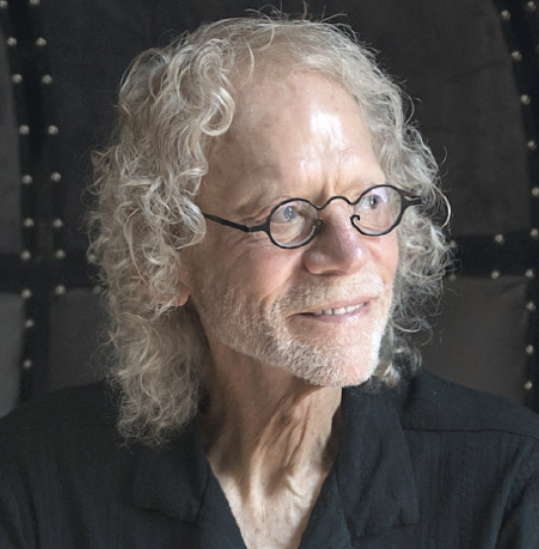
Tom LeNoble is an international speaker, confidential advisor, and resilience strategist who works with leaders navigating meaningful inflection points in life and leadership. He has held senior leadership roles at MCI, Walmart.com, Palm, and Facebook, and high growth startups. He is the author of the award-winning memoir “My Life in Business Suits, Hospital Gowns, and High Heels.” Through speaking, coaching, and writing, he explores resilience, leadership, and the choices that shape how we show up for others and for the communities we serve.
The Philanthropic Mindset
Published on April 23, 2026









Recent Comments