




Photos by Jerome Parmer
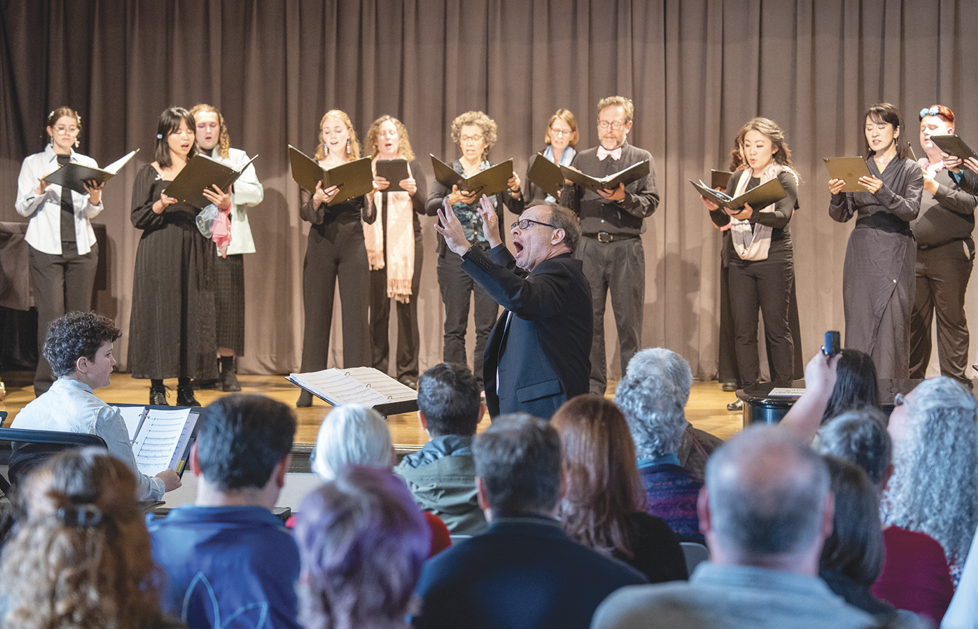
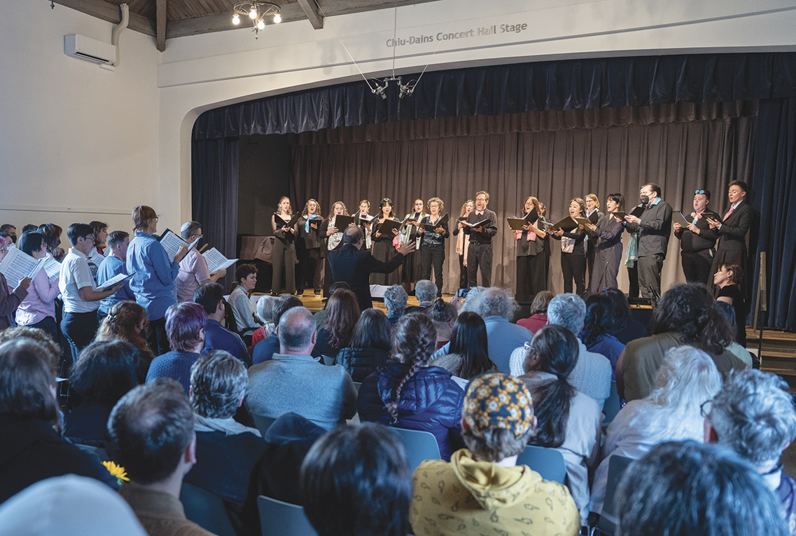
On a Sunday afternoon in April, transgender and gender-expansive young singers from across the Bay Area stepped onto the stage at the Community Music Center in San Francisco’s Mission District. And it was the first time they had performed in a choir created specifically with them in mind.
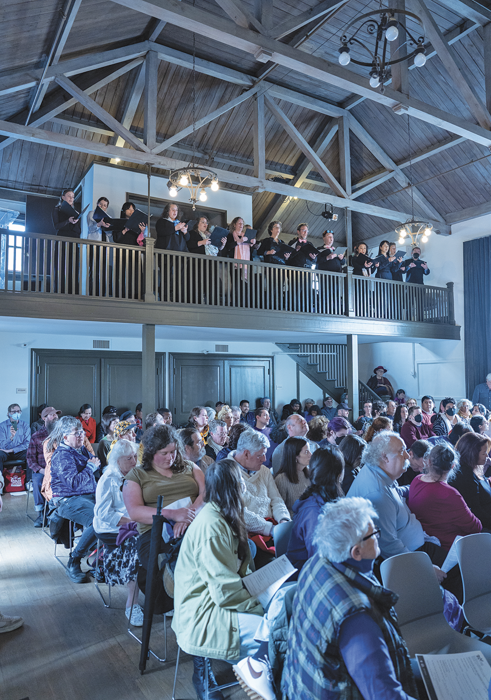
The Voices Taking Space concert marked the debut of the Transgender Youth Choir Project, a pilot collaboration between the professional treble ensemble 21V and New Voices Bay Area TIGQ Chorus, a community chorus for transgender adults. The program of contemporary choral music was a powerful reminder that choirs are places of belonging. For everyone gathered that day, the concert felt both celebratory and deeply meaningful.
A Treble Choir Without Gender Boundaries
21V was founded with two guiding ideas: sing the music of our time, and expand who belongs in the choir.
This professional ensemble performs only music written in the 21st century by composers from the Americas. Its singers perform treble (soprano and alto only) repertoire, but, unlike traditional treble choirs, the ensemble welcomes singers of all gender identities whose singing voices fall in those ranges.
That philosophy was part of the ensemble’s foundation from the beginning.
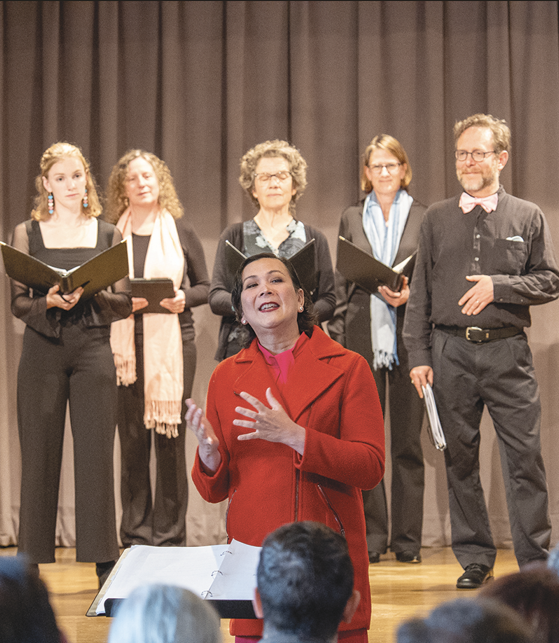
“I wanted to free the idea of a treble choir from gender expectations,” said Artistic Director Martín Benvenuto. “If someone sings soprano or alto, that’s the voice part. The rest of who they are belongs in the room with them.”
This approach has created an ensemble that reflects the diversity of contemporary choral singers while exploring music that speaks directly to the present moment.
When the Idea Took Shape
The idea for the Transgender Youth Choir Projectemerged from conversations within the Bay Area choral community.
Several youth chorus directors had approached 21V over the years asking whether similar ensembles existed specifically for young transgender and gender-expansive singers. Young people navigating vocal changes or gender identity questions sometimes find that traditional choir structures stifle gender exploration across voice types. They were looking for an ensemble that centered their unique needs.
“When I reached out to 21V singer Reuben Zellman, founder of New Voices, about that question, we realized there wasn’t a space like this that we knew of in the Bay Area,” Benvenuto recalled. “If the space didn’t exist,” Benvenuto said, “then we felt we should help create it.”
The Transgender Youth Choir Project grew from that simple idea.
Building the Program
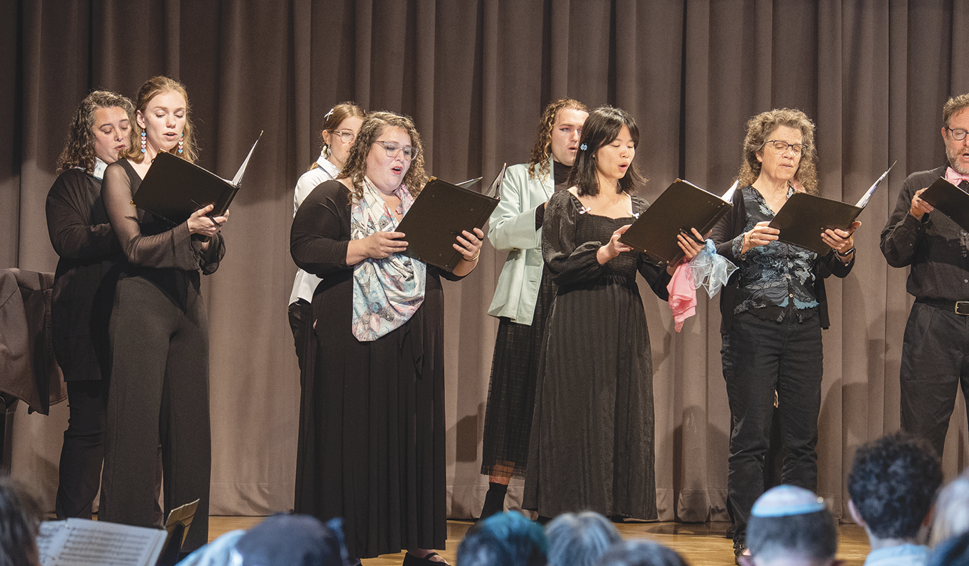
21V singer Dylan Benander, who is non-binary, set about creating a space intentionally shaped to support young singers’ vocal exploration without gender-based notions of voice type.
In one early Zoom conversation, a young transfeminine singer defiantly shared that she could sing well in a treble range, relating that “I like to sing higher—I can sing for you if you don’t believe me.” Benander’s response was immediate and affirming: “I believe you. I understand.” In that moment, Benander was able to be the supportive, encouraging choir director they always wished they’d had as a young singer.
That exchange exemplifies the tone of the program—one grounded in trust, flexibility, and the conviction that each singer’s voice is their own to discover.
Concert Day Arrives
The Transgender Youth Choir Project debuted in the April 12 concert Voices Taking Space, taking the stage both independently and in collaboration with 21V and New Voices. After each choir was featured on its own, the concert culminated in all three ensembles singing a world premiere together.
21V had invited transgender Bay Area composer Robin Estrada to write a piece specifically for this concert. The resulting work, “Be Heard, Be Seen, Be Found,” is a powerful tour de force, with the title aptly capturing the spirit of the initiative.
The energy from the audience—families, educators, LGBTQ+ advocates, and supporters of contemporary music—felt both warm and electric. Moments of laughter and celebration mixed with quieter periods of reflection. “The repertoire embodied the resilience of the trans spirit,” an audience member said.
For many, the most moving aspect of the concert was seeing the young musicians of the Transgender Youth Choir Project claiming space in a musical tradition that has not always welcomed them. “Singing in a choir made up of people just like you is special,” one singer shared.
Looking Forward
For 21V and New Voices, the Transgender Youth Choir Project represents a step toward a broader vision of what choral communities can become. “Choral music is fundamentally about belonging,” Zellman said. “When people stand together and sing, they’re saying something about the kind of community they want to create,” New Voices Bay Area Co-Director Jessalynn Levine added.
On that Sunday afternoon in San Francisco, that vision was clearly visible. Singers stood proudly onstage. Families and friends filled the hall. And, together, they created a space where transgender youth voices were not simply welcomed—they were placed at the center. To quote Estrada’s piece, “We’re here. We’re here. We’re here.”
50th Anniversary of the Dykes on Bikes®
Published on April 23, 2026









Recent Comments