








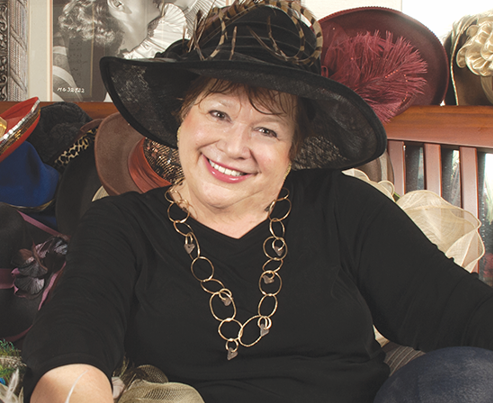
By Jan Wahl—
My conversations continue with friend and fellow film lover Adam Kent, this time with a focus on screenwriting.
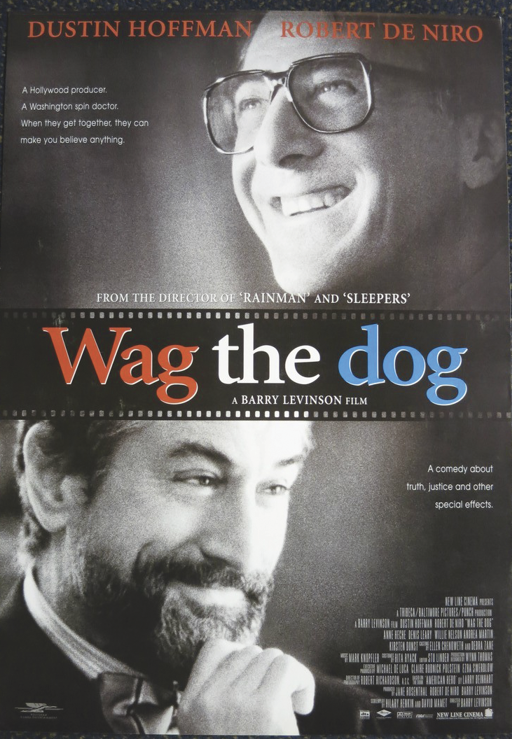
Adam Kent: I know you got on my case for not seeing Wag the Dog. I can’t believe how relevant it is to today!
Jan Wahl: Living in terrible Trump times, it is almost a relief when a playwright is this prescient. The brilliant screenwriter David Mamet (Glengarry Glen Ross, Speed-the-Plow) wrote Wag the Dog. Two weeks prior to re-election, the U.S. president lands in the middle of a sex scandal. To quell the situation, a presidential advisor, played by Robert De Niro, decides distraction is the best course. A major Hollywood producer, played by Dustin Hoffman, helps him fabricate a war. Sound familiar?
Adam Kent: What gets me is how the film depicts the joining together of the political world and the Hollywood world.
Jan Wahl: It reminds me of the lyric in The Producers: “All you need to know is everything in showbiz.”
Adam Kent: The writing—how does someone come up with this stuff?
Jan Wahl: It’s just genius! Like his 2000 comedy State and Main, David Mamet is bitterly funny and treats the audience as if we are very smart. I hope everyone sees Wag the Dog; you’ll be blown away.
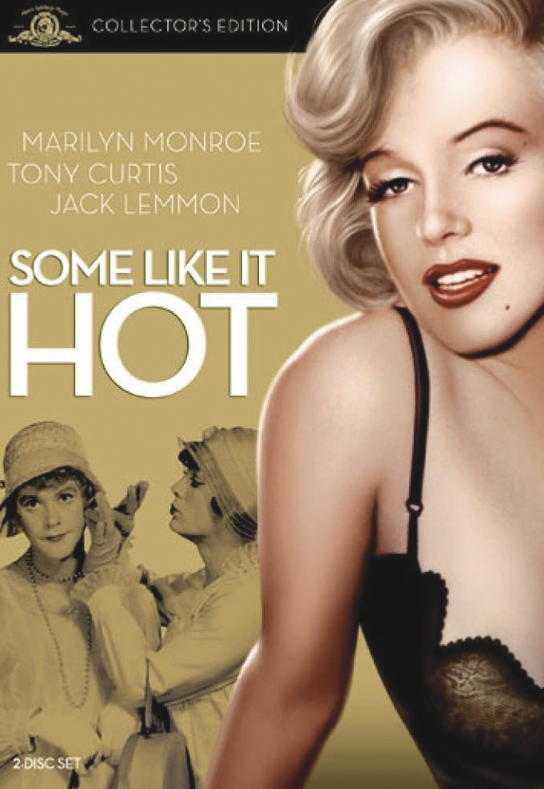
Adam Kent: Talking about genius, I also took your recommendation and watched Some Like It Hot! You tell me that Billy Wilder is not gay, but I think he is tipping his hat to the gay community with the final line, “Nobody’s perfect.”
Jan Wahl: Yes, you’re talking about when an exasperated Jack Lemmon pulls off his wig and says, “Damn it, I’m a man!” and Joe E. Brown, playing Osgood Fielding, III, says, “Well, nobody’s perfect!” You know, there’s a great book by Charlotte Chandler titled Nobody’s Perfect about the making of the film.
Adam Kent: I know you love Elizabeth Taylor’s line: “Without gays and lesbians, there would be no Hollywood.”
Jan Wahl: Yes, but it all starts with the “word.” Both Mamet and Wilder are straight boys, but they write from the heart. There are so many wonderful LGBTQ screenwriters. Here are just a few faves: Phyllis Nagy, she wrote Carol (2015), based on a romance novel by Patricia Highsmith; it’s a beautiful look at two women falling in love. One of my favorite and funniest interviews ever was with Paul Rudnick for the movies In & Out and Addams Family Values. James Ivory made us all feel romantic in Call Me by Your Name (2017), and Dustin Lance Black gave us a hero in Milk (2008). The list goes on, as does the word!
Great Comedy Writing
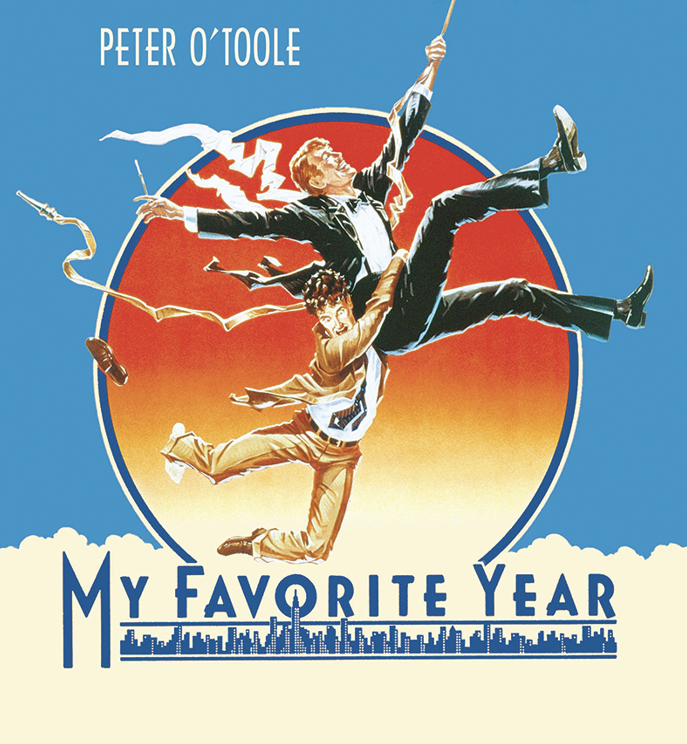
Jan Wahl: In my favorite comedy, My Favorite Year, Peter O’Toole says, “Dying is easy; comedy is hard.” Two film comedy classics My Favorite Year (1982) and In & Out (1997) remind us that good comedy writing combines strong character development with techniques designed to surprise the audience. Writer-director Billy Wilder once told me, “Great comedy reveals a deeper truth.” We establish expectations and then subvert them, often placing relatable characters in absurd situations.
I recently sat down with you and watched these two brilliant comedies. Watching with you, my cinema colleague, is special because you had never seen these—though I have many times.
So, Adam, as I told you, My Favorite Year is my favorite comedy. What did you think about the writing by Norman Steinberg and Dennis Palumbo?
Adam Kent: This film is easy to get into because it’s so smartly written and funny. It shows the tragedy of a movie star who makes us believe he is a hero when he doesn’t believe it himself. The writers give us a glimpse into the world of TV production, stardom, and happiness while depicting the common theme of shallowness that permeates the showbiz world.
Jan Wahl: I actually feel sorry for folks who have not seen My Favorite Year because it is a classic. Peter O’Toole plays a character who is part John Barrymore and part Errol Flynn: an alcoholic movie star booked on a huge TV network comedy show. It is the job of a lowly writer to keep the star sober and responsible.
Adam Kent: I found it to be a joyful ode to the early days of television. It’s true to the period of the 1950s, and that helped me get into the visual comedy of the time. I loved how the writers use “opaque truths” and stark ironies to bring us into the story. “I’m not an actor; I’m a movie star!” O’Toole exclaims when he realizes he’s going to be on live television with an in-studio audience. It’s ironic that you can have everything and still be haunted the way his character is; that Billy Wilder “deeper truth” is definitely there.
Jan Wahl: Casting is so important and is perfect in this film. O’Toole completely captures the alcoholic movie star that we love and resent at the same time. He should have won the Oscar for Best Actor, but this was the year Gandhi came out—and how are you going to go up against that? I hope people will see this film or revisit it.
Adam Kent: I agree, Jan, a must-see. I love how O’Toole shows how he can recapture his humanity in spite of his stardom.
Jan Wahl: One of my favorite comedy writers is Paul Rudnick (Addams Family Values, 1993; Jeffrey, 1995). In & Out is a romantic comedy about a Midwestern teacher questioning his sexuality. When someone else decides to “out” him on international television, his life changes in ways he could never imagine. Again, the casting really matters; Kevin Kline, Tom Selleck, Debbie Reynolds, and Bob Newhart are just a few of the actors who make this film perfect. It is Paul Rudnick’s writing that provides that kernel of truth Wilder talked about.
Adam Kent: The writing is exceptional and the story is funny, but I disagree on the casting. I love Tom Selleck and Kevin Kline, but, as straight men, they don’t convince me as gay characters—at least not to the degree that Terence Stamp did in The Adventures of Priscilla, Queen of the Desert.
Jan Wahl: Yet I heard you laughing like crazy at In & Out.
Adam Kent: Yes, the writing is relatable and human.
Jan Wahl: It’s good to remember that some movies are just “joke movies,” like The Naked Gun and Airplane!, but I believe story beats jokes every time!
Jan Wahl is a Hollywood historian and film critic on various broadcast outlets. She has two Emmys and many awards for her longtime work on behalf of film buffs and the LGBTQ community. Learn more at www.janwahl.com
Off the Wahl
Published on May 21, 2026












Recent Comments